Friday, January 17, 2014

The literature of war

What passing-bells for these who die as cattle?
Only the monstrous anger of the guns.
Wilfred Own, Anthem for Doomed Youth, 1920

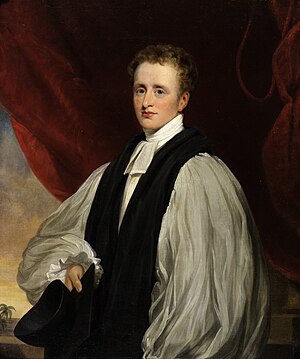
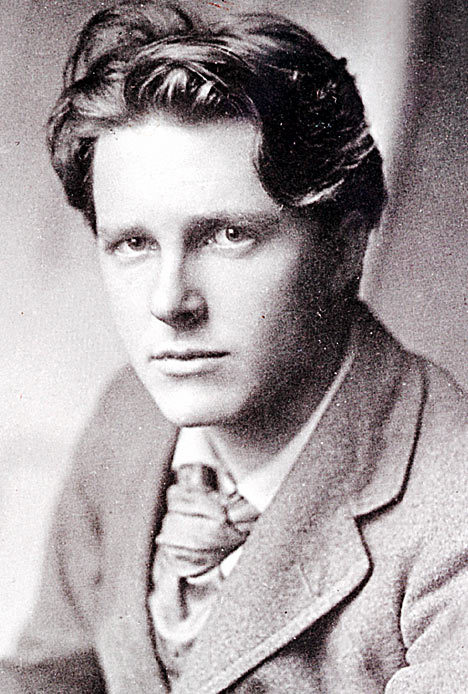
Rupert Brooke
I think of World War I as the war of the poets and World War II as the war of the novelists. I don't mean just that poets and novelists were fighting, although plenty of them were, but that each war produced a different kind of literature.

Literature changed significantly in the two decades between the wars. During the first war, young men of a literary bent who went to war read poetry, and when they wrote about their wartime experiences, they tended to write in verse. Sure some novels came out of the war, most notably All Quiet on the Western Front by Erich Maria Remarque, but mostly veterans of the war expressed themselves in poetry.

James Jones
Among the dozens of published poets who fought in the war were Siegfried Sassoon, Rupert Brooke, Herbert Asquith, Robert Graves, Wilfred Owen, Walter Lyon, Herbert Read and Geoffrey Studdert Kennedy. Many of the poets, including Sassoon, Brooke and Lyon, died in that war. Many others were injured. C.S. is not highly regarded today for his poetry, but after he was badly injured at the front, he thought of himself as a poet until he later discovered his true gifts.

By the time World War II started barely 20 years later, fewer young men read or wrote poetry. Fiction was king in the literary world. Veterans of this war expressed themselves in prose. The best of these included Norman Mailer, James Jones, Irwin Shaw, Herman Wouk, Kurt Vonnegut and Joseph Heller, to name only the Americans, but there were many others.

Wednesday, January 15, 2014

A terrific thriller

Elizabeth George's 1996 mystery In the Presence of the Enemy, the first of her books I have read, is a gem. I can understand why so many readers rate this author and this particular novel so highly. Although it is more than 600 pages long, there is not one dull page. And although it has numerous characters, all are so clearly drawn that each remains distinct in the reader's mind the rest of the way, a feat not every writer can pull off.

If I have a complaint, it lies with the title, In the Presence of the Enemy. It quickly becomes clear that only a handful of characters, perhaps just two or three, could possibly be the killer if that title really means what it says. Thus, when George finally reveals her big surprise, it isn't quite the surprise to readers that it is to the investigators.

The story begins with the kidnapping of a little girl, the daughter of a Tory Member of Parliament, Eve Bowen. Bowen has kept the identify of the girl's father a secret mainly because he is Dennis Luxford, editor of a London tabloid that specializes in scandal, especially Tory scandal. It is Luxford, now married to a former model and the father of a son, who first hears from the kidnapper. The man wants him to reveal on his front page the details about the birth of his first child. Luxford, although he has had no contact at all with the little girl, is willing to do this, but Bowen won't allow it. She insists Luxford himself is behind the kidnapping as an evil plot to both bring down the Conservative government and to increase his newspaper's circulation. She continues believing this even after the discovery of the body of her little girl.

Then Leo, Luxford's son, is kidnapped.

George's hero, Detective Inspector Thomas Lynley of  Scotland Yard, plays a relatively insignificant role in this case and, in fact, becomes something of a villain himself  when he lashes out against members of his team and even the woman he hopes to marry early  in the novel. The key investigator turns out to be Lynley's underling Barbara Havers. The lively novel really comes alive whenever she becomes the focus, and it is she who ultimately saves the day.

Monday, January 13, 2014

Neither borrower nor lender

I feel about lending a book the way most fathers feel about their daughters living with a man out of wedlock.
Anatole Broyard, The New York Times Book Review

"Neither a borrower nor a lender be," says the character in Shakespeare's Hamlet. He must be a bibliophile.

I don't know which I hate more, lending one of my books or borrowing somebody else's book. I try to avoid doing either, but sometimes it isn't easy. Friends do, on occasion, ask to borrow a book, and it would be unthinkable to refuse. Other friends may offer one of their books or, worse, insist that I read it. Again, refusing would be ill mannered. So I am either stuck with a book I really don't want to read, but must and as quickly as possible, or forced to the suffer the pangs caused by a missing book that may or may not be returned.

To quote Broyard again, "Until the book is returned, I feel like a parent waiting up in the small hours for a teenage son or daughter to come home from the dubious party."

An early 19th century book collector named Richard Heber had an interesting solution for this problem. He proposed buying three copies of every book: one to read, one to keep on the shelf in pristine condition and a third to keep on hand just in case anyone asks to borrow it. Most of us, of course, have neither the money to purchase three copies of the same book nor the space to store them. Still it sounds like a wonderful idea.

When I sold my first edition of Sue Grafton's "A Is for Alibi" for $500 a few years ago, the book dealer said he would have offered much more if my copy had not been so worn. I explained that not only had I read the mystery myself, but I had allowed at least a couple of friends to read it, too. Why did I do that? he wanted to know. Why indeed. I wished then I had had more than one copy on my shelf.

Books are rarely returned in the same condition they were in when they were borrowed, if they are even returned at all. It takes time to read a book, and many people begin reading books with the best of intentions but never get around to finishing them. Meanwhile, the book goes on a shelf or under a stack of magazines and is forgotten. By the time that book is rediscovered years later, they will have forgotten where it came from in the first place. Was it purchased or borrowed? And if borrowed, from whom? Who knows? Well, the owner of the book probably knows, but it is considered bad form to actually request the return of a book.

I did so once after a dear friend borrowed Nick Hornby's novel A Long Way Down. I loved the book, and I was pleased that my friend loved it, too. But she had given it to another friend, who also loved it and gave it to somebody else. My friend didn't know who had the book now, but she bought me a new paperback to replace it. Problem solved? Not really. I had purchased Hornby's novel when I was in England, and it was a nice British edition that wasn't readily available in the U.S. So it was the same book, but not quite the same book. It now sits on my shelf like an imposter.

As bothersome as lending out books can be, borrowing the books of others can be just as bad. I prefer to read my own books in my own time at my own pace. And when I enjoy a book, I want to keep it, not give it back to somebody else. That's why I rarely read library books, even though I belong to at least three libraries right now and am writing this today in yet another library.

"To the doting book lover," to quote Broyard yet again, "the idea of reading a borrowed book is disgusting, an unclean habit akin to voyeurism." That may be a little strong, but still it comes close to how I feel.  When a friend learned I had read and enjoyed Little Dorrit a couple of years ago, she gave me a handwritten list of all the many Charles Dickens novels in her possession and invited me to borrow any of them. As much as I would love to see her Dickens collection, I avoid asking to view her books for fear she will insist that I borrow one. I would much rather read my own books
.
Friday, January 10, 2014

The source of the dollar

"I'm worried something'll happen to 'em before we can turn 'em into real money."
"What is 'real' money, Jack? Answer me that."
"You know, pieces of eight, or, how d'you say it, dollars --"
"Th -- it starts with a T but it's got a breathy sound behind it -- 'thalers.'"
"D-d-d-dollars."
"That's a silly name for money, Jack -- no one'll ever take you seriously, talking that way."
"Well, they shortened 'Joachimsthaler' to 'thaler,' so why not reform the word even further?"
Neal Stephenson, Quicksilver

Neal Stephenson's fanciful 2003 novel Quicksilver, set in 17th century Europe, mixes a good deal of fact in with the fiction. Real historical figures like Isaac Newton, Robert Hook, John Locke and Samuel Pepys come and go throughout the story, and actual events are central to the plot. And even that piece of dialogue from the middle of Stephenson's sprawling 900-page tale, the first part of a massive trilogy, explains in a nutshell how the word dollar came into the English language.

Barbara Ann Kipfer puts it this way in Word Nerd: The word, she says, "ultimately derives from the German Taler, short for Joachimstaler, a silver coin of the 16th century; the Spanish dolar, a coin also known as piece of eight or peso, derived from that and influenced Thomas Jefferson's choice of name for our monetary unit."

You may notice that while Kipfer says Taler and Joachimstaler, Stephenson puts it as thaler and Joachimsthaler. So which is it? According to Wikipedia, the proper spellings are Joachimsthaler and Thaler. It goes on to say, however, that after a 1902 German spelling reform, Thaler became Taler, but this did not affect the English spelling of Thaler. So I will award the point to the novelist.

Joachimsthal is a city in Bohemia where Thalers were first minted.

Speaking of not taking the word dollars seriously, as Stephenson's  character Eliza does in Quicksilver, I am reminded of the time I visited Delft. Inquiring about the admission price for a small museum, I mistakenly said dollars instead of euros. It seemed like an honest mistake to me, but the man behind the counter took serious offense and started ranting about American tourists. I turned around, taking my euros, purchased with dollars, with me. Euros were still fairly new in Europe at that time, and I imagine even a few of the Dutch were still having trouble with the word.
.

Wednesday, January 8, 2014

Cast out of heaven

Home seemed a heaven and that we were cast out ...
Henry Green

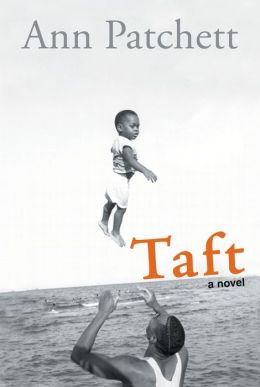
Ann Patchett's early novel Taft (1994) begins with these words from the British novelist, and as I think about the novel in the days after reading it I see that that, in brief, summarizes Patchett's story. Her characters seem to want nothing more than to go back home, back to earlier, happier times, even if those times weren't really as happy or as heavenly as they seem in memory.

The story is told by John Nickel,a black man and a former drummer, who now manages a Memphis bar. His former girlfriend has moved to Florida and taken their son with her. It was her idea that John give up music and get a steady job to better support his son. Now he misses his drums, misses his boy and even misses the ex-girlfriend who refused to marry him.

One day a white teenager named Fay Taft walks into his bar and asks for a job. Against his better judgment, he hires her, the first of many times when he finds he cannot say no to Fay. Soon her brother, Paul, begins hanging out at the bar. It's clear, to John at least, that Paul is high on drugs.

The Taft kids grew up in eastern Tennessee, but when their father died they moved to Memphis to live with relatives. They, too, have been cast out of their heaven.

Complications follow. Paul becomes a dealer, putting John's business in jeopardy. Fay decides she's in love with John and keeps finding excuses to be near him. His girlfriend and the boy return to Memphis, perhaps for a visit, perhaps to stay, but John has made the mistake of having sex with her sister. Then things really turn bad.

The title, oddly enough, refers neither to Fay nor her brother but to their father. There are flashbacks, apparently from out of John's imagination, about him and his kids back home.

This wonderful little novel leaves hints that maybe, just maybe, some of us really can go home again.

Monday, January 6, 2014

More weird and wonderful words

A month ago I listed 10 words that were new to me and, I would guess, unknown to most English speakers. They are words we seem to manage very well without, yet I am delighted that they exist. Here are 10 more such words, also found in Barbara Ann Kipfer's Word Nerd.

admarginate: to note in the margin

agerasia: looking young for your age or not appearing to age

begrutten: having a face swollen from weeping

extraforaneous: outdoor

ginnel: a long narrow passage between houses

gnurr: the substance that collects over time in the bottoms of pockets or cuffs of trousers

kippage: commotion or confusion

kirkbuzzer: someone who robs churches

paraffle: an ostentatious display or flourish

warth: a shore of stretch of coast

Some of these words, especially begrutten and kippage, could easily be used by any of us in speech or in writing. No doubt William F. Buckley Jr. knew them and used them. The problem for most of us, however, is that if we used them, chances are nobody would know what we were talking about. The purpose of language, after all, is to communicate, not to impress. So these perfectly good words go mostly unused.

Thursday, January 2, 2014

Magazines about books

I came away from a newsstand recently with three book-related magazines that held my interest for several days. Two of them, Mystery Scene and ForeWord Reviews, I had never spent time with before, while the third, Fine Books & Collections , was an old friend I hadn't seen for a couple of years.

ForeWord Reviews devotes itself to books from independent publishers. These books, like indie films, get relatively little attention from the major media and, consequently, from the public, but often are worth seeking out. Unfortunately, because the purpose of the magazine is to promote books from small publishers, the reviews are almost indistinguishable from the magazine's ads. One might get the idea that each of the scores of books mentioned is at least a minor masterpiece.

Despite this shortage of objectivity, ForeWord makes interesting reading for any bibliophile. I found at least a couple of books that might be worth seeking out: Shake Terribly the Earth: Stories from an Appalachian Family by Sarah Beth Childers (Ohio University Press), the review of which includes a long excerpt that sells the book by itself, and Cartilage and Skin by Michael James Rizza (Starcherone Books), a thriller that sounds unusual and interesting.

The autumn issue of Fine Books & Collections has articles about Hobby Lobby billionaire Steve Green's plan to build a Bible museum in Washington and about the Billy Ireland Cartoon Library and Museum on the campus of Ohio State University. Nicholas Basbanes, a regular contributor to the magazine, has both his column, Gently Mad, and an article that seems basically to be a promotion for his latest book, On Paper: The EVERYTHING of Its Two Thousand Year History.

The holiday issue of Mystery Scene contains a piece about Alexander McCall Smith explaining how he came to write the No. 1 Ladies Detective Agency novels and another about the husband-and-wife writing team of Aimee and David Thurlo. The magazine offers numerous reviews, which like those in Foreword tend to be mostly positive. The publication seems like a good way for mystery fans to find out what's new before heading to the bookstore to make their choices.

I seldom read magazine ads, but I found the ads in these three magazines to be almost as interesting as the articles. I may have read every one of them. The ads, like the magazines themselves, are about books.