Friday, October 17, 2014

Generically kind

On the way home, she varied her route and passed St. Mary's. She had attended once or twice after they moved here, and people were generically kind. Her preferred brand of kindness, truth to tell.
Laura Lippman, I'd Know You Anywhere

Sometimes I think adjectives and adverbs get a bad rap. Beginning writers are urged to go easy on their modifiers and focus instead on precise nouns and strong verbs to carry their sentences. "Write with nouns and verbs, not with adjectives and adverbs," William Strunk Jr. and E.B. White say in The Elements of Style. "The adjective hasn't been built that can pull a weak or inaccurate noun out of a tight place."

That seems like good advice for writers,  yet when I read the short passage above from Laura Lippman's novel I'd Know You Anywhere, the two words that jump out at me are "generically kind," an adverb and an adjective. It would take a lot of nouns and verbs to create the image Lippman creates with those two descriptive words.

You need not attend church to know the kind of people Lippman writes about. These are the people who shake your hand without actually looking at your face. They say, "We're glad you could be with us this morning," without giving any evidence they mean it or will remember your name if you return next Sunday. We find generically kind people working in restaurants and shops all the time. They say their polite words and phrases as if they have memorized a script, giving no indication of sincerity.

What Lippman calls generic kindness beats no kindness at all, and is certainly better than rudeness. Yet unlike the character in her novel, most of us would probably prefer a bit more genuine kindness in our daily lives.

Wednesday, October 15, 2014

Mystery in Algonquin Bay

The assumed suicide that turns out not to be a suicide at all has become something of a cliche in murder mysteries, yet there is nothing in By the Time You Read This by Giles Blunt that reads like something you've read before. The suicide in this 2006 novel happens to be that of Catherine, the beloved, manic-depressive wife of Detective John Cardinal of the Algonquin Bay Police Department in Canada. If you have read earlier stories in the series you will know Catherine has been in and out of hospitals because of her severe depression. Yet at other times she is a gifted photographer and a loving wife and mother.

When her body is found to have fallen from a tall building where she was taking pictures at night and a suicide note in her handwriting is found as well, the conclusion seems obvious. Yet Cardinal, though he is placed on leave, won't let it rest. He discovers the suicide note was written weeks before Catherine's death and bears someone's fingerprints other than her own.

Meanwhile Sgt. Lisa Delorme, one of Cardinal's colleagues on the force, is assigned to a child pornography case. Evidence suggests the photographs were taken in the Algonquin Bay area. Amazingly, the pornography case and Catherine's apparent suicide have a thin connection to one another.

This novel by the Canadian author, whose books are not as readily available in the U.S. as I would like, makes riveting reading from beginning to end, which is somewhat surprising in that Blunt, unlike most mystery writers, gives the surprises away early. Readers know what happened and who's responsible long before Cardinal and Delorme do. Yet revealing the killer at the beginning of each episode never prevented Columbo from becoming one of the most popular TV detectives ever. Perhaps Giles Blunt is a fan.

Monday, October 13, 2014

Where the words came from

Coleridge
That the origins of so many English words can be traced back to the individuals who coined them or, at least propelled them into the English vocabulary, was what I found most interesting about the Henry Hitchings book I wrote about last Friday, The Secret Life of Words: How English Became English.

Thanks to Chaucer we have such words as intellect, galaxy, famous, bribe, accident, magic, resolve, moral, refresh and resolve.

John Lydgate gave us opportune and melodious. Bible translator John Wyclif was responsible for chimera, civility, puberty and alleluia. Ben Jonson brought strenuous, retrograde and defunct into the language. Sir Philip Sidney produced hazardous, loneliness and pathology. John Skelton introduced idiocy and contraband.

Robert Burton, the 17th century scholar, gave us electricity, therapeutic and literary. Novelist Fanny Burney is credited with grumpy, shopping and puppyish. Lawrence Sterne brought lackadaisical, muddle-headed and sixth sense into the vocabulary. Poet Samuel Taylor Coleridge popularized cavern, chasm, tumult and honeydew. Thank Sir Walter Scott for blackmailawesome, gruesome, guffaw, faraway and uncanny.

As I've suggested, these people did not necessarily invent all these words. In many cases, they may have heard words in conversation that they then incorporated into their own writing, or they may have even seen these words used in books that have not survived. In other cases, they borrowed words from other languages and simply made English words out of them. That these people have so many words accredited to them has a lot to do with how prominent and influential the literature produced by them was in their own time and since. Many people create words that die on the vine simply because they are not written down or, if they are, they are written in literature that generates little attention and does not pass the test of time.

Even the words introduced by the above individuals did not always gain acceptance with the public. Skelton, for example, called a clumsy person a knucklybonyard and a fool a boddypoll. Perhaps it's a good thing the influence of him and the others went only so far.

Friday, October 10, 2014

The spread of English

It is a language nobody owns.
Henry Hitchings, The Secret Life of Words

Henry Hitchings makes this comment near the end of his 2008 book The Secret Life of Words: How English Became English. He is speaking about the spread of the English language around the world so that far more people speak English as a second language than as their primary language. Travelers who speak only English can travel just about anywhere in the world and find some native they can communicate with. The language, as its name suggests, may have originated in England, but the English have not actually owned their language for a long time.

Hitchings doesn't say so, but nobody owns the Spanish or French languages either. Just as English spread in previous centuries thanks to conquest and colonization, so Spain and France spread their languages far and wide. Today Spanish is spoken throughout most of South and Central America, and thanks to immigration, legal and otherwise, in many parts of North America. French is the primary language in Quebec and in a few other parts of the world heavily influenced by France.

Most languages tend to be confined almost exclusively to the lands or regions where they originated. As Hitchings observes, if you hear people talking in Polish, chances are they are from Poland.

There were about 6,900 languages spoken in the world at the time Hitchings wrote his book, but hundreds of them have become extinct since then. "Realistically, fifty years from now the world's 'big' languages may be just six: Chinese, Spanish, Hindi, Bengali, Arabic and English," the author writes. Of these, only the last two, Arabic and English, have "significant numbers of non-native speakers," according to Hitchings. Converts to Islam must learn Arabic, while persons around the world are learning English for reasons of business, technology and entertainment.

As English spreads, it continues to gobble up words from other languages, claiming them as its own. The apt word Hitchings uses to describe the language is "omnivorous."

Wednesday, October 8, 2014

One step further

Christopher Guest's idea of comedy is reality plus "one step further." In his movie comedies, the reality is just as important as that one step further. He wants the characters portrayed in his films to seem just like the people one might actually find at a dog show or at a reunion of folk singers from another era. They are just a wee bit off center, like the travel agent couple in Waiting for Guffman who have, with one small exception, never left the town they live in, or the dog owner in Best in Show who keeps encountering former lovers she had before she became happily married.

John Kenneth Muir's book, Best in Show: The Films of Christopher Guest and Company, reflects on the making of those two movies, plus A Mighty Wind. The book was published in 2004, before the release of For Your Consideration.

Guest doesn't like the term "mockumentary" to describe his films because he thinks that suggests he uses the films to mock dogs shows, folk singers and small-town people with aspirations for Broadway. He prefers calling them comedies done "in a documentary style." Muir uses "mockumentary" anyway, and I think he is justified in doing so. First, the word has become widely used in reference to Guest's comedies. Second, the term means not just belittling or making fun of something, but also imitating something, such as a mock battle or mock turtle soup. Guest's movies play like true documentaries, but with that one step further that makes them great comedies.

Guest's screenplays are much shorter than the screenplays for most movies simply because he omits all dialogue. He chooses actors such as Catherine O'Hara, Eugene Levy, Michael McKean, Parker Posey, Jane Lynch and Fred Willard who have great improvisational skills. Then Guest just sets the scene, starts the cameras rolling and lets the actors make it up as they go along. Most of this footage never sees the screen. The editing process can take more than a year. In the case of Best in Show, 60 hours of film was trimmed into an 84-minute movie. For A Mighty Wind, Guest cut 80 hours down to 90 minutes. Sometimes the funniest scenes don't make the final cut simply because Guest decides they are not necessary to tell his story.

I read this book over several days, and in the evenings I watched yet again the three Guest films Muir writes about. I have always liked Best in Show best because it is the funniest, and I liked it best again this time. Yet Muir makes a good case that A Mighty Wind may actually be the best movie, "the apex of the director's career." It may not be the funniest, but it has more heart and it ultimately tells the best story.

Monday, October 6, 2014

Saying a lot in a few words

Billboards along highways may have less than a second to get their message across, depending upon how fast vehicles are moving and how long drivers are willing to take their eyes off the road. Most billboards are too wordy and their words too small for drivers to read everything, assuming they even want to. Thus a billboard's effectiveness depends upon a visual image and a slogan or key phrase that says a lot in a brief glance. Here are a few slogans I've noticed on billboards near my Ohio home:

Where Friends Collide

Thankfully this slogan refers to a downtown restaurant, not to the stretch of highway where the billboard is located. Even so, the mental image the word collide suggests is not one that makes me eager to visit that particular restaurant. Certainly the restaurant could have found a better word.

Plant the Science of Tomorrow Today

This billboard promotes a seed company and is addressed to farmers, although since it is located on a stretch of highway connecting two cities, I am not sure its location is ideal, even though the road carries a lot of traffic. The slogan seems like a good one though.

Pick Your Passion

An auto dealership has this billboard, and that phrase sounds like it would be effective. I suspect buying a vehicle for most people has more to do with passion than practicality.

Hire Us BEFORE Your Spouse Does

That's all one has to read to know the people shown on the billboard are divorce lawyers.  If you are in the business of promoting the breakup of marriages, I guess that is as good a slogan as you could find.

Feel the Power of Massive Interest ... 1.77%

That bank billboard just makes me laugh.

You Get Paid, We Get to Crush Stuff ... Win Win

This billboard for a recycling company may be my favorite, even if it may be a bit wordy for most people to safely read at 55 mph.

Friday, October 3, 2014

Forgotten books

"We exist as long as we are remembered."
Carlos Ruiz Zafon, The Shadow of the Wind

I included that line from The Shadow of the Wind several days ago in a post about Spanish novelist Carlos Ruiz Zafon. In that novel, as in real life, the line is more true about books than it is about people.

A vast warehouse in Barcelona known as the Cemetery of Forgotten Books plays a key role in this novel, as in others by the same author. A boy is taken by his father to the Cemetery of Forgotten Books and told to choose one book from among the many obscure books on the shelves, to read it, treasure it and protect it for the rest of his life. For as long as one person remembers that book, it will continue to exist. The author of that book will not have labored in vain.

The boy selects a novel, also called The Shadow of the Wind, by an author named Julian Carax. Later he learns someone is trying to find and destroy every copy of every Carax book in existence. As he grows into maturity, he tries to find out why.

I like the idea of a Cemetery of Forgotten Books. Perhaps the Library of Congress serves this function, but it does not house and protect forgotten books alone. Unfortunately, more books are forgotten than remembered within a few years of publication. "There are currently more titles published in the UK and US in a month (around 15,000) than even the most bookish person will read in a lifetime," John Sutherland writes in Curiosities of Literature. Most of those books would end up in the Cemetery of Forgotten Books very quickly, if such a facility actually existed. Instead they end up in used book sales, assuming they were ever purchased by someone in the first place, and if not bought by someone else, in landfills somewhere.

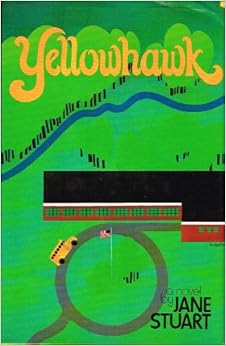
One of pleasures of membership to LibraryThing is that it allows one to see how many other members own the same books you do. I can see, for example, I am one of 49,570 members with a copy of Pride and Prejudice. More than 47,000 other members have The Catcher in the Rye and To Kill a Mockingbird in their libraries. Yet there are several books that I alone possess. These include two novels by Jane Stuart, daughter of Jesse Stuart; The Experience, a novel by Cecil Hemley, a former creative writing teacher of mine; and Harvest of the Bitter Seed, a 1959 novel by Gordon F. Morkel, a colorful doctor who practiced in Mansfield, Ohio, for many years during my time working there as a journalist.

I doubt very much I am the only person in the world who owns these books, even if other copies of them, especially Morkel's, would be hard to find. Each of them might rest in the Cemetery of Forgotten Books. By keeping them in my own library I'd like to think I am helping to keep them alive.