It annoys my wife when I ask her to repeat something she has just said to me. She thinks I am getting deaf, although if that is true, I have been getting deaf for many years without actually becoming deaf. Part of the problem, I think, is that when my mind is focused on one thing, a book or a football game perhaps, it takes awhile to refocus on something else, namely whatever it is she is saying to me. I have suggested she first make sure she has my attention before telling me something important.
Lately, however, I have come up with a new theory. I usually hear most of what she says, but not the one or two words that would convey the most important information. I might hear the verb but not the noun or, sometimes, the noun but not the verb. Then I noticed I am often missing the key words people other than my wife are saying.
Listening to someone on radio or television (I forget which) count down the top-grossing movies of the weekend, I noticed I could clearly hear almost every word she said except the titles of the movies themselves. The volume of her voice seemed to go down a few notches every time she said a movie title, and it was the titles that were important.
A day or so later I heard another woman, also talking about movies, say, "If you're like me you are obsessed with the movie ...." Again I could clearly hear everything she said except the name of the movie. Later in the conversation, thankfully, I was able to catch the word Frozen, so I finally knew what she was talking about. A few days later I watched Frozen for the first time. It is a wonderful film, although I can't imagine anyone becoming obsessed with it.
Anyway, I am still wondering. Is there something wrong with my hearing or do some people, perhaps even most people, lower their voices slightly when they say key words, as if they are sharing some kind of secret?
Monday, December 8, 2014

Friday, December 5, 2014
Take care with commas
He, the pilot and three others had been belted into their seats when the plane went down but two of the passengers had been gripped with hysteria at the first sign of trouble, leaping up and trying to break into the cockpit in their panic.
The use of commas, more so than with other kinds of punctuation, has always been a matter of individual preference. Some writers will use a comma in certain situations, while other writers will leave it out. A case in point is when a sentence lists a series of things. Some writers will write "a lion, a zebra and a gorilla," while others, probably a majority, would write "a lion, a zebra, and a gorilla." Most of the time it matters very little. In the newspaper business we always omitted the comma before the and because it was unnecessary and took up space and, when you are on deadline, time.
The above sentence at the bottom of the first page of Arnaldur Indridason's Icelandic thriller Operation Napoleon caught my attention because its missing comma actually makes a big difference. How many people on the plane were belted into their seats, four or five? The missing second comma makes it clear there were five people wearing their belts and a total of seven people on the plane when it crashed into a glacier. It also makes it clear the man being referred to as he was not the pilot. Were there a second comma we could not be sure about any of this. Commas, both their presence and their absence, can make a huge difference in the meaning of a sentence,
Later in the same sentence, before the word but, Indridason again omits a comma that other writers might have chosen to stick in. It makes little difference either way, but then why use punctuation that doesn't serve a purpose?
Arnaldur Indridason, Operation Napoleon
The use of commas, more so than with other kinds of punctuation, has always been a matter of individual preference. Some writers will use a comma in certain situations, while other writers will leave it out. A case in point is when a sentence lists a series of things. Some writers will write "a lion, a zebra and a gorilla," while others, probably a majority, would write "a lion, a zebra, and a gorilla." Most of the time it matters very little. In the newspaper business we always omitted the comma before the and because it was unnecessary and took up space and, when you are on deadline, time.
The above sentence at the bottom of the first page of Arnaldur Indridason's Icelandic thriller Operation Napoleon caught my attention because its missing comma actually makes a big difference. How many people on the plane were belted into their seats, four or five? The missing second comma makes it clear there were five people wearing their belts and a total of seven people on the plane when it crashed into a glacier. It also makes it clear the man being referred to as he was not the pilot. Were there a second comma we could not be sure about any of this. Commas, both their presence and their absence, can make a huge difference in the meaning of a sentence,
Later in the same sentence, before the word but, Indridason again omits a comma that other writers might have chosen to stick in. It makes little difference either way, but then why use punctuation that doesn't serve a purpose?
Wednesday, December 3, 2014
Art and meaning
Art is a private matter; the artist does it for himself; any work of art that can be understood is the product of a journalist.

from The Dada Manifesto
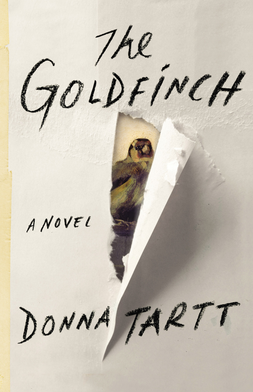
That idea, popular with so many early in the last century, gets much less support today. Even so, many do believe that art cannot be easy. If too many people understand it, it must not be any good. Perhaps isn't even art at all. Thus, in the world of painting, the likes of Norman Rockwell and Thomas Kinkade get very little credit. In literature, Donna Tartt's The Goldfinch must not be much of a novel because it was a best-seller for so long earlier this year. The fact that many people were never able to finish reading the book they paid $30 for doesn't mitigate the fact that so many others read it and loved it. Popularity lessens artistic value in the eyes of elitists.
My own view is that true art means different things to different people. The best art has an entry level meaning assessable to just about anyone. This is nothing more than simple beauty. A beautiful painting or a beautiful piece of music or a beautifully written novel needs nothing more to justify its existence. If the masses enjoy it, that takes nothing away from it as a work of art.
At the same time, the best art has other levels of understanding that open up to those who may be more perceptive, more intelligent or more experienced. Each reader or observer may find something different. Scholars continue to find new meaning in the works of writers like Charles Dickens and Thomas Hardy, which were popular with the masses at the time they were written. Much of this meaning may have never been intended by the authors themselves, which means not that the meaning is false but that these novels are true works of art.
The test for The Goldfinch, or any other novel, lies not in how many people bought it or read it or loved it, but rather in how many different levels of meaning will be found, over time, within its pages. The same is true with any work of art.
Friday, November 28, 2014
An insult to P.G. Wodehouse

Sometimes Faulks finds a word or a phrase that sounds authentic, as when he writes "Jeeves shimmied in with the tea tray," but rarely a paragraph or even a complete sentence. As for his chapters, they are too long and never seem to end with any incentive to begin the next one. Jeeves and Wooster novels were never dull, until now.
The early premise of the story is actually quite good. Circumstances oddly call for Jeeves, the manservant, to pretend to be an English lord, while poor Bertie Wooster must play his servant, a wonderful changing of roles that, unfortunately, Faulks never manages to milk for all of its potential humor. The plot, such as it is, involves Bertie trying to aid one of his chums in winning the love of his life and, of course, making a mess of it. Leave it to Jeeves to sort things out in the end, although the resolution seems like something Wodehouse would have never concocted had he written a hundred Jeeves and Wooster novels.
As I've written before, Faulks did a nice job when he paid a similar homage to Ian Fleming in his James Bond novel Devil May Care. His latest tribute novel fails to deliver. But perhaps this is really an homage to Wodehouse after all. It demonstrates that not just anyone, not even a writer as gifted as Sebastian Faulks, can do what he did.
Wednesday, November 26, 2014
Short book about a long silence
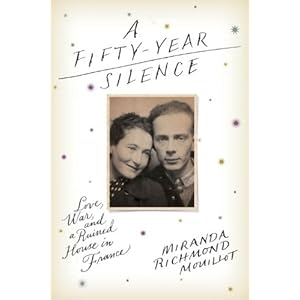
There is a bit more to the story. Armand and Anna, both Jews, survived World War II in France, although other family members did not. They saw little of each other during the war. Afterward they married, bought that house and lived together long enough to have a daughter. Then Armand became a translator at the Nuremberg Trials, where he learned firsthand what the Germans did to the Jews. After that, silence. Armand stayed in France. Anna moved to the United States, where years later Miranda was born. Why her grandparents never spoke, yet in some odd way still seemed to love one another, weighed on her mind while she was growing up. Eventually she found that ruined house, spent time with her grandfather and began to piece together the story that neither grandparent wanted to talk about.
Because this story really doesn't amount to much, Mouillot fills out her book with details of her own life, including her romance with and eventual marriage to a Frenchman. She's a fine writer. Not everyone could make so much out of so little and still make it worth reading.
Friday, November 21, 2014
A revolution at the movies
As in the case with most Academy Awards ceremonies, there was less symbolism to be extracted from the evening than morning-after analysts might have imagined, and even that applied only to the Academy's taste in movies, not to the country's.
The above quotation, found near the end of Pictures at a Revolution, a fascinating 2008 book about the five movies nominated for best picture in 1968, seems like an odd thing for Mark Harris to say, given that his entire book focuses on the symbolism of those five movies and the 1968 Academy Awards. His thesis is that what he calls New Hollywood began to take over from Old Hollywood that year. All five movies nominated -- In the Heat of the Night, The Graduate, Bonnie and Clyde, Guess Who's Coming to Dinner and Doctor Doolittle -- were American-made, following a long period of British dominance at awards ceremonies. Younger, liberal, independent film makers, greatly influenced by European directors, began to replace older, conservative studio heads.
The ceremony in 1968, which was delayed by the death of Martin Luther King, reflected the struggle of the two camps, according to Harris. The Graduate and Bonnie and Clyde very much represented New Hollywood, while Doctor Doolittle, the only one of the five films to never break even, represented Old Hollywood. In the Heat of the Night, which won the award for best picture that year, and Guess Who's Coming to Dinner, were mostly Old Hollywood, but they both starred Sidney Poitier and both dealt with race relations, a timely topic even if the latter film was considered out of date by the time of its release.
Harris goes into exhaustive detail about the making of all five of those movies. Much of his information may be gathered from other sources, yet much of it is also based on his interviews with those involved in the productions. Among the tidbits he shares:
-- French directors Francois Truffaut and Jean-Luc Godard both considered directing Bonnie and Clyde. Instead Arthur Penn made the movie and got a nomination for his efforts. It may be a good thing Godard didn't take the job because he wanted to make the movie, set in Texas and surrounding states, in New Jersey in January.
-- Among actresses considered for the part of Mrs. Robinson in The Graduate were Doris Day, Jeanne Moreau, Patricia Neal and Ava Gardner. Anne Bancroft ultimately got the part. And the Simon and Garfunkel song Here's to You Mrs. Robinson was originally written to mention Mrs. Roosevelt.
-- Spencer Tracy's monologue at the end of Guess Who's Coming to Dinner took six days to shoot. Tracy was so ill at at the time he could work just a few hours each day. He died before the movie was released.
--Bosley Crowther, the longtime New York Times movie critic, lost his job because he panned Bonnie and Clyde again and again and again. He loved Cleopatra. Meanwhile, Pauline Kael got her job as film critic at The New Yorker because of an article she wrote praising Bonnie and Clyde.
Oliver!, made in Great Britain, won the Academy Award for best picture the following year, but it was the last British film to win until 1982 (Chariots of Fire). New Hollywood had taken over.
Mark Harris, Pictures at a Revolution: Five Movies and the Birth of the New Hollywood
The ceremony in 1968, which was delayed by the death of Martin Luther King, reflected the struggle of the two camps, according to Harris. The Graduate and Bonnie and Clyde very much represented New Hollywood, while Doctor Doolittle, the only one of the five films to never break even, represented Old Hollywood. In the Heat of the Night, which won the award for best picture that year, and Guess Who's Coming to Dinner, were mostly Old Hollywood, but they both starred Sidney Poitier and both dealt with race relations, a timely topic even if the latter film was considered out of date by the time of its release.
Harris goes into exhaustive detail about the making of all five of those movies. Much of his information may be gathered from other sources, yet much of it is also based on his interviews with those involved in the productions. Among the tidbits he shares:
-- French directors Francois Truffaut and Jean-Luc Godard both considered directing Bonnie and Clyde. Instead Arthur Penn made the movie and got a nomination for his efforts. It may be a good thing Godard didn't take the job because he wanted to make the movie, set in Texas and surrounding states, in New Jersey in January.
-- Among actresses considered for the part of Mrs. Robinson in The Graduate were Doris Day, Jeanne Moreau, Patricia Neal and Ava Gardner. Anne Bancroft ultimately got the part. And the Simon and Garfunkel song Here's to You Mrs. Robinson was originally written to mention Mrs. Roosevelt.
-- Spencer Tracy's monologue at the end of Guess Who's Coming to Dinner took six days to shoot. Tracy was so ill at at the time he could work just a few hours each day. He died before the movie was released.
--Bosley Crowther, the longtime New York Times movie critic, lost his job because he panned Bonnie and Clyde again and again and again. He loved Cleopatra. Meanwhile, Pauline Kael got her job as film critic at The New Yorker because of an article she wrote praising Bonnie and Clyde.
Oliver!, made in Great Britain, won the Academy Award for best picture the following year, but it was the last British film to win until 1982 (Chariots of Fire). New Hollywood had taken over.
Wednesday, November 19, 2014
Naming the states
That so many place names in the United States, especially the names of states and rivers, were derived from indigenous American languages, rather than European languages, seems surprising. Sure we have state names like Rhodes Island, Virginia and Pennsylvania with obvious European roots, yet so many others were taken from Indian words, however corrupted those words may have been in the process.
My own state, Ohio, got its name from an Iroquois word meaning "good river." Michigan comes from a Chippewa word meaning "great water." Massachusetts comes from an Algonquian word, the meaning of which remains unclear although "great hill" is often mentioned. Connecticut got its name from Quinnehtukqut, which means "beside the long tidal river." Oregon may have gotten its name from an Indian name for a river, the Ouragon. Continuing the theme of naming states after Indian words referring to rivers, Mississippi comes from Misi-ziibi, meaning "great river." Idaho was supposedly named for a Shoshone word meaning "gem of the mountains," but this was later found to be a hoax. It was just a made-up word. Oklahoma comes from a Choctaw phrase meaning "red people."
And so it goes. Texas, Missouri, Illinois, Kansas, Alaska and Alabama are among other states whose names had Indian origins.
One of the oddest state name stories may be that of Wyoming, which Elizabeth Little says in Trip of the Tongue "comes from the same language that was spoken in and around what is now New York City." It was first used as a place name in eastern Pennsylvania, where there are towns named Wyoming, Wyomissing and Wyomissing Hills. At least a dozen other states have Wyoming as a place name, as do Ontario, Canada, and New South Wales, Australia. The popularity of the place name, Little writes, has to do with a poem by Thomas Campbell, which contains the line, "On Susquehanna's side, fair Wyoiming!" The word means either "at the big river flat" or "large prairie place," depending upon whom you believe.
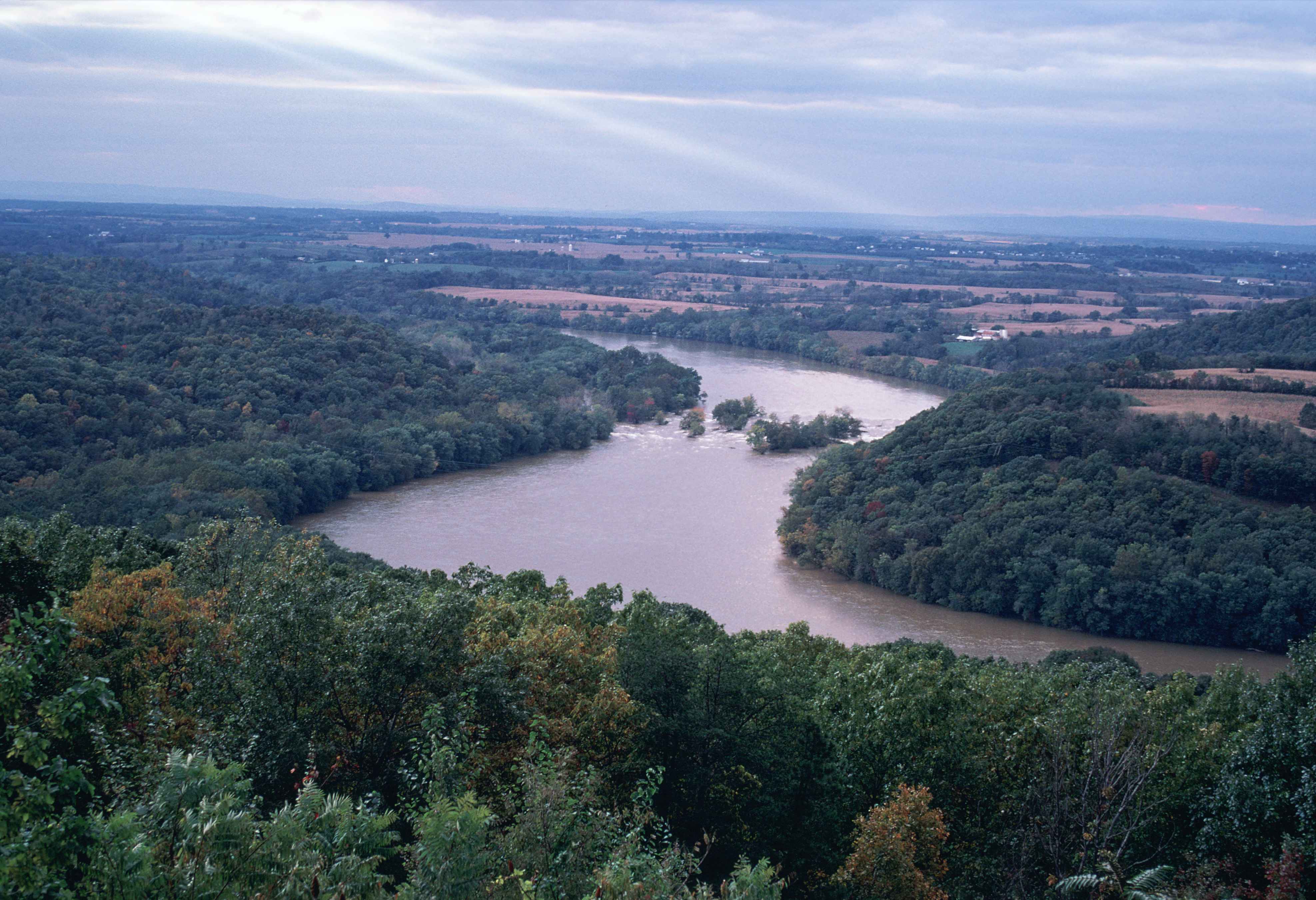 |
| Ohio River |
And so it goes. Texas, Missouri, Illinois, Kansas, Alaska and Alabama are among other states whose names had Indian origins.
One of the oddest state name stories may be that of Wyoming, which Elizabeth Little says in Trip of the Tongue "comes from the same language that was spoken in and around what is now New York City." It was first used as a place name in eastern Pennsylvania, where there are towns named Wyoming, Wyomissing and Wyomissing Hills. At least a dozen other states have Wyoming as a place name, as do Ontario, Canada, and New South Wales, Australia. The popularity of the place name, Little writes, has to do with a poem by Thomas Campbell, which contains the line, "On Susquehanna's side, fair Wyoiming!" The word means either "at the big river flat" or "large prairie place," depending upon whom you believe.
Subscribe to:
Posts (Atom)