Friday, June 16, 2023

Caught by the fish

I only knew I ached at times in certain ethereal directions and I believed that in this direction there might lie the object toward which I ached, the Real Thing that would satisfy the homeward aching and make me feel at long last as I long had longed and longed to feel.

Eric Metaxas, Fish Out of Water

Anyone who has read much C.S. Lewis, especially his Surprised by Joy, will experience a bit of deja vu when reading the above line in Fish Out of Water (2021) by Eric Metaxas. Both men experienced a persistent longing — which Lewis calls joy and Metaxas calls "homeward aching" — that eventually led them to a vital Christian faith that ultimately influenced countless others.

Their early lives, which in most respects were quite different, had commonalities. They were both raised in ostensibility Christian families and attended prestigious universities — Lewis, Oxford and Metaxas, Yale — where they drifted into conformity with the intellectual trends of their generations. They rejected God, even while being incessantly and unwillingly drawn to him.

The son of a Greek immigrant father and a German immigrant mother, Metaxes was soaked in both cultures from an early age, even while growing up in the United States and experiencing that culture firsthand. He visited relatives in both Greece and Germany at various points in his youth. His family belonged to a Greek Orthodox church where even the priests never seemed to believe much of anything. The church was always more about culture than faith.

At Yale, he showed a flare for writing, yet despite a few successes rarely seemed to have anything to write about.

All the while Metaxas says he felt like a fish out of water, as if he didn't really belong in whatever environment he found himself. He says his conversion came in a dream in which he pulled a golden fish out of the water, and he realized, upon waking, that the fish represented Jesus Christ. A fish has long been a Greek symbol for Christ. What Metaxas had been looking for had found him.

Since then Metaxas has become a biographer of notable Christians, including Dietrich Bonhoeffer, and he conducts interviews on a weekly television show and on podcasts. Among the surprises in his fine book is his connection to Larry David, creator of Seinfeld, and the real individuals behind two of the main characters in that popular series.

Wednesday, June 14, 2023

Listen to the trees

In most of his previous books, German forester Peter Wohlleben amazed us with his insights into how trees think, feel, nurture their young and communicate with each other. Now in The Power of Trees (2023), he focuses on what trees can teach human beings.

When it comes to saving the planet, trees know best, he argues. To a large extent, he says, climate change has resulted from cutting down so many forests around the world, whether to clear fields for agriculture or to provide lumber for construction or wood for fires. With fewer mature trees, the climate has turned warmer and dryer, for forests both cool the air and help manufacture rain. When you are in your own backyard on a hot summer day, you prefer to stand or sit under a tree because it's cooler there. Multiply that by thousands of trees, and this cooling effect impacts a large area.

Planting young trees doesn't make up for clear-cutting mature trees. It can take hundreds of years for younger trees to do the work of older ones. But rarely are they even given the chance to do that, for the forest industry needs their lumber before they have a chance to mature. And to make it worse, the industry tends to replace old forests with trees that grow fast but are not necessarily suited for the climate or soil. Better to plant trees that grow naturally in the area, Wohlleben argues.

Meanwhile, the heavy machinery used to clear forests compacts the soil so severely that young trees cannot develop the root structure they need for a long, healthy life. Trees actually grow best, he says, in the shade of other trees, not out in the open. Too much sun too early leads to a shorter lifespan for trees. Young trees out in the open also provide easy meals for deer.

His solution to the climate problem is simply to let trees do their thing. Let them grow naturally and spread their seeds naturally. Yet this isn't really so simple. Virtually every building that goes up means trees must come down. And so many buildings require large amounts of wood for their construction. Most other foresters work more for the timber industry than for the trees or for the environment, he argues.

Wohlleben doesn't exactly stand alone with these opinions. Even so, among his fellows, he often feels more like a single tree out in the open than part of a forest.

Monday, June 12, 2023

Discovering what happens

Once I start writing things down, I feel like I'm nailing the story in place.

Ann Patchett, These Precious Days

Ann Patchett
Some writers say they write a story to discover how it will end. Ann Patchett says she needs to know how her story will end before she even begins writing it. I can understand both approaches. I don't write stories, but sometimes when I'm writing I know exactly where I'm going before I start. Other times I haven't a clue. I just start writing and see what develops. I can have good results — or bad ones — either way, although I will admit that knowing where I'm going usually makes for easier writing.

Yet Patchett must not just know the ending before she writes the beginning, but apparently she must know everything else in her story. I wonder, how is this even possible?

In her essay "These Precious Days" in her book with the same title, the novelist writes, "When I'm putting together a novel, I leave all the doors and windows open so the characters can come in and just as easily leave." And this is before she begins the actual writing.

"When I rely on my imperfect memory, the pieces are free to move," she says. But with an imperfect memory, how does she remember where they move to? There is too much coming and going in a novel for anyone to remember where everyone is, I would think.

And yet I am left wondering if Ann Patchett is really so differently from those writers who write in order to discover what happens. She goes through the same exciting process of discovery, except she does it before she starts writing.

Friday, June 9, 2023

Still earns an A

Way back in the mid-1960s, Bel Kaufman's unorthodox novel Up the Down Staircase (1964) was the hottest book in America. Does it hold up more than 60 years later? Well, yes it does, I discovered.

Kaufman, herself a New York City school teacher, imagines Sylvia Barrett as an idealistic young English teacher in her first semester at Calvin Coolidge High School in New York. What's unorthodox is the author's telling of her story without any narrative whatsoever. The novel is simply a collection of memos, announcements, notes, blackboard scribblings, student excuses, etc.

The frustrations Sylvia endures comes as much from the school's administrators as from her students. She writes in a letter to a friend, "We have keys but no locks (except in the lavatories), blackboards but no chalk, students but no seats, teachers but no time to teach."

Humor stays plentiful, as when one of her students leaves her a note saying, "You are my most memorial teacher, you teach a subject as fast as it can enter and stay put in my brain." Yet there is as much bitter as sweet, as when a girl attempts suicide and a surly boy corners her in a dark room after school.

Sylvia is pretty — nothing wrong with that, certainly — but Kaufman reminds us of this over and over again until it gets annoying. But perhaps this just helps reveal the immaturity of her students, both boys and girls, who can't resist mentioning it.

Really good books stay good with the passage of time, and I think Up the Down Staircase passes this test.

Wednesday, June 7, 2023

Intellectual fashion

"It's going down very well with the more progressive customers."

Matthew laughed. "You flatter me, Lou. Progressive. Very nice."

Big Lou had not intended it as a compliment. "Progressive actually means conformist, Matthew. A follower of intellectual fashion."

Alexander McCall Smith, A Promise of Ankles

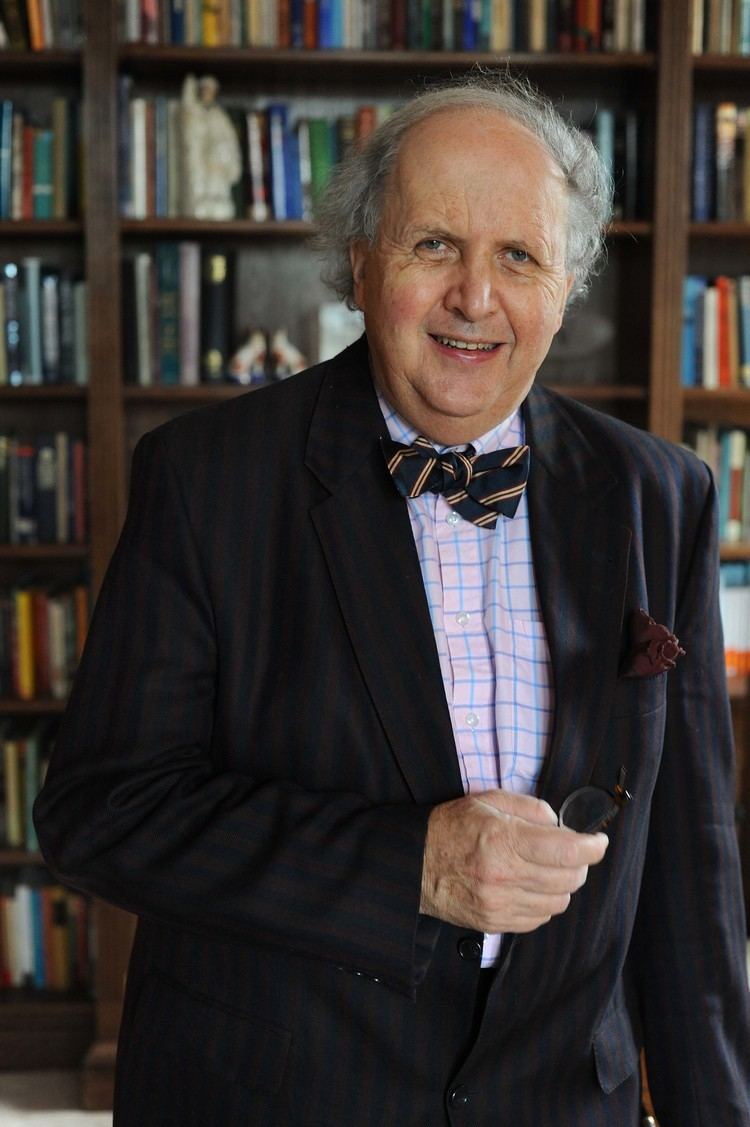
Alexander McCall Smith
Alexander McCall Smith's gentle novels rarely stray into anything controversial or political, but the small exchange quoted above dips a toe into the social-political controversy that is altering, perhaps forever, the entire western world, including Scotland, where his novel A Promise of Ankles is set.

Look up the word progressive in any dictionary and you will be unlikely to find any mention of conformity. Definitions suggest just the opposite, in fact. Used as an adjective, according to one online dictionary, the word means, among other things, "making use of, or interested in, new ideas, findings, or opportunities." As a noun, it is said to be "one believing in moderate political change and especially social improvement by government action."

Yet Big Lou's definition actually seems much more accurate in today's world. How else to explain how quickly "progressive" ideas are accepted by so much of culture? If a man puts on a dress and calls himself a woman, then he is a woman? Five years ago that would have been considered a preposterous idea by just about everybody. Today a significant number of people actually believe it, and a great many others pretend to believe it in order to conform with, as Big Lou puts it, intellectual fashion.

This helps explain why Democrats in the United States, the more progressive party, tend to act like sheep, easily herded to vote however their shepherds tell them to vote and believe whatever their shepherds tell them to believe. Meanwhile Republicans behave more like cats, each straying off in their own direction. It also helps explain why Democrats win most of the votes. Who doesn't want to fit in with one's fellows?

Monday, June 5, 2023

Back to Scotland Street

Alexander McCall Smith's A Promise of Ankles (2020) is the 14th installment in his 44 Scotland Street series, a light-hearted soap opera about the people who live in a building at that address in Edinburgh. The title, which may suggest ladies in floor-length gowns in an earlier age, refers instead to Angus Lordie's dog, Cyril, who cannot always resist the urge to nip at a tempting ankle.

The novel, like others in the series, has no plot, just numerous subplots. As in a typical Seinfeld episode, these subplots often intersect, creating a pleasing whole. I didn't find A Promise of Ankles as pleasing as others in the series, however, probably because Matthew, possibly the least interesting of the continuing characters, dominates this time. Two days after finishing the novel, I have trouble recalling what his particular subplot is about.

Much more interesting is the excitement of Bertie, the precocious seven-year-old boy who gets the opportunity to live in Glascow for a month with his friend Ranald. Bertie is also happy because his oppressive and progressive mother, Irene, has run off to Aberdeen with her therapist. Irene hates all things Glascow, so Bertie assumes it must be a fine place.

Meanwhile Stuart, Bertie's caring father, finds his excitement with Katie, a young woman totally unlike Irene — until she runs off with another man, as well. She cannot resist the handsome Bruce, just as Cyril cannot resist a good-looking ankle.

Meanwhile there is the discovery, by Cyril, of what may or may not be a Neanderthal skull and a phony duke being held prisoner by someone trying to teach him Gaelic.

If you have never read a 44 Scotland Street novel, do so. Just don't start with this one.

Friday, June 2, 2023

A fine day goes bad

Charles Todd's 2015 novel A Fine Summer's Day may seem to have an odd title for a murder mystery, yet I find it perfect. Todd novels tend to have bland titles — A Test of Wills, A False Mirror, etc. — which, in comparison, make this one memorable. The title will always remind the reader of what it is about.

Tragedies so often happen on what start out as fine days — 9/11, for example — and so it is on this beautiful June day in 1914. Ian Rutledge, a promising young Scotland Yard detective, is about to become engaged to the woman he loves, Jean, a military officer's daughter. How can anything spoil this paradise? Yet very quickly two things do just that.

First, and at the time more significantly, Rutledge becomes involved in a murder investigation that takes him away from Jean for days at a time. But on that same day in Sarajevo, Archduke Ferdinand is assassinated, leading soon to the Great War, which will separate Ian and Jean forever.

This entire novel is a flashback. Other novels in the series feature Rutledge as a detective in the 1920s, still haunted by memories of the war. More specifically, he is haunted by the ghost of Hamish MacLeod, who also becomes engaged to be married on that same fine summer's day. Hamish will later become a soldier in Rutledge's unit whom Rutledge, as the commanding officer, has executed for disobeying an order.

As for the mystery, it involves a series of murders that look like suicides. Men drink milk laced with laudanum or are found hanging in their homes. Yet none of the men had seemed likely to commit suicide. They have nothing in common until Rutledge discovers they all served on the same jury in Bristol years before.

He identifies the likely suspect fairly early. The tricky part becomes discovering how this man persuaded the men to kill themselves and then actually catching him. Thus the novel becomes more a thriller and historical novel than a murder mystery in the usual Charles Todd mold. Any fan of the series should read it.