Friday, March 29, 2013

Unpardonable puns

I like puns. I really do. Puns, to me, are not a low grade of humor, as some people seem to think, but a high form. Intelligent people come up with the best, most original puns.

So I am not sure why I so strongly detest puns in the titles of mystery novels. Here are some examples of the many such books now available:
Naughty in Nice

Quilt or Innocence

Book, Line and Sinker
 
Fowl Prey

The Real Macaw

Hearse and Buggy

Death of a Rug Lord

Deader Homes & Gardens

Let It Sew

Suture Self

Hiss and Hers

Grape Expectations

Last Wool and Testament

Bell, Book and Scandal

Read and Buried

Murder for the Halibut

And Then You Dye
Bone Appetit

Reel Murder

Tiles and Tribulations

Pies and Prejudice

Roast Mortem

Reap What You Sew

Hell Hath No Curry

As the World Churns

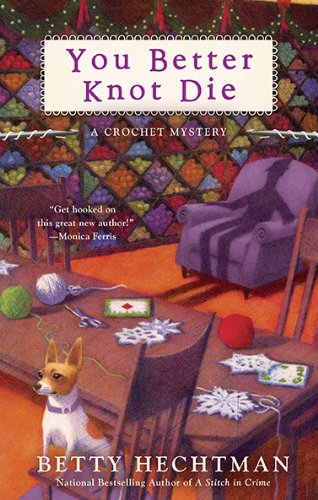
You Better Knot Die


Deviled Eggs

Sew Deadly

Threaded for Trouble

Splendor in the Glass

Fleece Navidad

Dyer Consequences

Books Can Be Deceiving

Immaculate Reception

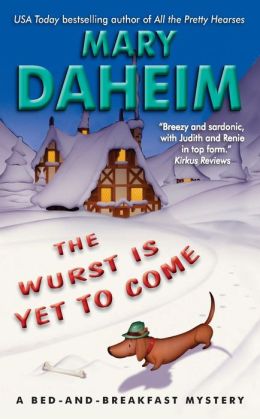
The  Wurst Is Yet to Come

Hiss of Death

I have not read any of these mysteries. They may be better than their titles, but I don't intend to find out. Why do I dislike these titles so?

It may have a lot to do with the fact that there are so many of them. I also avoid novels with titles like "So-and-so's Daughter,"  simply because they are so numerous. These titles may at first appear to be clever and original, but after awhile they all sound alike. One gets the impression that some of these writers start by trying to come up with a good pun, then build their story around it. Just as people who pun all the time can quickly become tiresome, so puns in book titles can quickly become a bore.

I have no objection to comic mysteries, but a pun in the title just seems a little too flippant to me. These are stories about murder, after all. Somebody dies. If the detective is a bumbler or if the investigation leads to some funny situations, I'm all for it. But a pun in the title reflects on the whole situation, including death itself.

The best, most respected mystery authors rarely, if ever, resort to puns. I'm talking about people like Donna Leon, Laura Lippman, Arnald Indridason, Loren D. Estelman, Joan Hess and Edna Buchanan. Intelligent people can up with some good puns, but intelligent people should also know when to avoid them.

Wednesday, March 27, 2013

Restaurant reading

"We do not live by bread alone. We must be reading, too." -- Tom Raabe, Biblioholism: The Literary Addiction

There are two kinds of people: those who hate to dine alone and those who can see its bright side. The latter group must be composed primarily of readers. I share most meals with my wife, but I still manage to read several books a year in restaurants. I always keep a book in the car for this purpose (as well as for waiting rooms and, here in the Tampa Bay area, drawbridges).

"Indeed, there is something about reading in a restaurant that is borderline romantic." -- Tom Raabe

I don't know about romantic, but it probably does leave an impression. Restaurant personnel are probably thinking: "Oh-oh, here's somebody who's probably going to be sitting at that table for awhile." Other diners may be thinking: "Isn't that too bad? He must be lonely."

"We can't kill half a day dominating a booth and drinking coffee or whatever else. We actually have to eat something." -- Tom Raabe

There's the rub. Sometimes all I want is a quiet place to read, not a meal. I sometimes stop into a tea room in the afternoon for this purpose, although my favorite such place is too far away from home to make this practical. Bars are too dark and usually too noisy.

"How do we place our book in an accessible location on the table and make it stay open while wielding our cutlery? That the real problem." -- Tom Raabe

I have two main criteria for the books I choose for restaurant reading. First, they must be books that I'm not going to mind too much if, or rather when, they get splattered with soup, sauce or whatever. Second, they must be books that will stay open by themselves. I don't like to eat one-handed. I want a book I don't have to touch except to turn the page. There are surprisingly few books that fit both of these criteria.

"A good motto to operate under in these conditions is 'A book for the wait, a mag for the plate.'" -- Tom Raabe

With messy food or a pristine book, this is a good strategy. I sometimes read a book while waiting for the meal, then work a sudoku puzzle during the meal. This, however, requires the same hand I need for my fork.

"Reading in bars is fraught with innumerable dangers." -- Tom Raabe

Actually, reading in restaurants, even nice restaurants, can be dangerous, too. Once I made the mistake of finishing my meal, paying the check, putting down a tip and leaving my book on the table while I went to the restroom. When I returned, the book was gone. I tracked down my server, who said she thought I had just forgotten my book. She returned it to me, and all was well. I was not so lucky recently at a Steak 'n Shake in Largo, Fla. The check was still on the table and I hadn't yet left a tip when I put my magazine down and went to the restroom. When I got back, the table was cleared. When I quizzed the server, she said she thought I had left. She checked, but the magazine by this time was in the trash, covered with mayonnaise. The check, unfortunately, was still in perfect condition.

Monday, March 25, 2013

Amateur heroes

The year is 1890 and in Paris there is a womanizing bookseller named Victor Legris who solves murder mysteries on the side. At about the same time in London, a gentleman named Charles Lenox makes elaborate plans for international travel, but he, too, finds himself distracted by murder. The two men, very different yet with much in common, are the heroes of two popular series of mysteries written respectively by Claude Izner and Charles Finch. I have just finished reading the second Victor Legris novel, The Disappearance at Pere Lachaise (2003), and the first Charles Lenox novel, A Beautiful Blue Death (2007).

The disappearance in Disappearance is that of a recent widow named Odette de Valois, who vanishes in a cemetery. Her maid comes to Victor for help because she knows he was Odette's former lover and because she has heard of his success solving another mystery. Victor doesn't take the missing Odette very seriously until both the maid and a cemetery worker are found dead. It finally dawns on him that something sinister is afoot. The solution has to do with jewelry, art and the Panama Canal.

The death of a different maid causes Lady Jane to enlist the services of her lifelong friend, Charles Lenox, to find out what happened to her. Finch's title, A Beautiful Blue Death, refers to the rare and expensive poison used to kill the maid, who since leaving Lady Jane has gone to work for the man who heads the Royal Mint and who has somehow decided that his own home is a safer place for the Mint's treasure than the Mint itself. So there seems to be a motive for murder, but is it the true motive? And why kill the maid if the killer is after the money?

As is typical of murder mysteries featuring amateur sleuths, especially historical murder mysteries, the police in both Paris and London are incompetent, as well as hostile to amateur interference, so Legris and Lenox must do battle against officialdom as well as killers. Neither of these books is a first-rate mystery, although both are enjoyable, and I expect to return to both series in the future.

Of the two, I found A Beautiful Blue Death more to me liking. Secondary characters are important in both novels, but while Finch uses these characters in resolving the plot, in Disappearance they are more often distractions. Izner (actually two sisters who are themselves booksellers, as well as experts on 19th century Paris) sometimes seems more concerned with showing us what Paris was like in 1890 than in telling a good story.

Friday, March 22, 2013

Watching writers at work

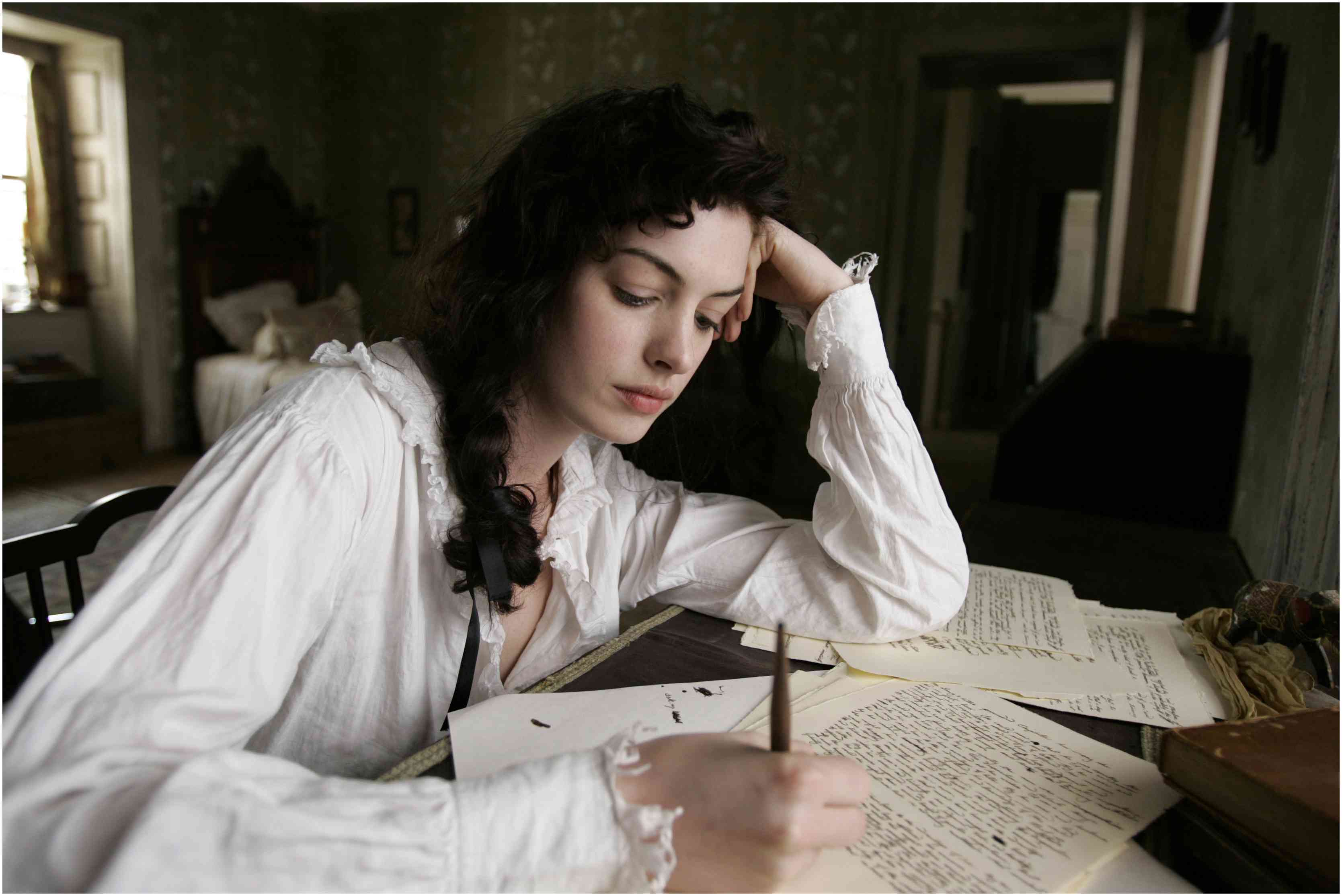
What most impressed me while watching the 2007 movie Becoming Jane the other night were those scenes showing Jane Austen, as played by Anne Hathaway, writing. I think that is what I will remember most about the picture.

To be sure, watching writers write is not most people's idea of entertainment. Writing can be enjoyable, even exciting work -- I write this blog for fun, after all -- but watching somebody write is nothing special. During my career in newspapers, I felt a little sorry for those teenagers who, on Career Day, would come in to watch reporters and copy editors at work. Observing reporters on a beat might have been interesting, but watching them actually write their stories must have been torture. It would have been more exciting, and probably more educational, for students to observe somebody paint a house, pick up garbage or even make french fries at a local fast-food restaurant.

Yet those scenes showing Jane Austen writing were, I thought, both important to the story and, in a way, captivating. The movie is about Austen's brief romance that ends unhappily, leaving her to devote her life to her stories. When we watch her write, sometimes staying up most of the night to write page after page, we witness more passion and commitment than we see in her scenes with her lover. We get an understanding of how Jane became Jane.

I contrast Becoming Jane with a couple of other movies about writers I've seen in recent months, Shadowlands and Midnight in Paris. The former is about C.S. Lewis, the latter about a writer, played by Owen Wilson, transported magically to Paris between the wars, where he encounters Gertrude Stein, Ernest Hemingway, F. Scott Fitzgerald, T.S. Eliot and others. Were you to watch these two movies without benefit of sound or subtitles, you might never guess they were about writers. We see Wilson carrying a manuscript around, but there isn't much actual writing shown on the screen. It is like watching a movie about Babe Ruth without any scenes showing him swinging a bat.

I think Shadowlands and Midnight in Paris are better movies. I have watched each of them more than once and hope to enjoy them both many more times in the future. Becoming Jane, on the other hand, is more of a once-is-enough kind of film. In one respect, however, this is the superior movie. It actually shows us a great writer writing.

Wednesday, March 20, 2013

It had to be you?

Most stories are told either in first or third person, and for good reason. Storytellers are either talking about themselves or somebody else. In two novels I've read recently, Michael Frayn's Spies and Matthew Flaming's The Kingdom of Ohio, the narrators alternate between first and third persons, although each narrator is talking about himself the whole time. In The Kingdom of Ohio, it comes as something of a surprise that the "I" and the "he" are the same person, while in Frayn's book, "I" usually refers to the adult telling the story, while "he" refers to himself as the little boy the story is about.

When writers use second person, it generally refers to "you the reader." It is seldom used. Korean author Kyung-sook Shin, however, tells the story in her international bestseller Please Look After Mom mostly in second person. The tale is about an elderly woman who goes missing in a Seoul subway station. Her husband boards the train assuming his wife is right behind him. When he finally looks back, the train is underway and she is not there.

Several members of the family narrate their versions of the story, and usually they relate it in second person. The "you" may refer either to themselves or to someone else. Often it gets confusing as to who "you" actually is.

The story is compelling. The family members tell about their part in the long search for Mom, but mostly they look back on their life with her, recalling incidents that take on new meaning to them now that she is missing. As the story unfolds, both you (the reader) and the other family members begin to see that this woman is much more complex than she appears. She has devoted her life to her family, yet she has had dreams and fears and pains and secrets that she has kept buried her entire life.

Please Look After Mom has been a popular novel, and deservedly so. I have to believe, however, that it is more in spite of than because of the author's decision to use second person to tell her story.

Monday, March 18, 2013

Thanks to the bogeyman

The bogeyman may not be real, but his contributions to the English language are. I was surprised in reading Mark Forsyth's The Etymologicon at just how much we owe to the bogeyman, that mythical creature feared by generations of children who believe he comes out from under their beds after the lights go out.

Forsyth reports that a man named Dr. Thomas Brown couldn't get a song called The Bogey Man out of his head while he played a round of golf. He played poorly that day and so, in jest, blamed the bogeyman. This was in 1890. By the 1940s, a bogey had become a popular term meaning one over par.

The use of the word bug to refer to insects is believed to be a shortened form of bogeyman. Some people who woke in the morning covered with insect bites called them bedbugs in reference to the bogeyman. Later other kinds of insects also became known as bugs, Forsyth says.

Before bugs, there were bugaboos, a popular term for bogeymen. A bugaboo was first a criminal slang term for a policeman. Later it came to refer to problems of any sort.

Thomas Edison is credited with first calling a mechanical problem a bug. Nobody knows if there was actually an insect that was the source of Edison's problem or if he just used the term bug in a figurative sense. In any case, we continue to refer to bugs in faulty machinery to this day.

When we're sick, we say we have caught a bug. A wiretap is commonly called a bug. We used to tell our little brothers and sisters to stop bugging us. In short, when something annoying happens, we blame the bogeyman.

Forsyth doesn't say whether Bugs Bunny is related to the bogeyman, but I'll bet Elmer Fudd thinks so.


Friday, March 15, 2013

Pure evil

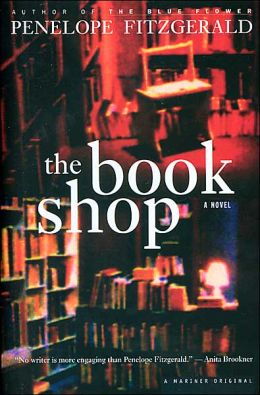
Comedies are supposed to have happy endings, right? So perhaps Penelope Fitzgerald's The Bookshop isn't actually the comic novel it appears to be for most of its 123 pages.

Her wonderful 1979 novel, set in 1959, tells of Florence Green, a widow who invests her inheritance in a small bookstore in Hardborough, an English seaside town that doesn't have one. Her enterprise is opposed almost immediately by Mrs. Gamart, one of Hardborough's leading citizens, who claims she has long intended to open an arts center in the old building Florence purchases for her bookshop.

Florence knows little about running a business, and her only assistant is a 10-year-old girl named Christine, yet the new store prospers, at least at first. Vladimir Nabokov's novel Lolita has just been published, and Florence takes a chance by acquiring a large number of copies for display in her store, and it sells well among the curious citizens of Hardborough.

Yet Mrs. Gamart persists in her efforts to close the bookshop. These efforts, such as persuading an artist to try to get Florence to display his work in her little store and getting her lawyer to send Florence strange threatening letters, provide much of novel's comedy. There is also a poltergeist that knocks around the building periodically.

Yet, in time, Mrs. Gamart comes to represent pure evil. Most villains at least have some reason for their villainy. Criminals robs banks because that is where the money is. Most murderers are greedy or jealous or afraid or just crazy. Mrs. Gamart seems to have no reason for opposing Florence's bookshop, however. She could have purchased the building long before Florence did. There are other vacant buildings available. The structure may be too small for a decent arts center anyway. In the end, she would rather see the building demolished than have it house a bookshop. Sadly, such purposeless evil, sometimes even seeming at first to be comic, is more common in our world than one might think. Many of us ordinary folks may even be guilty of it from time to time.

Fitzgerald, who died in 2000, had an amazing gift for writing relatively small sentences that make a reader sit up and take notice. Here are a few that caught my attention in The Bookshop:

"Culture is for amateurs. ... Shakespeare was a professional."

"Gentleness is not kindness."

"Understanding makes the mind lazy."

"Old age is not the same thing as historical interest. Otherwise we should both of us be more interesting than we are."