Wednesday, August 31, 2016

Fuel of genius

I still believe that books are the fuel of genius. Leaving a million or so in Archer City is as good a legacy as I can think of for that region and indeed for the West.
Larry McMurtry, Walter Benjamin at the Dairy Queen

Besides being a best-selling and Pulitzer Prize-winning novelist, Larry McMurtry is also a long-time dealer in used books. Over the years he has acquired "remnants of twenty-two bookshops" and stored them in various buildings in Archer City, Texas, his hometown. What he doesn't sell he expects to leave behind as a legacy for Archer City, a "fuel of genius."

This notion of books as a "fuel of genius" strikes me as apt. We might compare a stack of books to a stack of firewood. Each is, at least potentially, fuel, one for genius, the other for fire. Yet neither becomes fuel until it is consumed. Those books stored in Archer City warehouses will do little good until somebody actually reads them.

I know from experience how easy it can be to have the notion in the back of our minds that simply possessing a book somehow makes us smarter. Think of all those dutiful parents who, a few years back, bought costly encyclopedia sets thinking they would make their children better students. In some cases that may have happened, but only if the children actually consulted the books when doing their homework. Most of the time encyclopedia just took up shelf space.
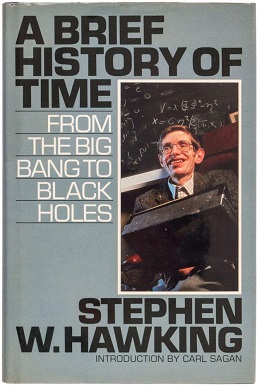
Or consider Stephen Hawking's famous book A Brief History of Time, which became a bestseller a number of years back. How many people who bought the book actually read it? And how many of those who read it understood it? Not many, I'll bet. I am among those who bought it, read it and didn't understand it. Yet we all felt somehow smarter just having the book on our shelf.

When both read and understood, books are a fuel of genius. Not only do they convey information, but they also stimulate thought and creativity. Writers, Larry McMurtry included, create new books by consuming older books and thinking about what they've read. Our best physicians, engineers, lawyers, artists, scientists, etc., had their genius fueled by books. Not books alone, but books along with other forms of experience.

Books are not the source of genius, but just a fuel of genius. They don't start the fire. A genius for one thing or another is mostly something we are born with. Books can only fuel that genius, providing they are first consumed.

Monday, August 29, 2016

Cultivate the four boxes

John McWhorter
There are many, especially among those of us of a certain age, who fear that such developments as e-mailing, texting and tweeting will be the death of good writing. That view is not shared by linguist John McWhorter. Rather, he sees the development of these new forms of communication in a positive light, They complete, as he puts it, our four language boxes.

McWhorter imagines that each language has four boxes that need to be checked if we, both as a culture and as individuals, are to fully develop our language skills. These boxes are formal speech, informal speech, formal writing and informal writing. We all, he argues, should "cultivate the four boxes."

By "formal speech," he doesn't mean in the sense of Edward Everett Horton and other great orators of the past. Except for a very few preachers, professors and politicians, nobody speaks like that anymore. Yet most of us do speak more formally in some situations than in others. We may speak one way on the job, especially when talking to customers or to our boss, than we do with friends. We may also speak differently to our mother, to members of the opposite sex, to teachers and to members of the clergy than we do in casual conversation. Most of us checked off those two boxes long ago.

Writing is another matter, however. That is something most of us learned to do in school, and our teachers taught us to write in a formal, or you might say proper, way. McWhorter, in one of his Great Courses lectures,  points to letters written back home during the Civil War. Not everyone was literate back then, but those who were, even if they had no more than a few years of schooling, wrote in a flowery, very formal manner. That was how they had been taught to write. Today few of us write like that, or are even capable of writing like that, but even so writing tends to be formal in the sense of proper spelling and grammar. In writing, most people use complete sentences, say "going to" instead of "gonna" and so forth.

Until the advent of e-mail, texting and tweeting, however, there was no handy way to check off that fourth box. Virtually all writing, with the possible exceptions of diaries, telegrams and notes passed in classrooms, was formal writing. Now that fourth box has been checked.

Friday, August 26, 2016

Be there in one hour

Twice in the first 20 minutes of Jason Bourne characters call for meetings "in one hour." Later in the movie, Bourne himself calls another man and tells him to be at "Paddington Plaza in 15 minutes." I didn't notice anyone looking at watches, computers, phones or clocks on the wall to see what time it was now so they would know what time the meeting would be. Yet everyone was on time for each of those meetings.

It's only a movie, as Alfred Hitchcock liked to say, yet even in real life one sometimes encounters strange ambiguity with regard to time. Have you ever seen a sign on the door of a small shop that says something like "Back in 30 minutes"? Of course, you just got there and have no idea if the sign was posted one minute ago or 29 minutes ago.  Should you wait, leave and come back later or just leave and forget about it? Small businesses need every customer they can get, so you might think those minding the shop would want to be more specific about when they will return.

And as for those espionage types in Jason Bourne, you would think, with lives on the lines, they would want to be very specific about the times of their meetings, 2 p.m., say, or 1400 hours. A meeting "in one hour" suggests to me a meeting that will start whenever everyone gets there. No rush. Yet the movie is a constant rush.

An old friend is coming to my house today "around 3 o'clock." He may arrive a few minutes earlier or an hour later. No big deal either way. But it's a social call, not business and certainly not the CIA.

Wednesday, August 24, 2016

Someday soon

He had wanted to tell her lies beginning with the word someday.
Karen Joy Fowler, Sarah Canary

The phrase "someday when we're rich" is something of a running joke in my family. That cottage by the lake, that new Lexus, that trip around the world will all be ours "someday when we're rich." We don't play the lottery, so our chances of winning a jackpot are slightly less than that of those who do. There will be no more inheritances. Now that we are retired and living on a fixed income with an ever-shrinking nest egg, that joke is becoming less funny. Or more so. I'm not sure which.

During our week in a Tennessee log cabin, my wife and I watched four Ma and Pa Kettle movies. Whenever Ma asks Pa to dig a well or fix the front door, his response is always some variation on, "I plan to get around to that someday." Then he goes back to his nap, goes fishing or whatever.

We all use the word someday a lot, such as when bumping into an old friend on the street or in the supermarket. "I'll call you someday and we'll get together," someone will say. Sometimes that happens. Usually it doesn't.

Snow White sings, "Someday my prince will come."

Judy Collins sings, "Someday soon, going with him, someday soon."

Dr. Martin Luther King said, "I have a dream that one day this nation will rise up and live up to its creed."

Christians say Jesus will return someday.

Words like someday and one day challenge us to make a choice. Are we hearing a joke or a promise? Is it an ideal, a dream or a statement of faith? Or is it just a pretty lie?

Monday, August 22, 2016

The story is ourselves

"If Sarah Canary is just what she seems, harmless, vague ..." Chin thought Sarah Canary had never seemed harmless or vague to him. Mysterious, rather. Possibly powerful. Certainly purposeful.
Karen Joy Fowler, Sarah Canary

When you make assumptions about people, assume you are wrong. That is one conclusion to be drawn from Karen Joy Fowler's mysterious, powerful and certainly purposeful 1991 novel Sarah Canary.

Sarah Canary, a name just bestowed on her because nobody knows her real name, is mute. She is a "strange and ugly white woman" who shows up in the Pacific Northwest in the 1870s. Everyone has a different idea of who or what she might be. To Chin, who has come all the way from China to work on the railroad, she seems like a ghost, and he feels somehow obligated to watch over her. Soon she is assumed to be mentally ill and, along with Chin, is locked away in an asylum. She soon escapes with Chin and B.J., another of the inmates.

Later Sarah is thought to be a wild woman raised by wolves and is made a part of a traveling show, even though audiences find her disappointingly tame. Adelaide, a suffragette, mistakes her for a woman on the run for killing her husband. Others think her a man in disguise. There is even a suggestion she could be an alien from outer space. Readers never discover who Sarah Canary really is. True to the spirit of her novel, Fowler lets us make our own assumptions and draw our own conclusions.

Yet Fowler's novel is more than a satire on people's misconceptions about other people. It could be viewed as a philosophical treatise on reality itself. Consider the following lines near her conclusion:

"What we say occupies a very thin surface, like the skin over a body of water. Beneath this, through the water itself, is what we see, sometimes clearly if the water is calm, sometimes vague if the water is troubled, and we imagine this vision to be the truth, clear or vague. But beneath this is yet another level. This is the level of what is and this level has nothing to do with what we say or what we see."

And a few pages later:

"We listen to stories and forget that the listening also tells the story. The story we hear is ourselves. We are the only ones who can hear it."

Thus, what I see and hear is not what you see and hear, even if we are in the same place at the same time. It helps explain political differences, religious differences and, in fact, the differences that create every division, every argument, every war. It also explains the power of literature itself. What I read in a story, including this story, is not at all what you will read.

Friday, August 19, 2016

Newsroom lingo

For a press veteran like me, one of the pleasures of reading John Darnton's newspaper-based murder mystery Black & White and Dead All Over is the frequent use of newspaper lingo. As with most enterprises, newspapers have their own terminology, words that mean something to those who work there that they don't mean to most other people. Here are a few of those terms I found in Darnton's novel:

spike - When I started in newspapers back in the Sixties, sharp spikes could be found point up on editors' desks in any newsroom. They are rare, if they exist at all, now that stories are written and edited on computers, not paper. Spike, the noun, became spike, the verb, in newspaper parlance. It refers to when an editor decides not to run a story. One of these spikes is found in the body of the first victim in the novel. An editor is literally spiked himself.

desk - Most people who work in a newsroom have a desk, but the desk commonly refers to the copy desk, or the area where the copy editors do their work.

reefer - This has nothing to do with drugs when used in a newsroom. Rather it is the term for a teaser on a cover page that refers to an inside story.

lede - This is the term for the first paragraph of a story. So why isn't it spelled lead? Well, lead means something else in the newspaper business. It refers to the space between lines. Decades ago, type was made out of lead, and pressmen would put thin strips of lead to stretch out a story to fit the space available. That was called leading.

deadline - Well. everybody knows what a deadline is. We all have them from an early age. But deadlines are taken very seriously in the newspaper business. There are deadlines for reporters to get their stories to editors, deadlines for editors to the production department, deadlines for the presses to start and deadlines to get the newspapers into the hands of carriers. Advertising departments have their own deadlines. Missed deadlines cost money, so the pressure to meet those deadlines can be intense.


Wednesday, August 17, 2016

Murder in the newsroom

One need not have ever worked for a newspaper to appreciate John Darnton's 2008 mystery Black & White and Dead All Over, but it helps. Darnton, who had a long career as a reporter and editor for The New York Times, makes the murder of an editor for the fictional New York Globe the core of his story. And it appears to have been an inside job. There is no shortage of suspects, for not too many staff members liked Theodore Ratnoff. One who did, a woman who was having an affair with him, is soon found dead as well.

Darnton seems as interested in satirizing the newspaper industry as he is in crafting an entertaining murder mystery. He jabs at the trend, already well underway in 2008, for newspaper executives to seriously downsize both staff and news coverage, then wonder why they continue to lose readers. And after the first newsroom murder, the Globe editors bury the story, page-one news for their competitors, on page 32. Newspapers famously hide their own bad news.

The author's handling of newsroom politics and operations often seems better than his handling of the  mystery itself. The latter is interesting enough, but as bodies pile up and the serial killer keeps finding more outlandish ways of getting rid of enemies on the staff, the mystery itself falls into satire.

So it's not the best mystery you are likely to find, but you will find it entertaining, especially if, like me, you have worked for a newspaper.