Friday, September 29, 2017

Tools not rules

So let me repeat, once more: literature not only breaks the rules, but makes us realize that there are none.
Francine Prose, Reading Like a Writer

Writing in Reading as a Writer, Francine Prose says she taught creative writing classes using rules until she realized the best writers broke those same rules on their way to creating masterpieces. Anton Chekhov's classic short story "The Lady with the Dog" is famous for breaking rules.

Another writing teacher, Roy Peter Clark of the Poynter Institute in St. Petersburg, puts the focus not on rules but rather on tools. His valuable guidebook for writers of all kinds, amateurs and professionals alike, is Writing Tools: 50 Essential Strategies for Every Writer, published in 2006. The word essential in the subtitle is unfortunate, for it implies something mandatory, and thus a rule. A tool, on the other hand, is something that may be useful sometimes, but not always. A handyman doesn't necessarily use both a hammer and a screwdriver on every project.

In St. Petersburg I once heard Clark speak on the subject of writing, and he spoke at length on a six-word sentence written by William Shakespeare in Macbeth and discussed early in this book: "The Queen, my lord, is dead." He noted that Shakespeare might have ordered the same six words differently, "The Queen is dead, my lord" or "My lord, the Queen is dead." So what makes Shakespeare's order the best one? Because it places the subject of the sentence near the front, where it usually works best in a clear sentence, and saves the key word, dead, for the end, where it will have the most impact.
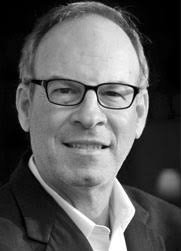
Roy Peter Clark
"Order words for emphasis" is the second tool in Clark's toolbox. Others include "Activate your verbs" (but notice Shakespeare chose a passive verb for his sentence), "Fear not the long sentence," "Vary the length of paragraphs," "Work from a plan" and "Learn from your critics."

Clark advises against reading his book in one sitting, although it may be short enough for some readers to accomplish this. A carpenter in training cannot master all the tools in the toolbox at the same time, and neither can a writer in training, and that includes anyone who opens this book. I took his advice and read one chapter a day, but that still may be too quickly to master many of these tools. Many take time both to digest and to implement, such as that one about learning from one's critics. Even the best writers may never master that one.

Wednesday, September 27, 2017

A novel with detours

Michael Frayn's Headlong (1999) turns alternately from comic novel to lively art history and back again. The novel is terrific, except for those repeated interruptions, and perhaps the same could be said for the art history, if art history were one's purpose for reading a novel.

The story concerns a British philosopher, Martin Clay, who with his wife, Kate, flees to the country to work on his book. She has her own project to work on, plus a new baby to occupy her. No sooner do they arrive at their county house than they are invited to dinner by Tony and Laura Churt, who have a motive other than pure neighborliness. Tony wants a free appraisal of some art he claims was given to  him by his deceased mother. He also wants help selling the art for maximum profit without having to pay the commission to someone like Sotheby's.

The Clays don't want to get involved, that is until Martin glimpses what he becomes convinced is a missing Bruegel masterpiece. Never mind that his wife is the art expert, Martin wants to do this on his own. He concocts a plan to acquire the painting for a fraction of its worth and sell it for a fortune. He convinces himself this would not be cheating Tony Churt but rather a public service.

Of course, things get complicated. For one thing, Laura Churt mistakes Martin's interest in the painting for an interest in her. Why else would he keep coming to the house while Tony was away?

Yet the biggest complication turns out to be all that art history that Frayn inserts into the novel. Although this is a work of fiction, the history appears to be true. If so, it is good stuff, at least for anyone with an interest in art history. For those of us just interested in the story about the Clays and the Churts, it proves an annoying detour.

With less history this could have been a first rate comic novel. With less plot it could have been a first rate art history.

Monday, September 25, 2017

Precious objects and holy spaces

But when all is said and done, holding a printed book in my hands can be a sacred experience -- the weight of the paper, the windy sound of pages turning, like a breeze. To me, a printed book is like a cathedral or a library or a beach -- a holy space.
Anne Lamott, By the Book, edited by Pamela Paul

Anne Lamott
In the same book, E.L. Doctorow refers to paper books as "precious objects." Doctorow and Anne Lamott are authors, so of course they love books, yet clearly this feeling that books are holy spaces or precious objects goes far beyond those whose livelihoods depend on them.

A recent post on Jane Friedman's blog, (janefriedman.com) reports that sales of paper books went up again during the first half of 2017, 2.6 percent over the same period in 2016. Meanwhile ebooks have "lost about $1 billion of their value as a format for traditional publishers since 2013." Since that year ebook sales have been in decline, even though many of us during that same period have been fearing that traditional books will disappear from the scene, obsolete in an age when virtually everyone carries an electronic object in their hands capable of downloading almost any book anyone might want to read.
E.L. Doctorow

Also in By the Book, Sheryl Sandberg, chief operating officer at Facebook, confesses she prefers paper books to ebooks, even though her career is in the tech industry. "I travel with an iPad, but at home I like holding a book open and being able to leaf through it, highlight with a real yellow pen, and dog-ear important pages," she says. Thus it is the sensory experience of holding a paper book, as well as the almost mystical experience that Lamott and Doctorow speak about, that keeps people buying books they can hold in their hands, when ebooks offer convenience and economy.

All this suggests that books, the old fashioned kind, will be around for awhile yet.

Friday, September 22, 2017

Admiring Woody Allen movies

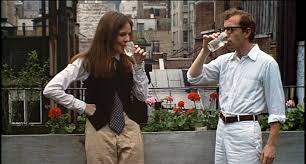
Diane Keaton and Woody Allen in Annie Hall
Not even Woody Allen admires all Woody Allen movies, as we learn from reading Woody Allen: Film by Film by Jason Solomons, an analysis of every movie (up to Irrational Man, 2015) Allen has ever had anything to do with as director, writer or actor, and even documentaries made about him. One thing I like about this book is that while Solomons doesn't admire every Allen film either, he finds something admirable about most of them.

Some people who review films give the impression that, in general, they don't like movies at all. Solomons isn't like this. He loves movies, and Allen movies in particular. Like a parent with a misbehaving child, the offender may disappoint but doesn't alter the love.

Dianne Wiest Mia Farrow and Barbara Hershey
with director Woody Allen on the set
 of Hannah and Her Sisters
If anything, Solomons may use too many superlatives, and not just with the widely acknowledged Allen masterpieces like Annie Hall and Manhattan. Hannah and Her Sisters "is about as perfect at Woody Allen gets," he says. Crimes and Misdemeanors is "perhaps the most skillful and soulful picture of his career." He calls Radio Days "one of his funniest." And so on.

I love it that Solomons loves such gems as Radio Days and Alice that get little attention from other critics when they are ranking Allen's best movies. Solomon's doesn't try to rank them. To use the parental analogy again, it would be like ranking one's children.

Allen, now in his 80s, has been making movies since the mid-Sixties at a rate of about one a year. Few of these movies have been box office hits, and few even have been critical favorites, although Allen has had amazing success on Oscar nights, especially in the screenplay and best actress categories. The parts he created have sweetened the careers of many actresses, especially Diane Keaton, Mia Farrow, Dianne Wiest, Mira Sorvino and Cate Blanchett.

Although his best years seemed to be behind him after such box-office flops as The Curse of the Jade Scorpion, Melinda and Melinda, Scoop and Whatever Works early in the new century, Allen surprised his critics with masterful films like Midnight in Paris and Blue Jasmine in his old age. He's still at work, and who can say what other surprises he may have left.

Wednesday, September 20, 2017

Organized chaos

When we bought a spacious three-bedroom home in the city in the late Seventies, I claimed the unfinished attic for my expanding library. Even with all the stuff that normally accumulates in attics, there would still be plenty of room for lots of shelves and lots of books. Or so I thought at the time. As the decades passed and my books continued to multiply (the result of both my purchases and the fact that publishers sent me a number of books each week for possible review), the available shelf space gradually disappeared. So that led to stacks of books on the floor, stacks that get so high they sometimes topple. See the photograph for a glimpse of a small portion of my library.

To anyone else this looks like clutter. And in fact it is clutter, but to me it is beautiful clutter. I am never more content than when I am reading amid this clutter. The photo shows the view from my reading chair.

As unorganized as my library may appear, there actually is some order to it, and I can usually find the book I am looking for quickly, even if I may have to move stacks of books to reach it. I actually use several different organization systems.

1. Fiction is shelved alphabetically by author.

2. Stacked fiction, mostly novels still unread, also reflects some alphabetical order. The stacks shown in the picture include an F stack (written by authors whose names begin with F), a G stack, an HIJ stack and a JK stack.

3. Biographies, autobiographies and memoirs are shelved in alphabetical order according to their subjects.

4. Other nonfiction is grouped according to subject, more or less. History is here, natural history over there, sports in this corner, show business on that shelf, etc. As books accumulate, this order becomes more and more disorderly.

5. Books are also sorted according to size. Mass market paperbacks are shelved separately from hardcover and trade paperback books, again with the fiction kept apart from the nonfiction. Large books, whatever they happen to be about, are kept on shelves big enough to accommodate large books.

6. Unread nonfiction is kept mostly in stacks behind my reading chair. These stacks lack any order whatsoever, which is not all bad. I never know what treasures I might find when I dig into them.

When we bought a Florida condo a couple of years back, it provided a modest amount of additional book space but also more complication. No matter where I happen to be, I never have access to my entire library. Usually that's not a problem, but sometimes I want a book that happens to be a thousand miles away.


Monday, September 18, 2017

Organizing books

The more books one owns, the more important organization of those books becomes. Also, the more difficult it becomes.

If your personal library consists of just 20 books, or even 50 or 100, there's not much point in sorting them according to author or topic. You will always be able to find the book you are looking for with ease. As libraries expand, however, it becomes necessary to order them in some way, even if it's something as basic as fiction here, nonfiction there.

Hannah Gerson, in an article she wrote for The Millions (themillions.com) in July, suggests 10 ways to organize a bookshelf: chronologically, by date published; by color; artful piles; by subject/genre; geographically; in order of importance and/or goodness; secretively; alphabetically; randomly and autobiographically.

Most of these suggestions make no sense at all to me. A random organization is really no organization at all. Shelving books according to their publication date would soon become a burden, especially if you happen to own more than an armful of books. Imagine returning from a used book sale with 20 volumes and having to find where on your shelves they belong. And how would you find a particular book you are looking for?

By "secretively," she means placing the spines of the books toward the wall. She says this would make it difficult for anyone to borrow your books. Or it could prompt curious houseguests to take virtually every book off a shelf to see what the "secret" is. And again, how would you find the book you are looking for?

Placing books in "artful piles" or sorting them by color has more to do with decor than books. If that is where your priorities lie, then go to it, but why are you reading book blogs?

Autobiographical shelving, Gerson says, was suggested by a character in Nick Horby's novel High Fidelity. The idea is to order your books in a way that makes sense to you but nobody else. Books you read while you were in college might go on one shelf, books in the early years of your marriage might go on another and those from your child-rearing years on still another. We can often remember when and where we read particular books, so this method may actually work for some people. Not for me, however. There are just too many books, many of them still unread.

Shelving books geographically might also work for some people. If a book is about Africa or is a novel set in Africa, then place it on the African shelf. The trouble is, some books are about several different areas, or no area at all. You could shelve it according to where the author is from, but some books have two authors from two different places. This system just seems too complicated to be practical.

Ordering your books by their quality or importance might be workable, except that it would require a value judgment each time you place a book on a shelf. Ranking 100 books might be fun, but a thousand books or more? And what do you do with those books you have yet to read?

That leaves ordering books by subject or genre, the most sensible of the 10 ideas. Gerson herself says she uses this one, although some books don't seem to fit into any category, so she just stacks them in a miscellaneous pile.

Maybe next time I'll write about my own method of library organization.

Friday, September 15, 2017

Literature both contemporary and historical

As I like to say, all literature is contemporary literature. It is read and preserved by those to whom it continues to speak.
Scott Turow, foreword, By the Book

Scott Turow
These words by Scott Turow, the author of popular legal thrillers, could serve as a definition of literature: stories that speak to every generation. Some stories don't even speak to their own generation. Others speak only to the generation in which they were written but have little to say to later ones. Real literature has staying power. It speaks anew to each succeeding generation, although what it says is not necessarily the same to each generation. Thus, as Turow points out, it seems contemporary, however old it may actually be.

It may even take a few generations to discover whether a particular book qualifies as literature or not. Some novels are widely read and appreciated when they are first published, but then are quickly forgotten. Sometimes these books are rediscovered and their literary value recognized years later. With most books, however, once forgotten, always forgotten.

A few weeks ago I read Anthony Trollope's 1879 novel Cousin Henry. The fact that the book remains in print indicates somebody recognizes its literary value. And I found, as I wrote in my review (July 24), that the story spoke to me, even though it was about people in a different time and place and about a situation, a contested will for the inheritance of a large estate, that I will never experience. Even so I could relate to these people and their attitudes and behavior. It seemed contemporary to me.

If all literature is contemporary literature, as Turow argues, I would add that all fiction is historical fiction. When Cousin Henry was written, it was a contemporary novel. Nearly 150 years later we read it both as being about us now but also about a culture that no longer exists. Historical writers today may attempt to capture something of 19th century England, but Trollope did that for us while writing about his own time.