Wednesday, March 30, 2016

We can't all be cowboys

I was a reader, not a cowboy.
Larry McMurtry, Walter Benjamin at the Dairy Queen

Booker T. Washington
"There is as much dignity in tilling a field as in writing a poem," Booker T. Washington said. I have no argument with that, but it does occur to me that many people, perhaps even most people, would flip it around: "There is as much dignity in writing a poem as in tilling a field." That's assuming they even believe that all labor, like all of humanity, is created equal.

My parents, I'm sure, would have favored the second phrasing. My mother in particular. She was the daughter of a full-time farmer and the wife of a part-time farmer, and she would have preferred that her son take more interest in tilling fields than in writing poems or writing anything else. In time she realized I was a hopeless farmer and that if I could make a living doing something else, even writing for a newspaper, so be it.
Larry McMurtry
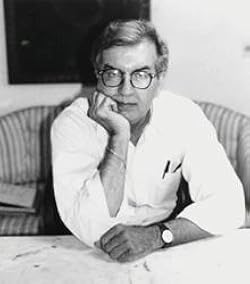
Lately I've been reading Walter Benjamin at the Dairy Queen: Reflections at Sixty and Beyond, one of Larry McMurtry's many memoirs. He grew up on a Texas cattle ranch, and his parents expected him to be a cowboy, as mine expected me to be a farmer. They gave him a pony to ride around the ranch, with an old cowboy to watch over him. He hated that pony. Once he discovered books, not easy since his parents apparently had no books, he was interested only in reading and later writing, not horses and cows. Later he would write about cowboys, most notably in Lonesome Dove, but that doesn't mean he ever longed to be one.

One day a traveling salesman stopped at the McMurtry ranch, and his parents bought a World Book Encyclopedia for their son, intended to aid him with his schoolwork. "In attempting to do the respectable thing -- become a household with an encyclopedia -- my parents had unwittingly unleashed a demon; they may have sensed that all those words, on all those subjects, most of which could have no utility for a young cowboy in Texas, were what was going to take me away from the small safe town and the ranch on the hill," McMurtry writes.

For me the turning point in my life came when my parents returned from a shopping trip to Toledo with a Smith-Corona portable typewriter in the summer before I entered high school. As with the McMurtrys and their encyclopedia, the typewriter was intended to help the kids with their schoolwork. Little did they realize the demon they had unleashed.

Previously I had had no interest in writing, and none of my teachers had ever commented on my ability in this area. But I loved watching my words flow onto paper in neat type, and I was soon writing stories and poems and producing a weekly newspaper and various books and magazines, all with that little typewriter.

In homes all over the world, the sons and daughters of doctors discover they have no interest in studying medicine, the offspring of lawyers and merchants decline to join the law firm or take over the family business; the children of artists decide they prefer something else over art. Most parents, difficult though it may be, eventually come around to agreeing with Booker T. Washington.

Monday, March 28, 2016

'Our only true celebrity general'

It's hard to imagine a more American man than Sherman. And although he died over 120 years ago, it's a safe bet that should Uncle Billy be brought back to life tomorrow, after a short orientation with the requisite hardware and software, he'd find himself right at home.
Robert L. O'Connell, Fierce Patriot: The Tangled Lives of William Tecumseh Sherman

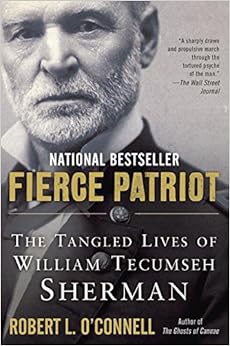
William Tecumseh Sherman was the third most famous general to come out of the Civil War, after Grant and Lee, yet he was arguably the most successful. He may not have won as many famous battles as the others, but his march across Georgia broke the back of the South with amazingly few casualties on either side. His success, not just in war but in most other aspects of his life, had much to do with his adaptability, which is what Robert L. O'Connell is getting at in the above lines from his superb 2014 biography, Fierce Patriot. When circumstances changed, he changed with them.

Another key trait was his outgoing personality. He was a non-stop talker whom people actually liked, and he was skilled at making persuasive arguments. His men loved him. Other officers loved him. President Lincoln loved him. Women loved him. He could easily have been elected president, but didn't want the job. Nor did he want to be the Union's top general. In both war and peace, he was comfortable serving under Ulysses S. Grant.

Most biographies begin at the beginning of the person's life and follow that life right up to death. O'Connell approaches Sherman differently, and it works amazingly well. He divides the general's life into three aspects and then examines each aspect in detail, even though this approach sometimes takes him over the same material more than once. These three parts are Sherman the Strategist, the General and His Army and the Man and His Families, with the first of these taking up eight of the 12 chapters in the book. This first part covers not just the war but also the years spent developing his strategic way of thinking, from his West Point days to his experience as a banker during the California Gold Rush.

The second part reflects on his relationship with his troops, which led to his Uncle Billy nickname. The final two chapters review his complex family life.

His father died when Sherman was young, and the family had to be divided because his mother couldn't support all the children by herself. That's how John, later a prominent U.S. senator, ended up in Mansfield, Ohio, while William was raised in Lancaster, Ohio, by a prominent lawyer named Thomas Ewing and his wife. He later married Ellen, one of the Ewing daughters. She was devoted to her daddy and for years lived more with him than with her husband. It took becoming a Civil War hero for Sherman to become the dominant male in the family, although even then their marriage seemed to require long periods of separation to thrive.

O'Connell's book contains plenty of fascinating detail. He compares military strategy to surfing, and makes the most of that analogy.  He calls Sherman "a prodigy of geography" because of his ability to visit a place once and then remember the exact terrain years later, a useful skill for a general. He tells how just before the Civil War broke out, Sherman organized a military academy in Louisiana, training officers for what would soon become the Confederate Army. Escaped slaves played an important role in Sherman's success in Georgia and elsewhere, providing invaluable information about the whereabouts of food and Rebel soldiers, yet Sherman never gave them any credit. After the war, Sherman encouraged the slaughter of buffalo as a means of pacifying the Indians. And much more.

Fierce Patriot makes fine reading.

Friday, March 25, 2016

Ethical questions

Is morality a factor in the buying and selling of books? I speak not about dirty books or books about building bombs, but ordinary books. The question seems to be not what is bought or sold but how or where it is bought or sold.

Two books I read recently hint at such ethical questions. First there was My Bookstore, a collection of essays by American writers about their favorite bookstores. These are independent bookstores, a seemingly disappearing species. Such stores usually offer better, more personal service than other sources for book purchases, although their prices tend to be higher and their selections smaller than Amazon or Barnes & Noble, for example.Yet some of the authors suggest this is more than just a matter of buyer preference. To them, buying from independent stores is the right thing to do, making purchases elsewhere wrong.

Then in The Little Bookstore of Big Stone Gap, Wendy Welch begins to question whether the used book store she runs with her husband is fair to writers. After all, authors get no royalties from the sale of used books. Publishers pay them only when new copies of their books are sold. So when you buy a used copy of Welch's book, rather than a new copy, you may not be taking money out of her pocket, but you are not putting any money into it.

Some things, like murder, are always wrong, but other actions (or non-actions) can be viewed differently by different people. These book commerce questions fit in the second category. Some people may feel strongly about them, especially authors and independent booksellers, while others may not. I am somewhere in between. I recognize the concerns, but I also feel no guilt about either shopping at Barnes & Noble or purchasing used copies of books still in print.

First question first. Should we try to keep independent booksellers in business by buying our books from them exclusively? Business is all about competition. Whatever business you are in, you must continually make adjustments and innovations to stay competitive. Independent bookstores have certain advantages, as mentioned above. Stores that stress these advantages and are well-managed will survive and prosper, just like many of those stores mentioned in My Bookstore. Other stores will fail. Customers may want a business to succeed, and so make their purchases accordingly, but I don't think they have a moral obligation to do so.

As for selling used books, Welch and her husband are still in business in Big Stone Gap, Va., as far as I know, so I guess we know how they resolved this issue. I'm with them. People sell used clothing, used cars, used furniture, used toys and so forth, so why not used books? General Motors doesn't make any profit if you sell your Buick online or through a classified ad. They made their money the first time the car was sold. Imagine the waste if someone decided we should buy only new products for the benefit of workers and retailers.

Just as some people cannot afford to purchase new cars, so some cannot afford to buy new books. Books bought at used bookstores or garage sales, or borrowed from a public library, provide affordable reading for millions of people, and readers, even readers who never buy new books, benefit those who write them. They talk about the books they've read, they pass their love of reading down to their children, they give new books as gifts that they would never buy for themselves, etc.

Recycling is a good thing, a moral thing, and not just in the sense of putting things out by the curb. The more people who can read a single book, the better for the world, ever if the author may miss out on some royalties.

Wednesday, March 23, 2016

Naturalist or not?

Who was Theodore Roosevelt the naturalist? Was he merely a big-game hunter justifying his hunts under the guise of museum collecting, or was he truly a man in pursuit of something higher in the name of science? To even ask such a question says something of the changed perception of naturalists today.
Darrin Lunde, 
The Naturalist: Theodore Roosevelt and the Rise of American Natural History

With those lines from his epilogue, Darrin Lunde neatly sums up his intriguing new biography of Theodore Roosevelt, The Naturalist.

For a number of years I was a member of the Audubon Society by reason of subscribing to the magazine. I identified the group with protecting the environment and all forms of flora and fauna. I identified them with their annual bird count, as well. I recall then being a bit shocked when I read in a biography of James J. Audubon about how many birds he killed in his search for a few good specimens to mount as models for his paintings. The man we most identify with American birds slaughtered those birds in large numbers?

Lunde explains that the study of animals once meant killing them. Today scientists use cameras to observe animals and sophisticated equipment to track them and study them without actually harming them. Times had already begun to change during Roosevelt's time, slightly more than a century ago. His hunting practices were controversial even then, which is why he hunted very little as president. He left the White House, rather than seek another term, because he wanted to hunt big game in Africa.

Roosevelt loved outdoor adventure and he loved hunting. Because of his poor eyesight, he was a poor shot and did best when hunting large animals. It often took him numerous shots to down an animal, although that was partly due to the fact that he favored a less powerful gun than was ideal. Lunde doesn't whitewash any of this, but he does make the case that Roosevelt was also committed to natural history and to natural history museums, such as the Smithsonian. When he hunted, he usually sent the best specimens back to these museums in New York and Washington. If you visit them today you can still see some of the animals Teddy Roosevelt killed in Africa and in the American West.

Yet when he knew certain species were endangered, such as the American bison and the African elephant and white rhino, he was all the more determined to kill them while there were still some to kill, and not just so their carcasses could stand in museums. He yearned to hunt and kill them while he could. Lunde says Roosevelt killed five northern white rhinos, while his son, Kermit, killed four. "Most were shot as they rose from slumber."

When people talk about Theodore Roosevelt the naturalist today, they usually focus on his creation of national parks and wildlife areas when he was president. They say less about the rest because, if it was controversial a century ago, it is much more so today.

Lunde begins his book by explaining what he and Roosevelt have in common. They both grew up in New York City where they developed a keen interest in natural history. Both hunted and studied taxidermy. Both collected for museums. "Roosevelt and I may have both sought adventure, but our pursuit is no less real or sincere than that of a traditional scientist in a lab coat," he writes.

Monday, March 21, 2016

Science and the afterlife

When "science tackles the afterlife" in Mary Roach's 2005 book Spook, you don't find much in the way of answers to age-old questions, but you do find a good time. Roach, as in other books with mostly one-word titles like Stiff, Gulp and Bonk, seems more interested in satisfying her curiosity and discovering science's lighter side than in hard science. Her college degree was in psychology. Still she imparts some information you are not likely to find, at least not all in one place, in any other science book.

Her most amazing bit of information may be simply that a few scientists really have made serious studies of such questions as: Do human bodies lose weight after death, possibly because of departing spirits? Can mediums really communicate with the dead? Do near-death experiences really give glimpses into heaven? Can cameras, recorders and other devices capture evidence of spirits that cannot be detected by the human senses?

The evidence in these studies proves inconclusive, yet often suggestive. Roach herself, if still skeptical about an afterlife at the end of her book, nevertheless seems hopeful. "I believe in the possibility of something more ...," she writes. "It's not much, but it's more than I believed a year ago."

Thus, Spook is a book both believers and skeptics can take some comfort in. It doesn't prove their position, but neither does it disprove it. Is there life after death? It's a question much of the world ponders during Holy Week. This book leaves most of us where we began, relying not on science but on what we believe, or what we want to believe.

Friday, March 18, 2016

Secrets and lies

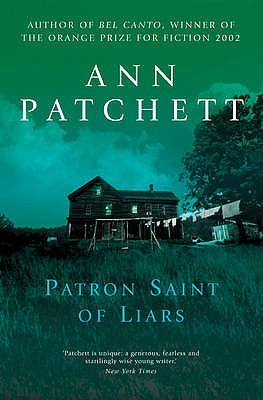
Homes for unwed mothers were built on lies. Compassionate lies perhaps, but lies just the same. Ann Patchett explored the nature of these lies in The Patron Saint of Liars, her first novel, published in 1992. Pregnant girls, usually in their teens, would come to these hideaways, have their babies after a few months, give them away for adoption and then return to their homes and schools, pretending to have just been away visiting a relative.

Rose, the central character of Patchett's novel, leaves the other liars in the story in her wake. She is not unmarried like the other girls. Rather she is married to a nice, devoted man whom she has never loved. She views her pregnancy as a chain that will forever link her to Thomas Clinton. So she climbs into his car and drives from California to Habit, Ky., where a Catholic home for unwed mothers is operated in a former resort. She doesn't mention the husband she left behind.

Then things really get complicated. The middle-aged handyman called Son, himself  a lost soul, falls in love with this tall, pregnant beauty and suggests she marry him so they can raise her baby together. She loves Son no more than she does her other husband, but she has nowhere else to go. Besides she has been helping out the old nun who runs the kitchen and realizes the place needs her, even if they are unwilling to pay her.

The first third of the novel is told from Rose's point of view. In the middle third we learn more about Son's life, how he got shot in basic training before he would even get to a World War II battlefield, how the girl he loved in high school drowned and how he wound up in Habit. Cecilia, Rose and Son's now teen-age daughter, takes over in the final third, the most heart-wrenching because we see how the accumulation of lies impact the innocent. When Thomas Clinton finally tracks down Rose, the story approaches its climax.

In novels about secrets and lies, we expect the truth to eventually be revealed to all. Yet in Patchett's hands, most of those secrets and lies remain in place, the lies perhaps just becoming a little whiter, a little more compassionate. This may be her first novel, but she already writes like a master.

Wednesday, March 16, 2016

The joy of insults

This reader's evaluation is that Sir Oliver was possibly a few envelopes short of a stationery set.
Mary Roach, Spook

Compliments may be more valuable than insults, but you have to admit, insults are a lot more fun. At least they are when not directed at you. Insults also seem to inspire more creativity and wit. There are entire books and websites dedicated to clever put-downs. Few people are interested in collecting compliments, at least not compliments directed at other people. But insults? They are something everyone can enjoy.

Goldie Hawn
My own interest lies in insults of a person's intelligence, or lack of same. Here's one I came across this morning" "Don't let your mind wander. It's too small to be let out on its own."

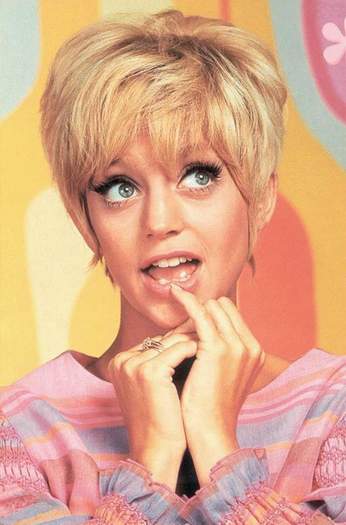
On Rowan & Martin's Laugh-In, Tennessee Ernie Ford once said of Goldie Hawn: "I think some of the bales fell out of her hayloft."

In one episode of the The Carol Burnett Show I saw recently, Mama (played by Vicki Lawrence) got off a string of zingers directed at her daughter, Eunice:

"You've got splinters in the windmills of your mind."

"You're not playing with a full deck."

"Somebody blew your pilot light out."

"You're playing hockey with a warped puck."

I had a lot more in my collection, but I misplaced them somewhere. They will probably turn up tomorrow. You might say I'm not the brightest bulb on the Christmas tree.

Or the swiftest boat in the race.

Or the sharpest tack on the bulletin board.