Tuesday, July 28, 2015

Civil War balancing act


The British hated slavery, but they depended upon the cotton produced by slave labor on plantations in the American South. That devil-and-hard place situation proved ticklish in the 1850s, and for Robert Bunch, Britain's consul in Charleston, it became downright dangerous once war broke out between the North and South.


Christopher Dickey tells Bunch's story in Our Man in Charleston: Britain's Secret Agent in the Civil War South, just published by Crown.

Because he witnessed the buying and selling, as well as the physical abuse, of slaves first hand, Bunch hated slavery even more than most of his countrymen. Yet he was a diplomat, so he behaved diplomatically, trying to maintain cordial relationships with slaveholders while regularly sending frank communications back to London expressing what he really thought about the nasty business. Had these letters been intercepted he could have been killed, for he rarely sent his messages in code, thinking that would only make them seem more suspicious.

Ironically, William Seward, Lincoln's Secretary of State, became convinced Bunch favored secession and was working to get Great Britain to enter the war in support of the South. The South, too, expected active support from Britain, but the British, thanks in part to Bunch, managed to straddle the fence until the war's conclusion gave them what they wanted, both a resumption of cotton shipments and the end of the slave trade in America.

Dickey probably tells us more about Robert Bunch than most of us care to read, and his book can get tedious at times, yet it reveals something about the Civil War probably even most devout Civil War buffs didn't previously know.

Monday, July 27, 2015

Thinking, feeling animals

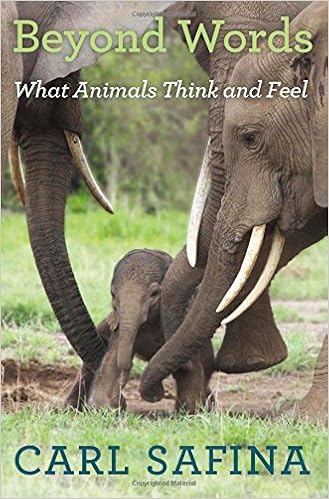
Carl Safina's new book Beyond Words: What Animals Think and Feel would once have been unthinkable for any scientist who hoped to maintain the respect of his colleagues. Until recently, questions about what animals might think or feel were off limits for scientists to even contemplate, let alone write books about. That attitude has changed slowly, thanks to the work of Jane Goodall and a few others.

Safina discusses many species, including the human one, in his book, but he focuses mainly on elephants, wolves, dogs (domesticated wolves) and killer whales. What these animals have in common is their complex social relationships, and this requires more developed brains. "Dolphins, apes, elephants, wolves, and humans face similar needs: know your territory and its resources, know your friends, monitor your enemies, achieve fertilization, raise babes, defend, and cooperate when it serves you," he writes.

He ridicules scientists past and present who fail to see the evidence of animals thinking and feeling that is right in front of their eyes, evidence that most pet owners notice every day. "People who don't see the evidence aren't paying attention," he says. Safina's research took him to scientists who are paying attention, those who have devoted their lives to observing elephants, wolves and killer whales. The scientists tell amazing stories about these creatures mourning the loss of family members, heroically risking their own lives in defense of others, solving difficult problems and, especially in the case of elephants and killer whales, communicating complex messages over long distances.

The author may spend too much time on the soapbox for his own good. He is right to explain how these intelligent and sensitive animals are endangered by shortsighted human behavior, but his repeated slams against humans (such as, "Creating problems seems to be one of the things that 'make us human.'") seem to go too far in the other direction. Instead of claiming animals are far inferior to human, he argues humans are far inferior to animals. Yet humans are the ones he expects to buy his book.

Friday, July 24, 2015

Target audiences

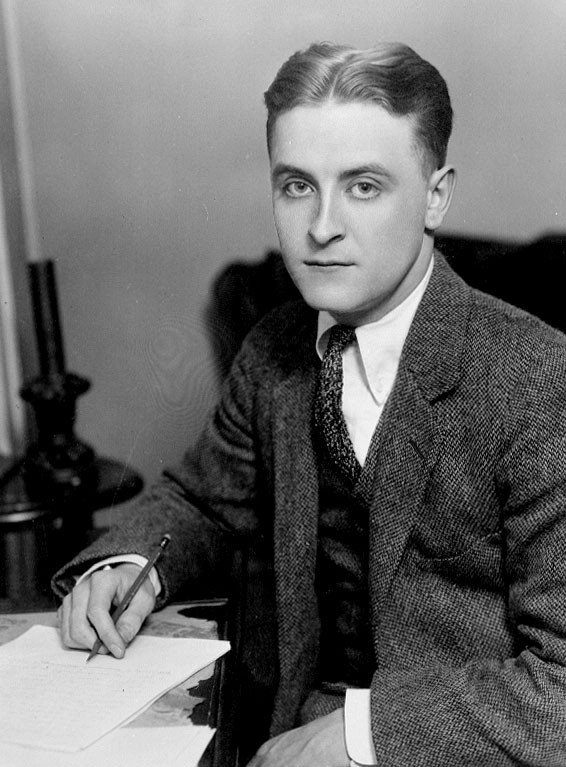
An author ought to write for the youth of his own generation, the critics of the next, and the schoolmasters of ever afterward.
F. Scott Fitzgerald

F. Scott Fitzgerald
Does this seem presumptuous? Most writers are lucky just to reach the youth, or anybody else, of their own generation, let alone critics and schoolmasters of the future. That F. Scott Fitzgerald, with novels like The Great Gatsby and Tender Is the Night, managed to reach all three of his target audiences says much for him. Success like that is rare in the literary world, however. I can think of writers who perhaps by striving for future greatness failed to write anything that drew much of an audience even in their own time.

I prefer John Updike's point of view. He said, "When I write, I aim in my mind not toward New York but a vague spot a little to the east of Kansas. I think of the books on library shelves, without their jackets, years old, and a countryish teen-aged boy finding them, and having them speak to him. The reviews, the stacks in Brentano's, are just hurdles to get over, to place the books on that shelf."

Updike's target audience, while still located in the future, seems more humble, more realistic and even more honorable. All books, after all, should be written for readers, not for critics and schoolmasters. Printed on paper and placed on shelves, they are intended to outlive their authors. Whether any future reader will ever discover them and take the time to read them is the question.

At a Friends of the Library book sale in my town last weekend, I noticed all the library discards on the shelves. These are the books the library removed from circulation to make room for newer books. I was particularly saddened when I noticed Michael Frayn's novel Spies among the discards. This is a wonderful book, published in 2002, that reads like an espionage thriller even though it is about two little boys just pretending to be spies. Now no "countrysh teen-aged boy," or anyone else, is going to be able to find it in this library ever again. That's too bad, not just for Michael Frayn but for all those potential readers, as well.

Wednesday, July 22, 2015

Our expanding vocabulary

The publishing industry, like every other industry, has its own vocabulary, which keeps expanding year by year. Leafing through William Brohaugh's English Through the Ages (1998), focusing mainly on words in the Literature/Writing category, I was surprised that some words are as recent as they are, while others have been in use much longer than I would have guessed.

It's no surprise that terms like desktop publishing and graphic novel weren't coined until the 1980s or that electronic publishing and self-published weren't used before the 1970s. Investigative journalism may have been done before Watergate, but not until the 1970s was that term actually used.

But a  coffee-table book wasn't called that until the 1960s, which surprises me. The terms pop-up book, speed-reading, legal pad and pulp magazine also were unheard until the 1960s, according to Brohaugh, even though the age of the pulp magazine was nearly over by the 1960s. I was surprised to learn that word processing dates back that far. Brohaugh confuses me when he says the term procedural, in reference to mystery novels, wasn't used until the 1970s, but he says police procedural was known in the 1960s.

Going back further we find the 1950s gave us centerfold (no surprise there), as well as both hardback and softbound. I am shocked that the terms fine print and copyedit are that recent, however.

The 1940s produced comic book, think piece (I would have guessed a later date), cover story and foreign correspondent. The Alfred Hitchcock film Foreign Correspondent was released in 1940, so unless Hitchcock himself coined the phrase, surely it must be older than that. The phrase writer's block also dates from this period of history.

By 1940 people were saying talking book (no surprise if you have seen the movie Places in the Heart), field guide, library card and photojournalism. Only the last term seems a bit out of place for that decade.

Go back another decade to the 1920s and we find newsmagazine (a surprise), bookmobile (another surprise), press and whodunit. That decade also gave us dust jacket, fan magazine, ghostwrite and newscast. A couple of terms from that decade, fictioneer and magazinist, have already dropped out of use.

By 1920 people were already saying comic strip, subplot, rhyme scheme, newshound, byline, superhero and blurb.

By the end of the 19th century they were using such terms as four-letter word, mumbo jumbo and weasel word. This period also gave us journalese, Americanese, telegraphese and officialese, which shows how you can have fads in vocabulary just like in anything else..

The middle of the 19th century produced a number of words still in use today. These include science fiction (in use by 1855, though I would have expected a later date), folktale, booklet, clothbound, book review (by 1865), potboiler, funny paper and scoop.

Earlier in that century someone coined punctuate, hyphen, exclamation point and past tense, making you wonder what terms were used for these things before then. That period also gave us figure of speech and cuss.

Go back to the 18th century and you find lyricism, dialogue, magazine, autobiography, circular, literature, poetic license and bookstore. The 17th century produced character, memoir, newspaper, biography, font, journalist, alphabetize and plot.

I could keep going. Some of the earliest English words in this category include such basics as book (by 725), verse (by 900), read and write (both also by 900).

Vocabulary, like culture itself, is a product of many generations, each one adding something new to what is already there.

Monday, July 20, 2015

Read at an appropriate speed

Books should be read at the speed they deserve.
James Salter, paraphrasing Jacques Bonnet
in his introduction to Bonnet's book, Phantoms on the Bookshelves

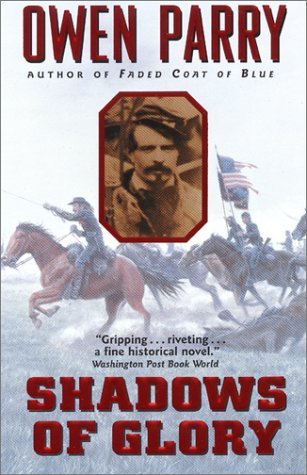
These words came to mind soon after I started reading Owen Parry's Civil War mystery Shadows of Glory, when it took me two days to read the first 12 pages. Now this is a murder mystery, not something by James Joyce or Marcel Proust. Even so, the rich language of the opening chapter deserved to be taken slowly and reread a time or two. I took seven notes during those first 12 pages, further delaying my progress. Here are a couple of passages I noted:

"Twas then I saw her, that woman who would reach into our souls. Well to the rear she stood, beyond the want of the wind-scraped faces -- narrow as lies -- and the pair of worried police fellows, their slouch hats wreathed with snow."

"Her wet eyes were as dead as her husband's body, and she smelled of milk and misery."

Owen Parry, the pen name of Ralph Peters, a retired soldier who also writes novels under his own name, has a gift for descriptive writing, especially in the flowery language of the mid-19th century. I thought it was worth taking my time to get through those opening pages. After that, fortunately, Parry lays off the description and moves into the plot, allowing me to pick up the pace of my reading.

Some people pride themselves on being able to knock off a 400- or 500-page novel every day or two. Of course, these novels are usually thrillers by the likes of David Baldacci or James Patterson, books that are written to be read quickly. Sometimes quite literally, you can't put them down. These people seem to get uncomfortable when they find themselves stuck with a book that requires a slower pace. They don't want to have to spend a week or more on the same book. That's too bad because some books, including some of the best books, need to be taken slowly to fully appreciate them. Some books, or at least some passages of some books, need to be read more than once.

I enjoy a Baldacci novel every year or so. I get pleasure out of being able to polish off a thick book in just a few days. Yet I wouldn't want a steady diet of this kind of books. Some books, like some meals, need to be consumed slowly and savored.

Friday, July 17, 2015

Criticizing the critics

Alfred Kazin
If critics often have harsh things to say about writers, writers can be just as harsh in their criticism of critics. Sometimes more so. Paul Hendrickson writes in Hemingway's Boat that noted literary critic Alfred Kazin, writing in The New Yorker, said of Ernest Hemingway's new book, Across the River and into the Trees, "(I)t is hard to say what one feels most in reading this book -- pity, embarrassment that so fine and honest a writer can make such a travesty of himself, or amazement that a man can render so marvelously the beauty of the natural world and yet be so vulgar..." In a letter to Harold Ross of The New Yorker, a letter which may never have actually been mailed, Hemingway wrote, "Please TELL KAZIN (if that is his real name) TO GO HANG HIMSELF (Will Furnish Worn Out Rope From the Boat)."

Well, that was Hemingway for you. His comments about other writers and their work could be crueler than anything critics might have written. About James Jones, author of From Here to Eternity, he wrote in a letter to publisher Charles Scribner, "I hope he kills himself as soon as it does not damage his or your sales." Of Thomas Wolfe, he wrote, "Tom Wolfe was a one book boy and a glandular giant with the brains and the guts of three mice." Of F. Scott Fitzgerald, he said, "Scott was a rummy and a liar and dishonest about money." To his credit, at least, these comments were written to third parties and not published in The New Yorker.

Jon Winokur collects some comments from writers about critics in his book Writers on Writing. Here is a sampling:

A critic is a gong at a railroad crossing clanging loudly and vainly as the train goes by. -- Christopher Morley

To literary critics a book is assumed to be guilty until it proves itself innocent. -- Nelson Algren

Critics sometimes appear to be addressing themselves to works other than those I remember writing. -- Joyce Carol Oates

Asking a working writer what he thinks about critics is like asking a lamppost what it feels about dogs. -- John Osborne

Criticism is a study by which men grow important and formidable at very small expense. -- Samuel Johnson

Writing criticism is to writing fiction and poetry as hugging the shore is to sailing the open sea. -- John Updike

Why did all these giants descend on me and my little stories? I wasn't doing anything of national import. All I was trying to do was entertain the public and make a buck. -- Mickey Spillane

Wednesday, July 15, 2015

Our reading biases

In the case of The House of the Seven Gables, I know perfectly well why I have never read it -- I hate people from Massachusetts...
Joe Queenan, One  for the Books

OK, so maybe we are remarkably free of bias when it comes to people of other races, other religions and other sexual preferences, but chances are there is one area where our prejudices come through, and that is in our reading. However much we may read, we can still read only so many books in one lifetime, and so we must make choices. We must discriminate, even if our reading biases, like the one Joe Queenan expresses above, don't always make sense.

Queenan actually mentions quite a number of reading biases in One for the Books. "I will not read books where the main character attended private school," he writes. A little bit later, he says, "I also will not read books by P.G. Wodehouse, a poncey aristocrat who played footsie with the Nazis during the fall of France." Still later, "I avoid at all costs books about melancholy WASPs, teens with social anxiety disorders, and immigrants who simply will not take no for an answer."

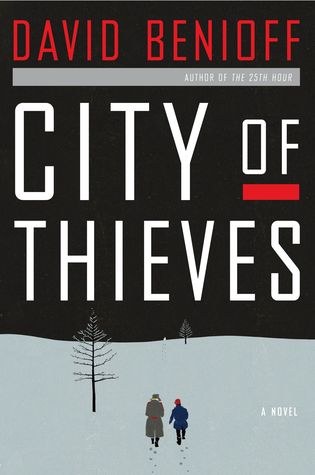
He says he started to read David Benioff's novel City of Thieves with enthusiasm, but decided he didn't like it on page two when the narrator reveals that his grandfather, the story's main character, came to America after the war and became a Yankee fan. Queenan thinks the character should have become a Dodger fan, and his choice of teams ruined the whole book for him. He adds, "I also refuse to read books whose characters or authors have any affiliation whatsoever with the Dallas Cowboys, the Los Angeles Lakers, the Duke University men's basketball team, the University of Southern California football team, or Manchester United, the Yankees' vile, English, soccer-playing twin."

Queenan may be a master of overstatement, but I suspect his reading prejudices are real, just as they are real for most of the rest of us. These prejudices may or may not make sense, but they do, in a way, serve a vital purpose. They significantly lighten the task we face, when entering a bookstore or library, of finding something to read. When we can instantly eliminate certain authors and certain topics from consideration, it makes our choices so much easier. Sadly, however, it means we deny ourselves the pleasure of reading some very fine books, like, for example, City of Thieves and almost anything by Wodehouse.