Leafing through Tom Dalzell's Flappers 2 Rappers: American Youth Slang, I stopped leafing and started reading when I reached the 1960s, the time of my own youth. I found myself sorting the various slang terms into groups.
Slang I don't remember ever hearing, either then or since
all woke up - Well informed on the latest styles and fashions. (Maybe that's because I have never been well informed on the latest styles and fashions.)
bad motorcycle - A person who is cool but manipulative.
bag some food for the brains - Study hard. (I was in college during the Sixties, but I'm pretty sure I never heard this term.)
eatin' the grapes right off the wallpaper - Very disturbed.
messy attic - A confused or distracted mind. (I like this one and wish I had picked it up at the time.)
submarine races - Lovers lane.
There are dozens more, but that's a good sample.
Slang I knew but would have never used
burn rubber - To leave quickly. (I tended to avoid slang that sounded like slang.)
make the scene - To visit, to stop by. (To this day I recoil at that phrase.)
sock it to me - let me have it.
You ain't front page news - You're not as cool as you think you are.
Z's - Sleep.
Slang I actually used
ace - To do very well. (Back in college, we all spoke about acing tests, although I always assumed it meant getting an A, not just doing well.)
check it out - To listen, to investigate.
hairy - Difficult.
rinky-dink - Trivial.
shot down - To be rejected.
womp - To defeat soundly.
Slang still used today
bod - Body or physique.
boob tube - Television.
jock - An athlete.
lame - Out of style, pathetic.
moon - To expose one's buttocks
straight - Honest, on the level.
tennies - Tennis shoes.
Last night I happened to watch an episode of The Beverly Hillbillies from the 1960s in which the Clampetts come to the aid of a hipster who, because he speaks only in slang they cannot understand, they assume to be mentally ill. Youth slang begins with the purpose of separation, the young from the old, the cool from the uncool. Eventually the slang terms age right along with those who use it, and they become part of common speech.
Friday, October 7, 2016

Wednesday, October 5, 2016
How movies benefit literature
More people watch movies than read novels, yet the movie industry still benefits novelists. Let us count the ways.
1. The sale of movie rights keeps writers writing.
It can take months, even years to write a novel. For full-time writers, that can mean a long time between publishers' advances (if any) and royalty checks (if any). When authors can sell movie rights to one of their novels for a good sum, that can be enough to feed their families while allowing them time to write their next book without having to look for a job.
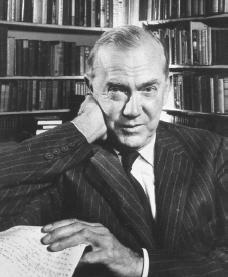 Graham Greene hated most of the movies made from his novels, but he took a philosophical view. "You take the money, you go on writing for another year or two, you have no just ground for complaint. And the smile in the long run will be on your face. For the book has the longer life." Greene wrote this before Turner Classic Movies, DVDs and Netflix made it possible for movies to live forever, but even so his viewpoint is sound. When an author sells the rights to his novel, the director then has the right to change the plot, change the characters and even change the title as desired. Whether the movie succeeds or flops, the author still has the money to continue writing. And the quality of the movie does not affect the quality of the novel.
2. Novelists are in demand as screenwriters.
This is another way Hollywood provides writers with income to supplement their writing careers. Sometimes authors are asked to write the screenplays for their own novels. Other times they are asked to adapt someone else's novel or to write original screenplays. They may be invited to revise another person's screenplay or to collaborate with other screenwriters. This can be a frustrating life for a writer, who feels Hollywood is pulling him away from his novel writing even as it is giving him the money to do it.
Among the many novelists who have spent time as screenwriters are William Faulkner, Aldous Huxley, William Goldman, James Agee, Larry McMurtry, Mario Puzo, Michael Crichton, Nick Hornby, Raymond Chandler and John Steinbeck. Some have begrudged their time spent in the film industry, while others, like McMurtry, treasure it for it has given them money to pursue their first love, while in some cases providing them with ideas for new novels. (Consider McMurtry's Loop Group, set in Hollywood.)
3. Movies can help sell more books
Not that movies adapted from novels always boost sales of those novels. I suspect that the long ride of The Girl on the Train at the top of the best-seller lists will soon end now that the movie version is out. Those who haven't already read the novel may feel less inclined to do so after seeing the movie. They already know what happens. But the sales of other novels, those that never became best-sellers, can jump when the film is released and a movie tie-in paperback edition is published. Popular movies can also prompt fans to seek out other novels by the same author on whose work the film was based. I suspect the other novels by Charles Portis, to cite one example, sold much better after True Grit became a hit movie. I know I bought several of them.
4. Some movies celebrate writers and their work.
Consider the Woody Allen film Midnight in Paris in which a fictional contemporary writer finds himself magically transported to Paris before World War II, where he meets Gertrude Stein, Ernest Hemingway, F. Scott Fitzgerald and others. Or consider Shakespeare in Love, The Jane Austen Book Club, Becoming Jane (also about Jane Austen), Miss Potter (about the life of Beatrix Potter) and any number of other movies about writers and books. Even the romantic comedy You've Got Mail could be placed in this group.
Whether or not films about books and about writers increase the sales of books, they nevertheless do honor the world of literature. And that can't be a bad thing.
1. The sale of movie rights keeps writers writing.
It can take months, even years to write a novel. For full-time writers, that can mean a long time between publishers' advances (if any) and royalty checks (if any). When authors can sell movie rights to one of their novels for a good sum, that can be enough to feed their families while allowing them time to write their next book without having to look for a job.
2. Novelists are in demand as screenwriters.
This is another way Hollywood provides writers with income to supplement their writing careers. Sometimes authors are asked to write the screenplays for their own novels. Other times they are asked to adapt someone else's novel or to write original screenplays. They may be invited to revise another person's screenplay or to collaborate with other screenwriters. This can be a frustrating life for a writer, who feels Hollywood is pulling him away from his novel writing even as it is giving him the money to do it.
Among the many novelists who have spent time as screenwriters are William Faulkner, Aldous Huxley, William Goldman, James Agee, Larry McMurtry, Mario Puzo, Michael Crichton, Nick Hornby, Raymond Chandler and John Steinbeck. Some have begrudged their time spent in the film industry, while others, like McMurtry, treasure it for it has given them money to pursue their first love, while in some cases providing them with ideas for new novels. (Consider McMurtry's Loop Group, set in Hollywood.)
3. Movies can help sell more books
Not that movies adapted from novels always boost sales of those novels. I suspect that the long ride of The Girl on the Train at the top of the best-seller lists will soon end now that the movie version is out. Those who haven't already read the novel may feel less inclined to do so after seeing the movie. They already know what happens. But the sales of other novels, those that never became best-sellers, can jump when the film is released and a movie tie-in paperback edition is published. Popular movies can also prompt fans to seek out other novels by the same author on whose work the film was based. I suspect the other novels by Charles Portis, to cite one example, sold much better after True Grit became a hit movie. I know I bought several of them.
4. Some movies celebrate writers and their work.
Consider the Woody Allen film Midnight in Paris in which a fictional contemporary writer finds himself magically transported to Paris before World War II, where he meets Gertrude Stein, Ernest Hemingway, F. Scott Fitzgerald and others. Or consider Shakespeare in Love, The Jane Austen Book Club, Becoming Jane (also about Jane Austen), Miss Potter (about the life of Beatrix Potter) and any number of other movies about writers and books. Even the romantic comedy You've Got Mail could be placed in this group.
Whether or not films about books and about writers increase the sales of books, they nevertheless do honor the world of literature. And that can't be a bad thing.
Monday, October 3, 2016
Esperanto lives, sort of
Ludwig Zamenhof created Esperanto in 1887 with the dream that it would be a language easy enough for everyone to learn so that everyone could communicate, whatever their native language might be. That dream never became reality, yet Esperanto is not the dead language many people assume it to be. Thousands around the world do speak Esperanto, and there is even a village in Brazil where it is the primary language.
Esther Schor describes both Esperanto's past and present in Bridge of Words: Esperanto and the Dream of a Universal Language.
At the end of this book she describes Esperanto as a language that is "radically chosen." And that may describe the problem it has faced since 1887. Except in that village in Brazil and in a relative few families around the world, it is not a language people learn as children. When someone chooses to learn a second language, that language is likely to be the one that will prove most useful. Around the world, that is usually English. In English-speaking areas, it is likely to be French, Spanish or German. Esperanto is a radical choice. If you want to learn the language, you may have to seek out someone to speak it with, which explains the appeal of those Esperanto conferences that Schor visits around the world to interview people who speak the language.
Although Zamenhof dreamed of a universal language, there have since been attempts to give it a narrower focus. Schor tells of those who have sought to make Esperanto the language of Jews, the language of blacks, the language of the political left (it is not by accident that Schor's travels take her to such places as Hanoi, Havana and Eastern Europe), the language of peace, the language of the Baha'i faith and the language of spiritism, among others.
She frequently refers to Esperanto as a movement, which may describe another problem it faces. Most of us want a language that allows us to make statements understood by others, not a language that itself makes a statement.
Esther Schor describes both Esperanto's past and present in Bridge of Words: Esperanto and the Dream of a Universal Language.
At the end of this book she describes Esperanto as a language that is "radically chosen." And that may describe the problem it has faced since 1887. Except in that village in Brazil and in a relative few families around the world, it is not a language people learn as children. When someone chooses to learn a second language, that language is likely to be the one that will prove most useful. Around the world, that is usually English. In English-speaking areas, it is likely to be French, Spanish or German. Esperanto is a radical choice. If you want to learn the language, you may have to seek out someone to speak it with, which explains the appeal of those Esperanto conferences that Schor visits around the world to interview people who speak the language.
Although Zamenhof dreamed of a universal language, there have since been attempts to give it a narrower focus. Schor tells of those who have sought to make Esperanto the language of Jews, the language of blacks, the language of the political left (it is not by accident that Schor's travels take her to such places as Hanoi, Havana and Eastern Europe), the language of peace, the language of the Baha'i faith and the language of spiritism, among others.
She frequently refers to Esperanto as a movement, which may describe another problem it faces. Most of us want a language that allows us to make statements understood by others, not a language that itself makes a statement.
Friday, September 30, 2016
Donald E. Westlake, sci-fi writer

Most of these tales read like Westlake's crime stories transplanted into space or into the future. In one, "The Risk Profession," an insurance claims investigator is sent to an asteroid where a prospector has died soon after making a strike. Was the death really accidental or did his partner murder him?
Yet several of these stories have inventive twists that suggest that, had he wanted, Westlake might have become a first-rate sci-fi writer. In "The Spy in the Elevator," years after a global disaster survivors are still living in giant buildings, each an independent culture and each distrustful of those living in other buildings. One day a "spy" from another building is found in an elevator, and he has something disturbing to say. What's most disturbing is that he may be right.
Anarchaos is clearly the best of these tales. The novel finds Rolf Malone, recently released from prison on Earth, going to the planet Anarchaos to discover why his brother, Gar, has died. The planet's name describes conditions there. Rolf finds anarchy and chaos. Only the fittest survive. His brother was not among them. How about Rolf? A group of men think Gar, as in "The Risk Profession," had made a valuable mining discovery. He left behind a coded message, and they believe Rolf to be the only person able to read it. They will go to any lengths to get him to reveal the secret.
Westlake makes Anarchaos a planet where, like the Earth's moon, one side is always in light and the other in darkness. He uses this feature creatively throughout the story to add to the tension. Another sci-fi twist is a drug called antizone that forces a person to reveal everything he knows while at the same time wiping his memory clean. At one point, eager to forget, Rolf welcomes this drug.
Eventually Rolf decides the entire planet is evil and must be destroyed. The irony is that in his quest he has left a trail of corpses behind, suggesting that if he can manage to leave Anarchaos, the evil will leave with him.
Wednesday, September 28, 2016
Shades of meaning

I have before me an old book called The Synonym Finder, a handier version of Roget's Thesaurus. I had this book on my desk for much of my career, and I continue to consult it on occasion. A synonym is, by definition, a word that means the same thing as another word. Yet as the exchange with my wife illustrated, synonyms aren't always synonymous. Different words, however close they may be in meaning, often mean slightly different things to different people in different situations.
The word sore may have suggested a more severe pain than my wife was experiencing, so she favored aching as the better choice. Or it may have suggested a less severe pain or an external pain rather than an internal pain or some other shade of meaning. I just know that one word correctly described how her foot felt, and the other didn't.
Here are some other synonyms for sore listed in The Synonym Finder: painful, tender, sensitive, raw, smarting, stinging, burning, inflamed, irritated, achy and hurting. You may have used each of these terms to describe a pain, but chances are you have never used all of them to describe the same pain. A stinging pain is quite different from a sensitive pain, which is not the same as an achy pain.
Or take the word stop. Suggested synonyms include pause, desist, cease, halt and quit. Yet each of these words suggests something a little different. A pause, for example, sounds temporary, while quit seems permanent. Words like desist, cease and halt sound more intimidating. The phrase cease and desist implies the two words don't mean the same thing. A border guard might say halt, but the rest of us don't use it much. We probably would be confused if an octagonal sign used any word other than STOP.
The English language has so many words that mean almost the same thing because it has adopted words from so many different sources: Anglo-Saxon, Norse, French, Latin and Greek, to name the main ones. Other languages may be purer, in the sense of being less influenced by other languages, and that can make finding the right word so much easier. There just are not as many options. English vocabulary, however, allows any number of nuanced meanings so that we can say we have a sore foot or an aching foot and
not necessarily mean the same thing.
Monday, September 26, 2016
Great readers don't need lists
But the problem with reading lists ... is that they are all in a sense dead letters, guides for the unadventurous, those without the time or the ambition to hunt around and make discoveries for themselves. The great readers will always know about books that neither the marketplace nor the academy has got around to.
There are great books, and there are great readers. Eventually they will find each other. So Larry McMurtry seems to be saying, and I think he's right.
I share his distaste for reading lists, which can come in a variety of forms. McMurtry makes a distinction between the marketplace and the academy, and so will I. The most obvious marketplace reading lists are those listing bestselling books. Many bookstores even discount bestsellers, giving people an incentive to buy them, thus helping bestselling books remain bestselling books. When these books are eventually published in paperback, their covers will have something like "New York Times bestseller" on the front as a guide for those who prefer to buy books that many others have read and presumably liked. Great readers don't care what other people are reading.
Bookstores may also have displays of staff recommendations, classic books, "books everyone should read" and so forth. Such displays are forms of reading lists.
As for academy reading lists, these would include recommendations by teachers, such as for summer reading, and college professors. Academics also write books and articles discussing books of note, and these can be influential with a certain audience.
Reading lists can take other forms, as well. Reading clubs tell members what to read. Book reviewers make recommendations and often provide a year-end list of the best books. Book blogs, my own included, suggest certain books. Then there are those books with titles like 1,001 Books You Must Read Before You Die.
I don't always ignore reading lists, whatever their form, but I rarely use them as guides for what I should be reading. Rather I just like comparing the lists against my own lists of books read and books I want to read. I love it when a book I enjoyed makes it to someone else's list. And on rare occasions I may even decide a book on someone's list looks interesting and so decide to read it. Great readers don't need reading lists to find great books, but lists can be one more way in which great books can be discovered. A book on a reading list isn't necessarily a bad book anymore than it is necessarily a great book. Great readers just like to decide for themselves.
Larry McMurtry, Walter Benjamin at the Dairy Queen
There are great books, and there are great readers. Eventually they will find each other. So Larry McMurtry seems to be saying, and I think he's right.
I share his distaste for reading lists, which can come in a variety of forms. McMurtry makes a distinction between the marketplace and the academy, and so will I. The most obvious marketplace reading lists are those listing bestselling books. Many bookstores even discount bestsellers, giving people an incentive to buy them, thus helping bestselling books remain bestselling books. When these books are eventually published in paperback, their covers will have something like "New York Times bestseller" on the front as a guide for those who prefer to buy books that many others have read and presumably liked. Great readers don't care what other people are reading.
Bookstores may also have displays of staff recommendations, classic books, "books everyone should read" and so forth. Such displays are forms of reading lists.
As for academy reading lists, these would include recommendations by teachers, such as for summer reading, and college professors. Academics also write books and articles discussing books of note, and these can be influential with a certain audience.
Reading lists can take other forms, as well. Reading clubs tell members what to read. Book reviewers make recommendations and often provide a year-end list of the best books. Book blogs, my own included, suggest certain books. Then there are those books with titles like 1,001 Books You Must Read Before You Die.
I don't always ignore reading lists, whatever their form, but I rarely use them as guides for what I should be reading. Rather I just like comparing the lists against my own lists of books read and books I want to read. I love it when a book I enjoyed makes it to someone else's list. And on rare occasions I may even decide a book on someone's list looks interesting and so decide to read it. Great readers don't need reading lists to find great books, but lists can be one more way in which great books can be discovered. A book on a reading list isn't necessarily a bad book anymore than it is necessarily a great book. Great readers just like to decide for themselves.
Friday, September 23, 2016
Moments of memory
That's the basic difference between price and value: one is calculated in dollars, the other in moments of memory.
When buying or selling homes, cars, toys, furniture or almost any kind of physical object, price and value can potentially come into conflict. The price we are willing to pay or accept as payment may depend upon the value we place on the object because of what Wendy Welch calls "moments of memory." Objects associated in our minds with good memories have more value to us. To buy them, we are willing to pay a higher price. To sell them, we may demand a higher price.
Welch is specifically talking about books. As the owner of a small used bookstore, she recognizes that persons thinking of selling books to create more space in their homes may find it difficult to part with certain books because of the memories attached to them, while customers seeking to replace books they loved in their youth may be willing to pay more than the books are actually worth.
Most of us who have books have at least some of them chiefly because of the memories attached them. They may be worthless in the marketplace, and we may never want to read them again. Yet they are priceless to us, or at least those "moments of memory" are priceless.
I still have a vocabulary book I spent hours with as a child. It shows pictures of ordinary objects with the appropriate word under each. I don't know whether my lifelong interest in words stemmed from that book or whether my interest in that book stemmed from some innate love for words. In any case, that is one of my priceless books.
Another is The Merry Adventures of Robin Hood by Howard Pyle, illustrated by Lawrence Beall Smith. How I loved that book. Today I can't see it on the shelf without sweet memories being triggered.
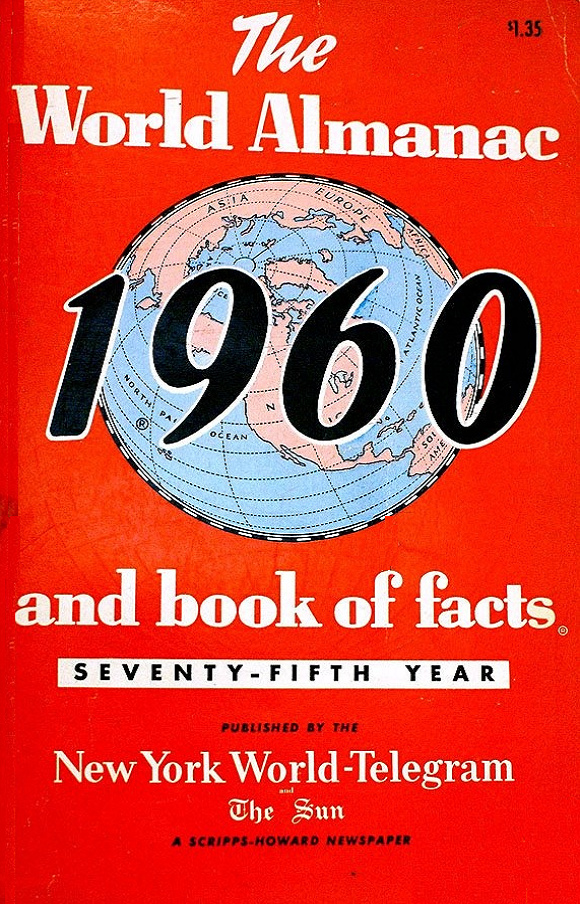 I also have a battered paperback copy of the 1960 World Almanac that I shall never surrender. Today the fine print in that 896-page book is difficult for me to read, but in high school I loved opening it to a random page to see what bits of information I could discover. Let's try it now: "The National Geographic Society, Washington 6, D.C., was organized in 1888 'for the increase and diffusion of geographic knowledge.'" And again: "A Knot is a measure of speed, one knot being a speed of one nautical mile an hour." This book cost $1.35, and I never felt that I needed another, newer edition.
Look through your own library. You will likely find books that have great value to you and books you might sell for a good price. Chances are they will not be the same books.
Wendy Welch, The Little Bookstore of Big Stone Gap
Welch is specifically talking about books. As the owner of a small used bookstore, she recognizes that persons thinking of selling books to create more space in their homes may find it difficult to part with certain books because of the memories attached to them, while customers seeking to replace books they loved in their youth may be willing to pay more than the books are actually worth.
Most of us who have books have at least some of them chiefly because of the memories attached them. They may be worthless in the marketplace, and we may never want to read them again. Yet they are priceless to us, or at least those "moments of memory" are priceless.
I still have a vocabulary book I spent hours with as a child. It shows pictures of ordinary objects with the appropriate word under each. I don't know whether my lifelong interest in words stemmed from that book or whether my interest in that book stemmed from some innate love for words. In any case, that is one of my priceless books.
Another is The Merry Adventures of Robin Hood by Howard Pyle, illustrated by Lawrence Beall Smith. How I loved that book. Today I can't see it on the shelf without sweet memories being triggered.
Look through your own library. You will likely find books that have great value to you and books you might sell for a good price. Chances are they will not be the same books.
Subscribe to:
Posts (Atom)