Wednesday, November 30, 2016

The art of murder

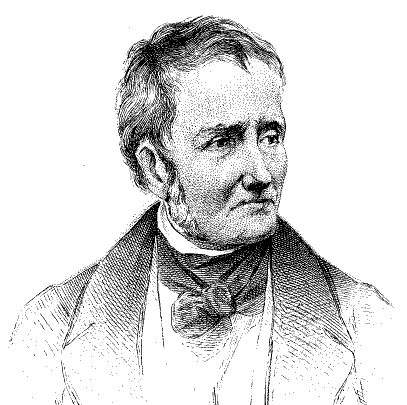
Thomas De Quincey
Writers of historical mysteries have turned everyone from Bertie, Prince of Wales, to Mark Twain to Groucho Marx into an amateur sleuth, but David Morrell's choice of writer Thomas De Quincey as his hero may be the most inspired of them all, even if De Quincey is little known today. If his name is recognized it is probably as the author of Confessions of an Opium Eater (1822) in which he describes his addiction to the opium-loaded drug laudanum after first taking it for pain relief. To support both his habit and his large family, he sold countless essays on a variety of subjects to British publications.

It is another of De Quincey's writings, On Murder Considered as One of the Fine Arts (1827) that Morrell uses as a launchpad for his 2013 novel, the first in a series, Murder as a Fine Art. De Quincey wrote about the infamous Ratcliffe Highway killings of 1811. Morrell imagines that, decades later, the crimes by the Ratcliffe Highway killer are repeated, almost death for death, as if to rub them in De Quincey's face.

At first, De Quincey is himself considered a suspect in the new round of bloody murders. Soon, accompanied by his youngest daughter, Emily, he is assisting Detective Inspector Ryan and Constable Becker in trying to solve the crimes. Or perhaps they are assisting him, so sharp is his mind, at least when he has access to a steady supply of laudanum.

Morrell, a literature professor before he became a best-selling author of thrillers (beginning with First Blood), became a Thomas De Quincey scholar before beginning this series of novels, and it shows in the detail he provides about De Quincey and his times. Also, Morrell provides his readers with a short history lesson at the beginning of virtually every chapter, writing about the London police force, the popularity of laudanum as a pain reliever in De Quincey's day, the spread of cholera in London in the middle of the 19th century and other topics relating to his story.

Murder as a Fine Art may be a violent novel, especially in the initial chapter, but it is an unusually fine mystery, one that may inspire some of us to seek out some of Thomas De Quincey's work.

Monday, November 28, 2016

Celebrate some words

Let's celebrate some centennials today, not of individuals, places or events but of words.

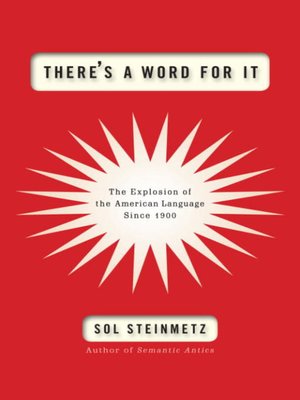
It can be difficult to be certain exactly when words were coined. Often they are used in conversation long before somebody writes them down, but not until they are written down in books or other publications can later scholars assign dates to them. Sol Steinmetz, in his book There's a Word for It (2010), provides lists of words coined, or at least put into print for the first time, every year from 1900 to 2009. So let's look at the words that appeared first in 1916, 100 years ago.

When I see lists of words arranged by their date of origin, I find myself dividing them into three groups in my mind: those I would have thought to be older, those I would have thought to be newer and those that sound about right. So allow me to do that now.

1916 words that seem older
Ambivalent, counterattack (used as a verb), dagnab it, dealership, goof, Midwesterner, multimillion and pastrami.
1916 words that seem newer

Carcinogenic, cryptobiotic, dysfunction, ecotype, environmentalist, homo-erotic, hush-hush, penny-pincher, princessy, punchline, Realtor and sex drive.

1916 words that seem about right

World War I was well under way in 1916, and certain words and phrases from that year appear to have grown out of that war. These include blimp, jarhead, munitioneer, national service, over the top, R.O.T.C., steel helmet and trip-wire.

Actually there are several other words on Steinmetz's list that I don't know where to place on one of my own. These include cuckoo-land, economy size, excludable, low-maintenance, photofinishing, profiteer and well-scrubbed.

Some of the words from 1916 we might have done very well without, but others, especially such handy gems as ambivalent and punchline, are certainly worth celebrating.

Friday, November 25, 2016

Literary prizes for songwriters?

A few weeks ago I mentioned folksinger Bob Dylan winning the Nobel Prize for Literature in connection with Paul Simon's denial that he himself is a poet. I didn't get into the question of whether literary prizes should be given to songwriters. Let's do that now.

A fellow LibraryThing member argued in a discussion group that Dylan's "not a literary figure, he's a songwriter and there are plenty of venues that celebrate excellence in music." That is a good point. Is there a hall of fame for poetry the way there is for rock and roll music and country music? Are the National Book Awards televised the way the Grammys and other music award presentations are? And are there as many categories so that one writer can win multiple awards and many writers can win at least one? (Of course, because there are so many categories of Grammy Awards, poets and other literary figures have sometimes won them. Grammy winners have included Maya Angelou, James Dickey, Carl Sandburg and Rod McKuen.)

Yet just because a poem is set to music does not mean that it is no longer a poem. There was a time when virtually every literate person read poetry. Today relatively few people do, but they do listen to it. And so most of our poets, like those who wrote the psalms in biblical times, set their poetry to music. I argued in my Nov. 2 post that Paul Simon is a poet. I could make a similar case for Leonard Cohen, who died recently, Dar Williams and many other singer-songwriters.

The quality of the poetry should not be judged on the basis of the music or the voice of the singer or the writer's celebrity. If you are going to give literary prizes to songwriters, it had better be because the words themselves and the strength of their imagery make them deserving. It would not do to start handing out literary prizes to celebrities in the music world at the expense of those who write quality books and poems in relative obscurity. But an occasional Nobel Prize for a Bob Dylan? I have no problem with that.

Wednesday, November 23, 2016

A writer who reads

Larry McMurtry, a prolific writer who also happens to be a prolific reader, surprised me when he observed in one of his books that many writers don't read all that much. Visiting in authors' homes and looking over their shelves, he said he often sees few books other than those they have written themselves or that have been sent to them by publishers hoping for some kind words to use as a blurb. I had always assumed that reading, whether for research or inspiration, was a prerequisite for writing.

Laura Lippman
One writer, other than McMurtry, who does read a lot is Laura Lippman. I have commented on this in past posts. Her crime fiction has numerous literary references, and in her personal appearances she often mentions books she has read. So when I read Baltimore Blues, her first Tess Monaghan novel, I decided to make note of her literary references. There turned out to be more than I expected.

She places three quotations at the front of the novel. One is from H.L. Mencken, "Of all escape mechanisms, death is the most efficient." Another comes from a letter written by a Baltimore doctor. later published in an 1873 book. The third consists of lines from A.E. Housman's poem, Terence, This Is Stupid Stuff. That Housman poem comes up twice in the 324-page novel, and another Housman poem is mentioned as well.

W.H. Auden
During the course of her story, she mentions, usually through her characters, Thomas Hardy, James Thurber's Walter Mitty character, John Steinbeck's Of Mice and Men, James M. Cain's The Postman Always Rings Twice, Double Indemnity and Mildred Pierce (Cain, in fact, pops up again and again in the novel), W.H. Auden, W.B. Yeats, Ernest Hemingway, John Milton, James Joyce, Marcel Proust, A.S. Byatt, Edgar Allan Poe and Don Quixote.

In addition, Tess works part-time in her aunt's used bookshop, and the Enoch Pratt Free Library in Baltimore is referred to as "a place of wonders to Tess."

All this is in a murder mystery that could be classified as light reading. Best of all, these many literary references contribute to the plot without getting in the way.

Monday, November 21, 2016

The first Tess Monaghan

Laura Lippman has written a dozen Tess Monaghan mysteries. I had read a couple of them with pleasure, but I was eager to read the very first in the series, Baltimore Blues, published in 1997. It reveals how Tess, like Lippman herself a former Baltimore newspaper reporter, becomes a private investigator.

It's not by design. Having lost her reporting job when her newspaper folded, she works part-time in her Aunt Kitty's bookstore and looks around for a new job, maybe a new career. Then her workout buddy Rock offers to pay her to follow his girlfriend, Ava Hill, who has been acting strange lately. It seems like easy work, but Tess's efforts end up getting Rock accused of murdering a lawyer she suspects of having an affair with Ava. Then Rock's lawyer hires Tess to work for the defense team with some investigative work, to play Paul Drake to his Perry Mason.

Tess turns out to be a better detective than she thought at first, although still not good enough to actually solve the case until the killer, thinking she knows more than she actually does, comes after her.

Despite the ending, something of a cliche in detective fiction, Baltimore Blues makes enjoyable reading. The characters, especially Tess Monaghan, are vividly drawn, the story moves at a steady pace and the side stories actually add interest rather than seeming like filler. So I'm glad I sought out Baltimore Blues. Now I must find a copy of Charm City.

Friday, November 18, 2016

Where do writers come from?

The best American writers have come from the hinterlands -- Mark Twain, Theodore Dreiser, Jack London, Hemingway, Faulkner, Wolfe, Steinbeck. Most of them never even went to college.
Edward Abbey, A Voice Crying in the Wilderness

The title of Edward Abbey's last book, written or rather compiled at the end of his life, is more than a metaphor, He spent much of his life in the wilderness of the American West. He had an aversion to citified, over-educated people, so it was perhaps natural that he admired those American writers who were more rural than urban, more self-educated than college-educated.

But was he right? Do the best writers come from the hinterlands? Have the best writers avoided college? He compiled quite a list of great American writers, but one could also compile an impressive list of great American writers who grew up in cities like New York, Chicago and Los Angeles and who attended college and, in some cases, taught college courses.

What Abbey perhaps should have said is that where one is from or how much education one has received has nothing, or virtually nothing, to do with writing talent. Either you've got it or you don't.

Thomas Wolfe
To pay the bills, many gifted writers teach college creative writing classes. These classes may help talented students become better writers, mostly by giving them incentive to actually write and then giving them feedback on what they have written. But if you can't write well on the first day of class, chances are you are still not going to be able to write well on the last day of class.

Because great writers are born, not made, they are likely to be born anywhere. At the time the writers on Abbey's list were born, there were probably more Americans born in rural areas than in urban areas. So that's where most of the best writers came from. Today more babies are born and raised in cities, so most great writers living today and in the future will probably be more urban. Also, more young people attend college today than at the time Twain, London, Faulkner, etc., lived. So more writers are going to be college-educated.

All of this means nothing. Great writers can show up anywhere at anytime. They probably should learn to read and write at some point, but after that, education doesn't matter much either.

Wednesday, November 16, 2016

When the lights go out

For the most part, public reaction to the possibility of a massive cyberattack has not even risen to the level of apathy.
Ted Koppel. Lights Out

A power outage lasting a few minutes or even a couple of hours can be an annoyance or an inconvenience. It might even be fun lighting candles and sitting together in the dark for a short time. I recall one outage that served as a nice excuse to take my wife out of town for dinner. But what if the power went out over a large, multi-state area for weeks, even months. How would most of us -- dependent upon electric power for staying warm (or cool), preparing food, doing our jobs and communicating -- survive? Imagine the chaos. Imagine the potential for violence. Imagine the suffering and death.

Ted Koppel does more than imagine all this in his new book Lights Out. He asks the tough questions, often of those in the energy industry and government who have yet to take such questions seriously.

Koppel refers to the Internet as "a weapon of mass destruction." Already, we know, hackers in Russia, China, North Korea, Iran and elsewhere have created havoc downloading supposedly secure files and shutting down websites. It may only be a matter of time before someone manages to shut down a massive power grid. Why fly airliners into skyscrapers when terrorists can do so much more damage a half a world away just by punching in the right code on a keyboard? It is only a matter of figuring out how to do it.

The energy companies, still largely self-regulated, continue to give a higher priority to profit than security, the author says. Meanwhile Congress, bogged down in politics, has other priorities, as well. Writes Koppel, "the individual can't do anything and the government won't do anything."

Actually there is something the individual can do. So far, those self-reliant folks in places like Wyoming and members of the Mormon church are the best prepared, not because they expect terrorists to cut off their power but just because being ready for disaster is what they do. Koppel devotes three of 20 chapters to the Mormon practice of stockpiling enough food and other supplies to last a year.

It's an example most of us could follow if we would only buy a little extra food and other supplies during each trip to the market and store it under beds and behind sofas. If the lights ever do go out like Ted Koppel warns us they will, such stockpiles could save our lives.