Each year one novel seems to stand out in my mind. One year it was Ann Patchett's State of Wonder, for example. Another year it was The Goldfinch by Donna Tartt. I am not talking about the best novel published that year, as I don't read nearly enough new novels to make a judgment like that, but just the best novel read that year.
Singling out one novel is tough this year, not because there were no outstanding novels but because there were so many.
Reading Jess Walter's Beautiful Ruins was a beautiful experience, even if it didn't wow me quite as much as Citizen Vince did the year before. Another Ann Patchett novel, an early one called The Patron Saint of Liars, impressed me greatly, as did Richard B. Wright's Clara Callan and two novels that actually were published in 2016, Sweet Caress by William Boyd and As Good as Gone by Larry Watson. The Jack Matthews novel reviewed here a couple of days ago, The Gambler's Nephew, was an incredible pleasure to read.
Not quite as good as these six, but still very good were The Sleepwalker's Guide to Dancing by Mira Jacob, Yellow Blue Tibia by Adam Roberts, The Land of Decoration by Grace McCleen and two thrillers by Joe R. Landsdale, The Thicket and Edge of Dark Water.
So it was quite a year for reading, and that doesn't even count such nonfiction pleasures as Erik Larson's The Devil in the White City, Robert L. O'Connell's Fierce Patriot and Neal Thompson's A Curious Man.
The choice is hard, but I am going to make it anyway. Here are my top three novels of the year:
1. The Patron Saint of Liars
2. The Gambler's Nephew
3. As Good as Gone
Friday, December 30, 2016
Wednesday, December 28, 2016
Best for last
| Jack Matthews |
I took two creative writing classes taught by Matthews when I was a journalism student at Ohio University in the mid-1960s. He was about 40 then and had a book of short stories, Bitter Knowledge, and a book of poetry, An Almanac for Twilight, under his belt. Soon he was turning out novels like Hanger Stout, Awake!, Beyond the Bridge and The Charisma Campaigns, a favorite of mine. These were good novels, but not great, and despite a nomination for a National Book Award (for The Charisma Campaigns), he never achieved the literary big time. After 1983, although he continued to write both fiction and nonfiction books, these were published mostly by small presses and university presses.
Matthews died three years ago at the age of 88. His last novel, The Gambler's Nephew (Etruscan Press) was published in 2011, just two years before his death. So I didn't expect much when I started reading it a few days ago, yet I was blown away. This is an incredible novel that deserves more attention than it probably will ever receive.
The story begins in the 1850s in the Ohio River town of Brackenport, where a businessman named Nehemiah Dawes has such strong views about slavery and grave robbery that people tend to avoid him even if they agree with him. One day Dawes sees two men force a runaway slave into a boat to take him back to the other side of the river. Dawes has his gun with him and decides to back up his big talk by shooting one of the slavers. Instead he kills the young black man, yet doesn't receive as much as a stern talking to for his act. But when Dawes himself is found murdered, authorities are quick to hang a former employee, despite scant evidence of guilt.
Who is the protagonist in this novel? Matthews keeps us guessing. Until his death, it seems to be Nehemiah Dawes. Then the focus switches to his brother, to a young doctor and on and on to others, as main characters fade into the background. Much later we realize that the runaway slave, the "gambler's nephew" of the title, is the true protagonist, even though we never actually meet him in the story. Everything revolves around him, even when it doesn't seem to.
The novel, because of the voice of the mysterious narrator, seems lighter than it really is. We are tempted to read it with a smile, then may feel a trifle guilty when we realize where Matthews is taking us.
Whether or not The Gambler's Nephew is Jack Matthews's masterpiece, I will leave to the literary experts, if any of them bother to consider the question. But I will say that for a man in his 80s to produce a novel of such depth, power and grace is something amazing.
Monday, December 26, 2016
Quiz time
Each year at this time I like to ask myself a few questions, then answer them them using only the titles of books read during that year. The goal is to be as logical, as truthful and as humorous as possible, in that order of priority. So let's get on with the 2016 edition.
Describe yourself: A Curious Man
How do you feel? Still Here
Describe where you currently live: The Thicket
If you could go anywhere, where would you go? London
Your favorite form of transportation: Off the Grid
Your best friend is: Used and Rare
You and your friends are: Weirdos from Another Planet
What's the weather like where you are? Black Skies
What is the best advice you could give? Bring on the Girls!
Thought for the day: As Good as Gone
How would you like to die? The Good Goodbye
Your soul's present condition: The Way of the Heart
Most of these answers are logical, the main exception being Off the Grid as a form of transportation. The most blatant untruth is Black Skies to describe the weather. It is actually another sunny day here in Florida. And a couple of my answers make me smile, namely Weirdos from Another Planet, the title of a Calvin and Hobbes collection, and Bring on the Girls!, a P.G. Wodehouse book I plan to review in a few days. So I guess I deserve a passing grade.
Feel free to take this quiz yourself, using your own list of books read this year.
Describe yourself: A Curious Man
How do you feel? Still Here
Describe where you currently live: The Thicket
If you could go anywhere, where would you go? London
Your favorite form of transportation: Off the Grid
Your best friend is: Used and Rare
You and your friends are: Weirdos from Another Planet
What's the weather like where you are? Black Skies
What is the best advice you could give? Bring on the Girls!
Thought for the day: As Good as Gone
How would you like to die? The Good Goodbye
Your soul's present condition: The Way of the Heart
Most of these answers are logical, the main exception being Off the Grid as a form of transportation. The most blatant untruth is Black Skies to describe the weather. It is actually another sunny day here in Florida. And a couple of my answers make me smile, namely Weirdos from Another Planet, the title of a Calvin and Hobbes collection, and Bring on the Girls!, a P.G. Wodehouse book I plan to review in a few days. So I guess I deserve a passing grade.
Feel free to take this quiz yourself, using your own list of books read this year.
Friday, December 23, 2016
Creating traditions
The Tampa Bay Times has an article today about Festivus, the "holiday" created in a 1997 Seinfeld episode. Frank Costanza, George's father played by Jerry Stiller, announces, "At the Festivus dinner, you gather your family around, and you tell them all the ways they have disappointed you over the past year." It's sort of Thanksgiving in reverse, something people with a certain personality, or a certain sense of humor, might go for. And they do. Nearly 20 years later, Christopher Sparta tells us in his story, Festivus continues to be celebrated here and there. And today is Festivus.
Festivus works as an example of how popular culture shapes holiday celebrations. How we celebrate Christmas today, Lawrence and Nancy Goldstone write in Used and Rare, is heavily influenced by Charles Dickens and the incredible popularity of A Christmas Carol when it first appeared in 1843. "What before had been a one-day, quiet sort of holiday became an occasion for feasting and gifts, songs and games. Christmas cards, which had never been particularly popular before, suddenly became a fixture of the holiday," they write. "It was as though Charles Dickens had taught people how to rejoice and celebrate."
Since then popular culture has influenced the holiday in many ways. Another literary work, Clement Moore's "A Visit from St. Nicholas," written before the Dickens story, created lasting images of Santa Claus and his reindeer. A century later Gene Autry further shaped holiday celebrations with songs like Here Comes Santa Claus, Frosty the Snowman and Rudolph, the Red-Nosed Reindeer. Popular Christmas movies and A Charlie Brown Christmas have also had an impact.
Halloween, which has in recent decades developed into the second most popular holiday, is heavily influenced by popular culture. Just look at the favorite choices in costumes each year. Years ago the Detroit Lions made watching NFL football on television a part of the Thanksgiving tradition. Now there are three NFL games each Thanksgiving Day, and most of us consume too much football the way we consume too much turkey and pumpkin pie.
New traditions are being created all the time. Some will last, others won't.
Gloomy Festivus everyone!
Festivus works as an example of how popular culture shapes holiday celebrations. How we celebrate Christmas today, Lawrence and Nancy Goldstone write in Used and Rare, is heavily influenced by Charles Dickens and the incredible popularity of A Christmas Carol when it first appeared in 1843. "What before had been a one-day, quiet sort of holiday became an occasion for feasting and gifts, songs and games. Christmas cards, which had never been particularly popular before, suddenly became a fixture of the holiday," they write. "It was as though Charles Dickens had taught people how to rejoice and celebrate."
Since then popular culture has influenced the holiday in many ways. Another literary work, Clement Moore's "A Visit from St. Nicholas," written before the Dickens story, created lasting images of Santa Claus and his reindeer. A century later Gene Autry further shaped holiday celebrations with songs like Here Comes Santa Claus, Frosty the Snowman and Rudolph, the Red-Nosed Reindeer. Popular Christmas movies and A Charlie Brown Christmas have also had an impact.
Halloween, which has in recent decades developed into the second most popular holiday, is heavily influenced by popular culture. Just look at the favorite choices in costumes each year. Years ago the Detroit Lions made watching NFL football on television a part of the Thanksgiving tradition. Now there are three NFL games each Thanksgiving Day, and most of us consume too much football the way we consume too much turkey and pumpkin pie.
New traditions are being created all the time. Some will last, others won't.
Gloomy Festivus everyone!
Wednesday, December 21, 2016
Snobbish book dealers
This wasn't like the other book fairs we'd been to and not just because of the books. The dealers behaved differently. The usual banter was missing. They were less accessible and friendly. They even dressed better. Often, they seemed to size you up to guess at your bank balance before they would even answer a question about something they had on display.
What Lawrence and Nancy Goldstone are describing in the above excerpt from their book Used and Rare is their visit to the New York Antiquarian Book Fair in 1996. They had been to other book fairs, but this one had a different atmosphere. They felt that they, with their modest bank account, weren't really welcome.
I mentioned in my review of this book last week that they didn't feel welcome in some used bookshops either. In one they were denied access to the rare book room each time they asked. The first time they were told the woman in charge of the room wasn't available. On other visits when that woman was at her desk, apparently doing nothing, she had ready excuses as to why they could not enter. Once she said she was about to leave for lunch, although the Goldstones remained in the shop looking at less rare books and the woman never left her desk.
Caution by dealers in rare books makes sense, even if rudeness does not. Valuable rare books lose value the more they are handled. When I sold my first-edition copy of Sue Grafton's A Is for Alibi a few years ago, the dealer who bought it told me he would have paid much more if the book and especially the dust jacket had been in better condition. Why, he wondered, had I loaned it out to friends? But who knew back then what the book would be worth today?
When I attend the Florida Antiquarian Book Fair each March, I notice the most valuable books are kept behind glass so they won't be handled by everyone who comes along with an interest in seeing them but no interest in spending the thousands of dollars necessary to purchase them. People like me, in other words.
The snobbishness the Goldstones encountered may even be understandable up to a point. Relatively few people spend big money for rare books, and most of these people are just interested in certain books by certain authors. They probably would never ask to just look around the rare book room as the Goldstones did. Thus the woman guarding the door knew the couple were not serious buyers, so why allow them in?
Yet as the Goldstones wandered deeper and deeper into the book world, they found themselves spending more and more money on books. It might have been smarter if some of those dealers had treated them less like tourists and more like potential customers. And if they knew the couple would one day write a book about them, perhaps they would have.
Lawrence and Nancy Goldstone, Used and Rare
![]() |
| Nancy Goldstone |
I mentioned in my review of this book last week that they didn't feel welcome in some used bookshops either. In one they were denied access to the rare book room each time they asked. The first time they were told the woman in charge of the room wasn't available. On other visits when that woman was at her desk, apparently doing nothing, she had ready excuses as to why they could not enter. Once she said she was about to leave for lunch, although the Goldstones remained in the shop looking at less rare books and the woman never left her desk.
Caution by dealers in rare books makes sense, even if rudeness does not. Valuable rare books lose value the more they are handled. When I sold my first-edition copy of Sue Grafton's A Is for Alibi a few years ago, the dealer who bought it told me he would have paid much more if the book and especially the dust jacket had been in better condition. Why, he wondered, had I loaned it out to friends? But who knew back then what the book would be worth today?
When I attend the Florida Antiquarian Book Fair each March, I notice the most valuable books are kept behind glass so they won't be handled by everyone who comes along with an interest in seeing them but no interest in spending the thousands of dollars necessary to purchase them. People like me, in other words.
The snobbishness the Goldstones encountered may even be understandable up to a point. Relatively few people spend big money for rare books, and most of these people are just interested in certain books by certain authors. They probably would never ask to just look around the rare book room as the Goldstones did. Thus the woman guarding the door knew the couple were not serious buyers, so why allow them in?
Yet as the Goldstones wandered deeper and deeper into the book world, they found themselves spending more and more money on books. It might have been smarter if some of those dealers had treated them less like tourists and more like potential customers. And if they knew the couple would one day write a book about them, perhaps they would have.
Monday, December 19, 2016
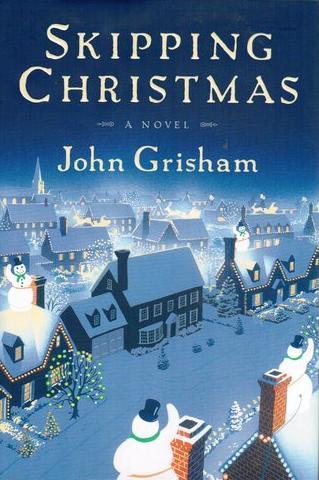
Skipping Christmas novels
There was A Christmas Carol by Charles Dickens, of course, if that can be called a novel, and a few years ago I read A Week in December by Sebastian Faulks, which although it may be set in December could just as easily have been set in June. Maybe there have been others, but none come to mind. Yet I could name any number of Christmas movies I have seen, many of them more than once. We watched Love Actually again just a few nights ago.
Do a web search and you can find countless Christmas novels, so somebody must read them. Or perhaps they buy them as Christmas presents. If so, they probably won't be opened until Christmas Day and even if started that day may not be finished until February. And who wants to read a Christmas novel in February?
I think that may partly explain why most of us don't view Christmas novels with the same fondness as Christmas movies. If we start watching a Christmas movie before Christmas, we will finish it before Christmas. Novels take longer. And, with the possible exceptions of A Christmas Carol or O. Henry's The Gift of the Magi, we probably don't want to read the same Christmas story every year or every other year, the way we may experience It's a Wonderful Life or A Christmas Story or Love Actually.
"I don't hate the holidays, but most holiday books leave me cold," Colette Bancroft, book editor for the Tampa Bay Times, wrote in Sunday's edition. I feel the same way. Some holiday books are sappy. Others just look sappy. Even if the stories are terrific, the books seem dated by the time the Christmas tree comes down.
Thursday, December 15, 2016
Spokesmen for their generations
"A book in its moment has romance. The book business is a romance business. Sometimes the dealer tries to build the romance, but in general, for the right books, it's already there."
Some writers continue to be read and admired long after their deaths, while most others simply disappear from view. No one reads them, no one writes about them and, after enough time passes, no one remembers them. But why is this so? I have always assumed it was just a matter of cream eventually rising to the top. Just as scholars are able to examine political figures more objectively after the passage of time, perhaps the same is true of literary figures. Thus some writers grow in stature as the years pass, while lesser ones fade from the scene. But maybe that is not the whole story.
George Minkoff, one of the rare book dealers Lawrence and Nancy Goldstone, the authors of Used and Rare, encounter on their travels, poses an interesting theory to them. He suggests the literary world, without necessarily even thinking about it, chooses a spokesman for particular times and places. "Spokesmen have been chosen for their generations," Minkoff said. "Steinbeck for the depression, Hemingway for the great expatriate era, Faulkner for the South after The Birth of the Nation... and that's who everybody reads ... and who everybody wants to buy."
The writer who best represents a particular niche in history is most likely to be remembered or at least gets the most attention, goes this theory. Thus, although people may still read Thomas Hardy, Anthony Trollope and a few others, it is Charles Dickens who most of us first think of as best representing Victorian England.
If all this is true, we are left to wonder which writer of those living today will be the spokesman for this generation. Which book, of all those published within the past few years, is the book of the moment? Which one has romance? Which will be remembered long after the others have been forgotten?
George Minkoff, bookseller, quoted in Used and Rare
Some writers continue to be read and admired long after their deaths, while most others simply disappear from view. No one reads them, no one writes about them and, after enough time passes, no one remembers them. But why is this so? I have always assumed it was just a matter of cream eventually rising to the top. Just as scholars are able to examine political figures more objectively after the passage of time, perhaps the same is true of literary figures. Thus some writers grow in stature as the years pass, while lesser ones fade from the scene. But maybe that is not the whole story.
George Minkoff, one of the rare book dealers Lawrence and Nancy Goldstone, the authors of Used and Rare, encounter on their travels, poses an interesting theory to them. He suggests the literary world, without necessarily even thinking about it, chooses a spokesman for particular times and places. "Spokesmen have been chosen for their generations," Minkoff said. "Steinbeck for the depression, Hemingway for the great expatriate era, Faulkner for the South after The Birth of the Nation... and that's who everybody reads ... and who everybody wants to buy."
The writer who best represents a particular niche in history is most likely to be remembered or at least gets the most attention, goes this theory. Thus, although people may still read Thomas Hardy, Anthony Trollope and a few others, it is Charles Dickens who most of us first think of as best representing Victorian England.
If all this is true, we are left to wonder which writer of those living today will be the spokesman for this generation. Which book, of all those published within the past few years, is the book of the moment? Which one has romance? Which will be remembered long after the others have been forgotten?
Subscribe to:
Posts (Atom)