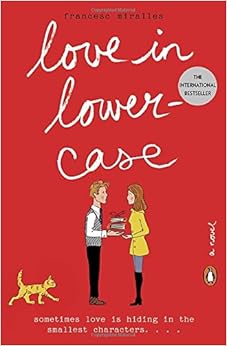
The international bestseller Love in Lowercase by Spanish novelist Francesc Miralles is an intriguing, off-the-wall love story that, depending upon one's point of view, could also be seen as either full of philosophical wisdom or a collection of trite sayings.
Samuel is an introverted college literature professor who sees a woman he believes to be Gabriela, a girl he met briefly as a young boy and has never forgotten. He thinks she's the love of his life. She thinks he's nuts. While he tries to find her again and then build a relationship with her, other changes come to his life. There is the stray cat that shows up at his door and doesn't want to leave (except when a pretty vet comes to give him a shot). There's an old writer who lives upstairs and, when he goes into a hospital, asks Samuel to help him finish the book he is writing. And there is a strange man named Valdemar, who may be insane or may perhaps the sanest one of them all.
Ever so often, Love in Lowercase gives readers a line worth reading, underlining or perhaps laughing at. Among them:
"Words shape thoughts."
"Science is a shortcut to God."
"The opposite is best. Whenever you're angry with someone, apply this maxim. It means doing the exact opposite of what your body's telling you to do."
"Remember that nothing happens without a reason."
"Never reject your sensations and feelings. They're all you've got."
"Experience can never be shared. It's served in separate packets."
Perhaps the best of these is summarized in the title. This is when "some small act of kindness sets off a chain of events that comes around again in the form of multiplied love."
The gist of the novel, or at least what I like best, is the idea of taking life as it happens and following it where it leads. Plans are fine, but they rarely work out anyway. Better to practice love in lower case, then see what happens.
Friday, March 31, 2017
Wednesday, March 29, 2017
All about the girl
There are trends in book titles as in most things. There was a time long ago when a book's title could take up an entire page. Some old books might have two titles, separated by the word or. Much more recently, one-word titles became popular. We had Jaws, Coma, Topaz and the like.
A recent visit to a bookstore alerted me to the fact that the current trend is for novels to have the word girl in the title, possibly replacing the trend of novels with the word daughter in the title. About a decade ago I wrote a newspaper column that listed scores of daughter novels, and it was an incomplete list.
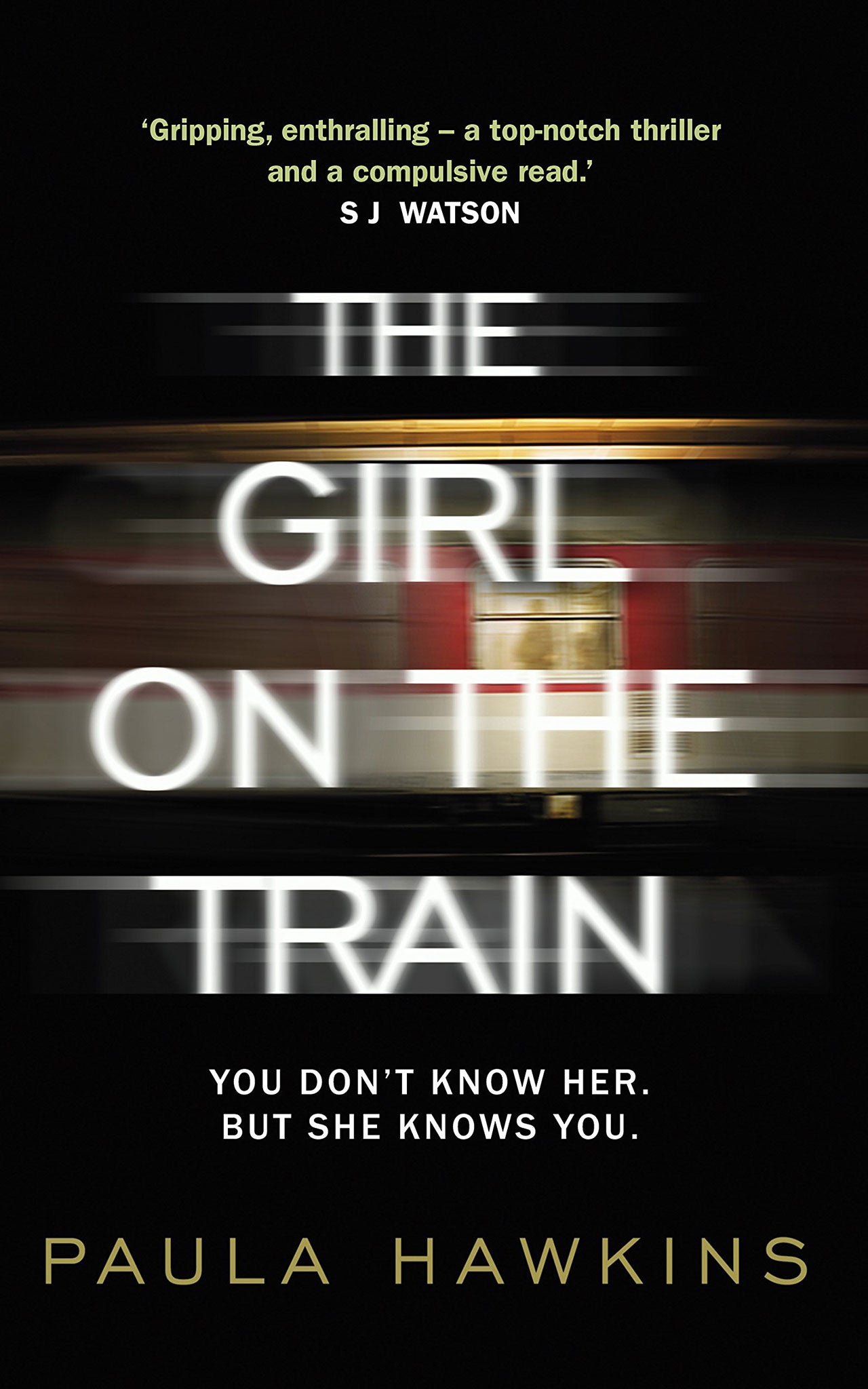
The girl trend started slowly several years ago with books like Girl with a Pearl Earring and then the popular series that included The Girl with the Dragon Tattoo, The Girl Who Played with Fire, The Girl in the Spider Web and The Girl Who Kicked the Hornet's Nest. Then came the bestsellers Gone Girl and The Girl on the Train, and the trend was in full swing.
Now one can find The Girl Before, Luckiest Girl Alive, Copygirl, Hemingway's Girl, The House Girl, The Silent Girls, The Perfect Girl, Girl in Translation, Pretty Girls, Sad Girls, Lilac Girls, The Girl Who Came Home, The Painted Girls, The Girl in the Glass, The Girl in the Castle, Vinegar Girl, The Tea Girl of Hummingbird Lane, Small Town Girl, The Girls, The Forgotten Girls, The Girl You Left Behind, The Girl From the Train, The Girls in the Garden, The Girl in the Glass, Silver Girl, All the Summer Girls, All the Pretty Girls and The Wicked Girls.
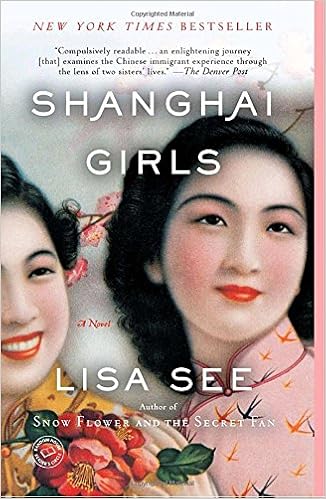
These girls come from all over the world: The Danish Girl, The German Girl, The English Girl, Vegas Girls, The Girl From Kilkenny, Shanghai Girls, The Girl From Venice, The Girl from Krakow and An Irish Country Girl.
Many of these girls seem to be in peril: Girl Waits with Gun, Girl in Pieces, Girl on Ice and The Burning Girl.
I found just one such book among the teen titles: Weregirl. So most of these novels were written for adults, and most of them were written by women for women, and most of the title characters presumably are women, never mind the girls in the titles. And never mind all the scolding men have endured for referring to anyone over 18 as a girl.
Even more than the word daughter, the word girl in a title, suggests youth. Readers, like moviegoers, seem to prefer stories about young women. Old women can find themselves in perilous situations, but you rarely find novels or movies about them. A novel called The Old Lady on the Train or The Forgotten Middle-Aged Women probably wouldn't sell very well.
Monday, March 27, 2017
Not quite over the hill
As a younger man, my idea of a great spy novel was Robert Littell's The Amateur (1981) or James Grady's Six Days of the Condor (1974), tales about young men, inexperienced in the ways of espionage agents, who get the best of veterans. Now, an "old boy" myself, I am nuts about Old Boys (2004), written by Charles McCarry when he was about the same age I am now. His novel is about veteran CIA agents who should be retired but instead team up to find an old friend (and his mother) and prevent a nuclear terrorist attack on U.S. cities.
So maybe my taste in espionage thrillers is a reflection of my stage of life, why I would rather watch movies starring Robert Redford, Tom Hanks, Morgan Freeman or Harrison Ford than ones starring any younger actor you might name. Or maybe all three are terrific novels. When I reread Six Days of the Condor recently, I enjoyed it just as much as I did back in the Seventies.
McCarry has been writing Paul Christopher novels since the Seventies (and I loved The Tears of Autumn and The Secret Lovers, too). In Old Boys, Christopher is in his seventies when he learns that his mother, who disappeared during World War II, may still be alive. And so he disappears, too. When ashes purported to be his are sent back from China, his old friends don't believe it. Horace Hubbard, Christopher's cousin, takes the lead, and he and the other geezers travel back and forth across the globe tracking down the Christophers, while at the same time preventing an even older terrorist from getting his dying wish, the destruction of America.
The novel includes a reference to The Over the Hill Gang. This story is similar to that old movie, but without the laughs. These Old Boys manage to stay a step ahead of much younger men, who keep trying to discourage them and send them back to retirement homes. Of these younger agents, McCarry writes, "Little did they know that they had just been extricated from the mess they had gotten themselves into by a bunch of arthritic, pill-taking old men who last saw combat before these kids' fathers were born."
As an arthritic, pill-taking old man, I found that great fun.
Friday, March 24, 2017
A celebration of printing
New technologies always give rise to new cultural anxieties.
Once we have found the secret to the letters, there will be no need for scribes.
Most of us have, several times in our own lifetimes, seen how new technologies have produced radical cultural change and, therefore, new cultural anxieties. Consider the impact of the computer and the cell phone. Those even older remember how television and air conditioning altered their lives. What we don't often think about is how, even several centuries ago, the same phenomenon took place: Technology brought change and, with it, anxiety.
We know before we open Alix Christie's 2014 novel Gutenberg's Apprentice how it will turn out: Johann Gutenberg is going to print a Bible using movable type. Before 1450, Bibles and every other kind of book had to be copied by hand by scribes, a long process that meant every book was precious but also that there were very few books and little reason for most people to learn how to read. So whatever tension and drama the novel contains has to do with how the printing press will change the known world. How will the church accept it? How will the aristocracy accept it? Will his press make Gutenberg rich or put him in prison?
Christie sticks close to the facts, adding details, conversations and minor characters. Her focus is not on Gutenberg but Peter Schoeffer, a young man trained as a scribe and ready to begin a career copying sacred books. Then his foster father, Johann Fust, convinces him to become Gutenberg's apprentice. Fust has invested money in Gutenberg's idea for a printing press, and he wants Peter both to keep an eye on his investment and get in on the ground floor of what could be an important new technology. It is he who tells Peter, "Once we have found the secret to the letters, there will be no need for scribes."
So while Gutenberg is the driving force of the project and Fust bankrolls it, Peter eventually becomes committed to the idea and contributes many of the innovations that make it successful (even though Gutenberg later claims he did it all by himself). Meanwhile there is the constant threat of interference from church leaders, as well as Peter's on-again, off-again romance with a young woman who isn't so sure God wants his Bible to be reproduced by machine.
Christie had never written a novel before, but she is a professional printer, which gives her a unique appreciation for what Gutenberg and Schoeffer went through. And her novel, published by Harper, may not be Gutenberg's Bible, but it nevertheless is a wonderful piece of printing in itself. Few novels are as physically beautiful as this one.
Andrew Root, Christianity Today (March 2017)
Alix Christie, Gutenberg's Apprentice
Christie sticks close to the facts, adding details, conversations and minor characters. Her focus is not on Gutenberg but Peter Schoeffer, a young man trained as a scribe and ready to begin a career copying sacred books. Then his foster father, Johann Fust, convinces him to become Gutenberg's apprentice. Fust has invested money in Gutenberg's idea for a printing press, and he wants Peter both to keep an eye on his investment and get in on the ground floor of what could be an important new technology. It is he who tells Peter, "Once we have found the secret to the letters, there will be no need for scribes."
So while Gutenberg is the driving force of the project and Fust bankrolls it, Peter eventually becomes committed to the idea and contributes many of the innovations that make it successful (even though Gutenberg later claims he did it all by himself). Meanwhile there is the constant threat of interference from church leaders, as well as Peter's on-again, off-again romance with a young woman who isn't so sure God wants his Bible to be reproduced by machine.
Christie had never written a novel before, but she is a professional printer, which gives her a unique appreciation for what Gutenberg and Schoeffer went through. And her novel, published by Harper, may not be Gutenberg's Bible, but it nevertheless is a wonderful piece of printing in itself. Few novels are as physically beautiful as this one.
Wednesday, March 22, 2017
Great literature on postage stamps
When I attend a stamp show, which isn't often, I seek out stamps with literary themes, those devoted to certain authors or certain literary works. This is what I did last weekend when I visited a stamp show in Largo, Fla.
Although I searched through stamps from a number of countries, I found success only among those from Great Britain and France, countries that have produced great literature and often commemorate their literary heritage on their postage stamps. Here are the stamps I brought home with me.
Oddly enough, Great Britain issued a stamp in 1976 celebrating "The Bicentennial of American Independence." The stamp, which features an image of Benjamin Franklin, thus celebrates a war the British lost, making American independence possible in 1776. Franklin always referred to himself as a printer, but he was many other things, including the author of one of the first classics of American literature, his Autobiography.
In 1992, the death of Alfred, Lord Tennyson (in 1892) was remembered with the issue of four gorgeous stamps honoring the great poet and his work. Each stamp shows an image of Tennyson at a different stage of his life, as well as paintings by the likes of John Waterhouse and Dante Gabriel Rossetti tied to certain Tennyson poems.
Great Britain commemorated the Year of the Child in 1979 with four stamps showing characters from notable children's books by British authors. These include Winnie-the-Pooh by A.A. Milne, Alice's Adventures in Wonderland by Lewis Carroll, The Tale of Peter Rabbit by Beatrix Potter and The Wind in the Willows by Kenneth Grahame.I paid just five bucks for all of these beauties. Each will make a very fine addition to my album.
Monday, March 20, 2017
Bookstore art
There are books about books, but there are also books about bookshops. The latter has practically become its own genre in both fiction (The Little Paris Bookshop, Mr. Penumbra's 24-Hour Bookstore, The Bookshop on the Corner, The Storied Life of A.J. Fikry) and nonfiction (My Bookstore, The Yellow-Lighted Bookshop, Overheard at the Bookstore, The Little Bookstore of Big Stone Gap).
Add to that second list Bob Eckstein's Footnotes* from the World's Greatest Bookstore, published last year. Surprisingly, this is first an art book. Eckstein did watercolor paintings of the fronts of scores of great bookstores from around the world, most of them still open but some of them no longer in business. He also tells us a little something about each store, then includes quotations about the store from owners, staff members and customers.
Eckstein is a New Yorker, so a significant number of the stores are in and around New York City, but some are as far away as India, Germany, Japan, Great Britain and Paris. The Librairie Avant-Garde in Nanjing, China, is located in the tunnel of a former bomb shelter. The Moravian Book Shop in Bethlehem, Penn., is the oldest continuously operating bookshop in the world. Quimby's in Chicago specializes in graphic novels. The Weapon of Mass Instruction in Argentina is a military tank converted into a roving bookstore. A daughter confessed to spreading her late father's ashes in various places in City Lights Booksellers in San Francisco because it had been one of his favorite places in the world.
I am pleased to have shopped in some of the stores Eckstein paints and writes about. These include Parnassus Books in Nashville, Powell's Books in Portland and John K. King Used & Rare Books in Detroit. Most of the others are still on my bucket list.
Friday, March 17, 2017
Collectible typewriters
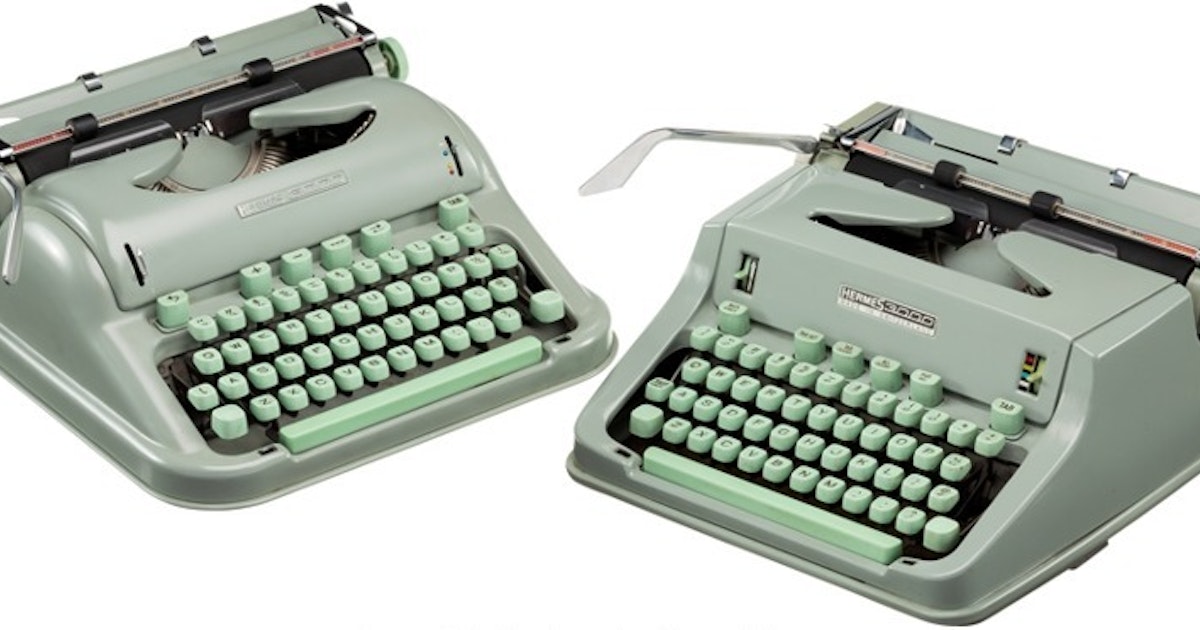
Last week somebody from Texas paid $37,500 for two typewriters. What made these typewriters worth that kind of money? That they belonged to author Larry McMurtry is only half of the answer. The other half is that these are the typewriters McMurtry used to write his Pulitzer Prize-winning novel Lonesome Dove (1985).
In those days McMurtry divided his time between his home in Archer, Texas, and his used book business in Washington, D.C. He kept a Hermes 3000 typewriter at each location so he could work on his novel, and presumably other books and screenplays, at either location.
The writer commented that since he owns 15 typewriters, he no longer needed these two and decided to sell them through a New York auction house. The opening bid was set at $10,000, and the winning bidder chose to remain anonymous. That the bidding went as high as it did suggests others were interested in the typewriters, as well, for their literary importance and perhaps for their importance to Texas history.
The sale of McMurtry's typewriters reminds us that literary collectibles include more than just first editions of important books. Almost anything owned or signed by a great writer can be valuable to a collector. One of my own prized possessions is a letter I received from novelist Michael Shaara asking for my permission to use a quotation from my review of The Killer Angels as a blurb on the paperback. That line was carried on paperback editions for many years. A book dealer told me that when I am ready to sell my first edition of that novel, the letter will enhance its value.
The homes of many writers, including the likes of Ernest Hemingway, Marjorie Kinnan Rawlings and Thomas Wolfe, are now open to the public. These are the best places for objects once owned by writers, and we can hope that the typewriters once owned by Larry McMurtry, now 80, will eventually find their way back to Archer, Texas, and back to the home of this notable Texas writer.
Subscribe to:
Posts (Atom)