Wednesday, October 30, 2019

Fun with language

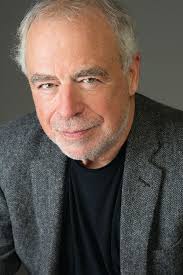
Neal Stephenson
Neal Stephenson novels can be a feast for lovers of language, and The System of the World is no exception. Word origins, for example, are often sprinkled into the narrative.

The story has much to do with English coinage, so readers learn very early that the word coin came from the archaic word coign, meaning corner. Coins apparently were originally square, but assayers removed corners to test the purity of the metal. Similarly characters discuss the origins of such words as club, mob and machinery.

Stephenson often uses 18th century spellings so that club is clubb, mob is mobb and top is topp. The words fantasy and fantasize are always spelled with a ph. Yet he frequently mixes in words and phrases that sound more modern than 1714, when the story is set.

An Internet source says the phrase "queer the deal" dates from 1812, or a century later than the story. I don't know when the phrase "absentee landlord" came into the language, but a book called Absentee Ownership was published in 1923. The phrase cocktail party also appears to have been a 20th century invention.

I have a feeling Stephenson was well aware of such language incongruities and hoped readers would enjoy them as much as he did.

Monday, October 28, 2019

Dawn of a new age

For the war is over; most of the great conflicts have been sorted out; Natural Philosophy has conquered the realm of the mind; and -- today -- as we stand here -- the new System of the World is being writ down in a great Book somewhere.
Neal Stephenson, The System of the World

As Neal Stephenson's ambitious (nearly 3,000 pages) Baroque Cycle draws to a close with the third novel, The System of the World (2004), England is bathed in optimism. A new king mounts the throne in 1714. The nation is at peace. And science (or Natural Philosophy) seems to have explained how the universe works. Isaac Newton and Gottfried Wilhelm von Leibniz, both major characters as well as real people, have much to do with this optimism.

The Baroque Cycle is unusual science fiction in that it deals with real science and real people, yet the plots are mainly fiction. This time the story revolves around Newton's work at the Royal Mint, an unusual job for one of the world's greatest scientists, but he is also an alchemist. Newton uses his position at the mint to watch for Solomon's gold, supposedly once owned by King Solomon himself and supposedly heavier and more valuable than other gold.

Meanwhile Jack Shaftoe, a vagabond who will be familiar to readers of other books in the series, has been counterfeiting coins, putting Newton's reputation in jeopardy as his life draws to a close. In even greater danger is Shaftoe himself after he is captured and sentence to be hanged, then drawn and quartered. The final chapters make compelling reading. The rest of the book, like much of the trilogy, requires patience.

The world is changing in 1714, although perhaps not as quickly as characters anticipate. They speak of binary code, a Logic Mill (or computer) and an Engine for Raising Water by Fire (or steam engine), but all these must wait for the future. Still, that future rested on the likes of Newton and Leibniz.

Friday, October 25, 2019

Library miracles

Josh Hanagarne
Josh Hanagarne, in his memoir The World's Strongest Librarian: A Book Lover's Adventures, makes a couple of observations about libraries that may be worth comment.

"I really want this building to serve the purpose for which it was intended -- as a breeding ground for curiosity."

Hanagarne mentions some other purposes some patrons at the Utah library where he works seem to think the building serves. Parents drop their children off while they go to work, expecting librarians to serve as babysitters. Some people seek quiet places in the library to sleep. Teenagers seek out the same places to make out. I recently used a public library for the purpose of getting coached on the operation of a new insulin pump.

Libraries themselves, especially in recent decades, have expanded their purpose in a multitude of ways. They have cafes, computers for patron use, public meeting rooms and a wide variety of programs.

But is being a breeding ground for curiosity the main purpose of a library? It could be argued that in most cases a person becomes curious before entering the library. One goes to the library to satisfy that curiosity -- to find the answers to questions, to scratch an already existing itch.

Yet answers have a way of stimulating more questions. As has been often stated, the more we know the more we realize we don't know. And often when we go to a library to get one thing, our eyes are drawn to another book, another magazine, another video, whatever. So, yes, libraries do breed curiosity, or at least more curiosity.

"A library is a miracle. A place where you can learn just about anything, for free. A place were your mind can come alive."

In an age when almost everyone has a world of information available to them at all times on phones they carry with them everywhere, it seems amazing how busy libraries are. Sometimes even finding a place to park can be a challenge. I have seen standing-room-only author talks and genealogy meetings. Video stores may have closed, but people still go to libraries to find movies to watch. Most days when I go to the Largo Library in Florida I see the same woman in the same chair reading a different book. Patrons line up to check out books or to ask questions. At the Largo Library, they also line up just to get in when the doors open in the morning.

The real miracle may be the fact that it is all free. We also live in age where almost everything has a price, and that price is rarely cheap. Even dollar stores now charge more than a dollar for most merchandise. Yet you can walk into any public library and walk out with an armload of books, CDs, DVDs or whatever, all for free. You have to bring them back, of course, and the fact that most people do is another miracle.

Wednesday, October 23, 2019

A library story

Josh Hanagarne may actually be The World's Strongest Librarian, as the title of his 2013 memoir boasts. He is six-feet-seven-inches tall and weighs 260 pounds, lifts weights and tosses cabers, rocks and other imposing objects at Highland Games. Yet neither his unusual size and strength nor, for someone of his dimensions, unusual job is the most central part of his story.

Since childhood Hanagarne has had Tourette Syndrome, meaning he is subject to involuntary movements and speech, often self-destructive and often embarrassing, especially for someone with a very public job. His weight training, along with breathing exercises, has helped somewhat to control his Tourette's, which he has nicknamed Misty.

Another part of his story is that he was raised a Mormon, the product of a devout mother and a father who went through the motions out of love for his wife. Now, years later, Hanagarne finds himself in the same situation as his father: a devout Mormon wife, a son who may or may not have Tourette's and a wavering faith. In Mormon terms, he fears he has "lost his testimony," but then again, maybe not.

The book alternates between past and present, between his life story and his experiences as a staff member at a large public library in Utah. He always loved books and became a secret Stephen King fan despite his mother's objections. Yet because of Tourette's he had difficulty in school. He started college many times, only to be forced to quit. Jobs, too, came and went until he discovered the library as a perfect fit for a man who didn't seem to fit anywhere else.

His love story is a beautiful one, as is his account of the couple's struggle to have a child, then a struggle to adopt one and finally a surprise pregnancy that gave them a son.

Hanagarne has had an intriguing life, but it didn't write itself. He skillfully put it all together in a way that makes compulsive reading.

Monday, October 21, 2019

A wartime murder

Reading just two James R. Benn novels is enough to make his Billy Boyle books one of my favorite mystery series. Rag and Bone (2010), like Billy Boyle, the first in the series, is an ideal blend of history, mystery and wartime adventure.

Boyle was a young police detective before World War II intervened and he was assigned to the staff of his Uncle Ike, none other than Gen. Dwight D. Eisenhower, to solve a ticklish murder. More murders follow, and so the series continues. Even in wartime, when people are being killed all the time, a murder is another matter.

This time the murder that draws Ike's attention is that of a Russian officer stationed in London. Evidence suggests the killer could be Polish, perhaps even Billy's best friend, Kaz, a Polish officer who got out of Poland before the Germans invaded. Now the Soviets covet Poland, and Kaz blames them for the massacre of Polish prisoners at Katyn Forest (an actual event), for which the Soviets blame the Germans. Because the United States has a large Polish population and because the Allies need the Russians to help defeat Germany, the situation is tricky. Ike wants his nephew to discover what really happened to that Russian officer, preferably without making things anymore complicated than they already are.

His investigation takes Billy into both the London underworld and the underground, for there seems to be a connection between the murder and a poetry-reading gangster who, because of German air attacks, has made his temporary headquarters in a subway tunnel. Along the way he comes into contact with Winston Churchill and even Kim Philby, later discovered to have been a spy for the Soviets.

Benn keeps the plot moving nicely, gives us fascinating characters and turns a riveting murder mystery into a painless history lesson.

Friday, October 18, 2019

Writers go to college

Like most academics, he is fascinated by childish, unprofessional behavior.
Richard Russo, Straight Man
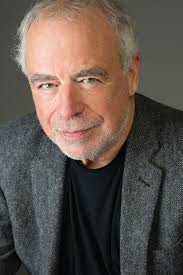
Richard Russo
I've noticed that several of the novels I have read this year feature college professors as characters, usually main characters. These include the recently reviewed Straight Man by Richard Russo, in which an English professor heads his department during threatened staff reductions; Nobody's Fool, also by Russo, in which the son of the main character is a professor; Ethan Canin's A Doubter's Almanac, about a mathematics professor who, because of age and careless living, has lost his brilliance at mathematics; Professor Chandra Follows His Bliss by Rajeev Balasubramanyam, about an economics professor who takes a leave to try to restore a happy family life; and David Lodge's Changing Places about two professors, one from Great Britain and one from the United States, who participate in a professor exchange program and find themselves leading the other fellow's life.

These books were written over a period of years, so perhaps they do not reflect a trend. I may have just happened to read these particular novels this year, yet I suspect there are enough other college-based novels and short stories (such as Mark Winegardner's "The Visiting Poet" and "The Untenured Lecturer," also read this year) to reflect at least a mini-trend.

If so, the reason is probably because so many of today's novelists and poets (and a few non-fiction writers, such as Les Staniford) are based at colleges and universities. As writers in residence they can teach a few classes, usually creative writing, and still have lots of time to write. Because most books make little money, the teaching jobs give them income to support their families. Their academic surroundings also give them material for their literary work. Even the best writers tend to write what they know.

Winegardner, according to the cover of his book of short stories, That's True of Everybody, is director of creative writing at Florida State. Balasubramanyam taught at Hong Kong University, among other places. Canin is on the faculty at the Iowa Writers' Workshop. David Lodge taught at the University of Birmingham. I don't know about Russo, but Straight Man certainly reads as if the author knows something about colleges and, in particular, English departments.

Many of the works mentioned above have certain themes in common, especially the fascination with "childish, unprofessional behavior" referred to in Russo's novel. The professors in these tales tend to drink too much, sleep with the wives of other professors and with their students, and worry constantly about departmental politics. Occam's Razor (stated simply: the simplest answer is more often the correct one) features in two or three of the novels. The narrator in Straight Man even names his dog Occam.

In the spirit of Occam's Razor, I conclude that putting writers in university faculties leads to novels about university faculties.

Wednesday, October 16, 2019

A disappointing Edgerton

Some novels seem to be more than the sum of their parts. Clyde Edgerton's Redeye (1995) somehow seems less.

With outlandish characters, a love triangle of sorts, a murder, a determined dog with an eerie red eye and loads of outrageous comedy, you might think the novel would offer satisfaction. Instead it falls flat. It's less than 250 pages long, and when you finish it you may find yourself asking, "Is that all there is?"

It's 1891 along the Colorado-Utah border where ancient cliff dwellings are discovered and immediately viewed as a possible tourist attraction. Other parts added to the mix include a would-be mortician who thinks blowing up a corpse is an ideal way to promote his business, a young woman from the East pursued both by a handsome Englishman and a Mormon bishop (who may or may not have several other wives), a mute old woman who's convinced a mummified baby from the cliff dwellings is her own dead baby and a stranger plotting to kill the bishop in revenge for his part in the Mountain Meadows massacre (a true event in which Mormons are believed to have plotted with Indians to wipe out a wagon train).

So that sounds interesting doesn't it? Maybe there's just too much going on, or perhaps the novel is too short to develop the possibilities. Whatever the case, Redeye is at times a pleasurable ride, but it goes nowhere.