Friday, March 7, 2014

Saying the obvious

I was forced to conclude that there are two laws no human being can escape: the first idea that comes into a person's mind will be the most obvious one; and, having had an obvious idea, nobody ever thinks that others may have had the same idea before.
Umberto Eco, How to Travel with a Salmon & Other Essays


Recently I picked up  my car after it spent a week in a body shop, the second time in the last three years the same car has been in the same body shop. I hasten to add that on both occasions the damage to my car occurred while it was parked. The shop manager thanked me for my business, and I said something to the effect that I hoped I would never be back again. "I hear that all the time," he said.

As I drove away I felt embarrassed at having said the obvious. Of course, nobody wants to return to a body shop, just as nobody wants a return trip to a cancer specialist. I had said the first thing that entered my mind, and, as Umberto Eco suggests in his essay, the first idea is generally the same one everyone else has in the same situation.

I still suffer pangs of regret after an experience in a tea shop several years ago when the owner wondered if I might like to try some chamomile. "That's not my cup of tea," I said, it being the first thing that entered my mind. The woman, to her credit, did not react at all, but she must have heard the same line hundreds of times. Sometime later in the same shop I overheard somebody else repeating the same line to the same woman.

Actor Roger Moore, who played James Bond in a number of movies, touches on this topic in his commentary on the Moonraker DVD. He recalls how Richard Kiel, the huge actor who played the villain Jaws on a couple of Bond movies, hated being asked, "How big were you when you were small?" He had to pretend each time that it was the first time he had ever heard that line, a line that must have actually seemed witty the first time it was heard.

Moore also remembers Barry Morse, who played the detective on The Fugitive TV series, complaining, "I have to act surprised when people say, 'He went thataway.'"

There are times, of course, when saying the obvious is exactly what we should say. Phrases like "good morning," "thank you," "how are you?," "I'm sorry for your loss," "I love you," "take care now" and "excuse me" never get old. We need not feel regret for saying what so many others have said with the very same words.

When we are trying to be witty, however, saying the first thing that comes to mind will most likely be the wrong thing. Better to say nothing than to say what everybody else says in the same situation.

Wednesday, March 5, 2014

The feelings of writers

Well, in literature workshops the writer isn't in the room. In many cases, the writer isn't in the world at all anymore, so Tolstoy isn't going to get his feelings hurt by what gets said about his work in my class.
Francine Prose, interview in Reading Like a Writer

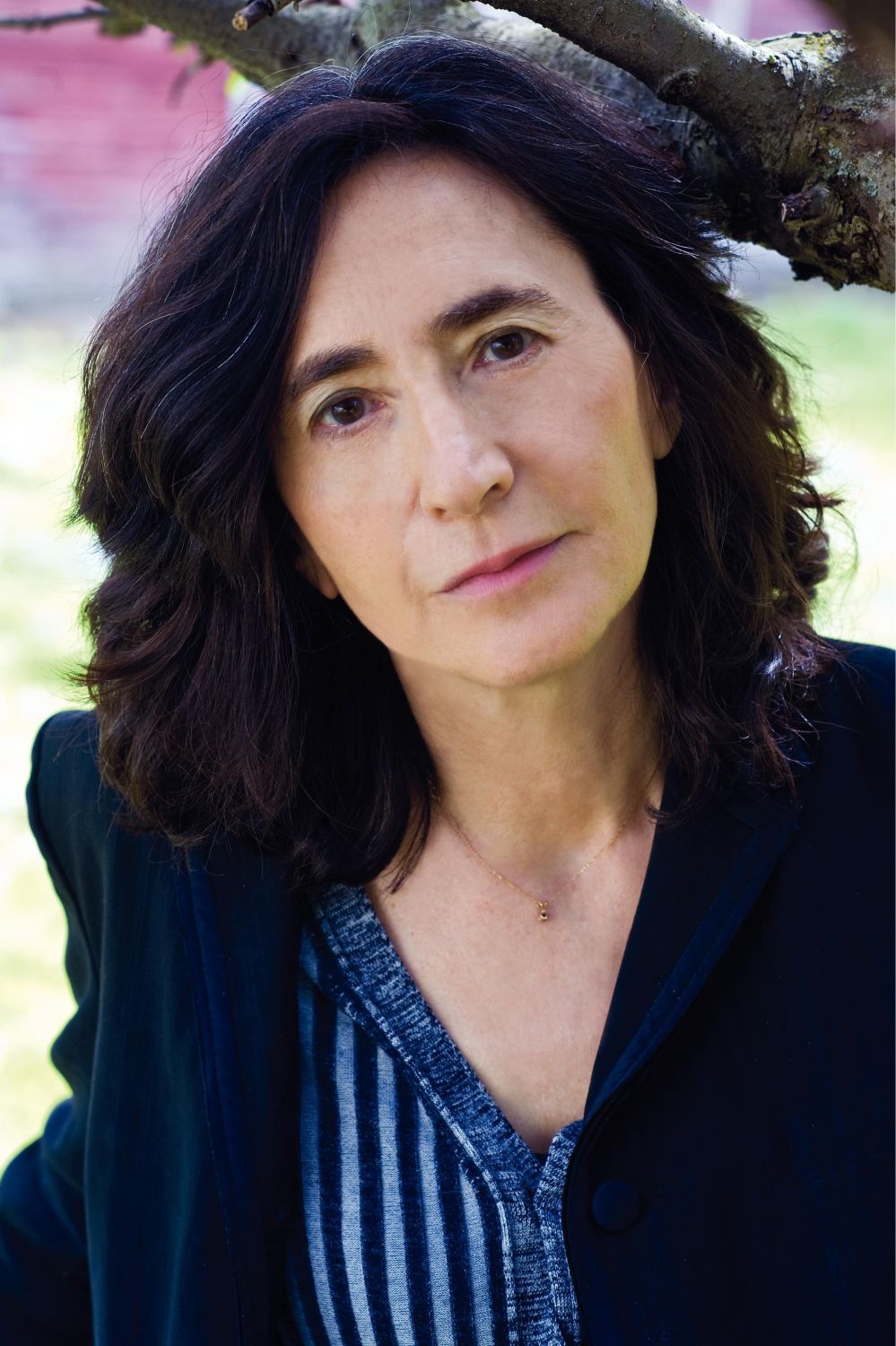
Francine Prose
Francine Prose, author of a number of novels and other books, including Reading Like a Writer, has also, like many other respected but not necessarily best-selling writers, taught writing classes to supplement her income. What she dislikes about these classes, however, is that period familiar to anyone who has ever attended a creative writing class when the students dissect each other's work. The comments, almost always containing much more criticism than praise, can be brutal.

"There's something essentially sadistic about the whole process," Prose says in the interview included at the end of her book. "I mean, to sit there and have the love of your life -- your work -- something that close to your heart and soul, just ripped apart by strangers ..."

I remember what that is like, having taken several creative writing classes at Ohio University back in the 1960s. A decade later, having given up the idea of writing fiction, I attended a two-week seminar for editorial writers in Reston, Va., where the workshops were quite similar. Participants were told to critique the editorials written by other members of the group, and that usually meant finding fault.

Dan Tucker
It was my assignment to comment on the work of Dan Tucker, an editorial writer for the Chicago Tribune. I can recall struggling to find something, anything, I could criticize about his editorials, but I just couldn't find it. They were wonderful editorials. When my turn came, I was forced to comment on what was right about Tucker's writing, instead of what was wrong with it. At first I felt like a failure, then I noticed the look on Dan's face and I realized that maybe a kind word can be the right word. Even less skillful writers, myself included, need a little praise. We can learn from our mistakes, but we can also learn from a pat on the back.

Cecil Hemley
Two of the three creative writing instructors I had at Ohio (Cecil Hemley, a poet and novelist, and Walter Tevis, author of The Hustler and The Man Who Fell to Earth) were introverts who, I thought at the time, seemed uncomfortable with the harsh criticism that was so common in their classes. I think both of them would have agreed with Francine Prose. Hemley once described one of my stories as "artful." Not only did that single word inspire me for a long time, but I suspect that it softened the negativity of my classmates. What student would dare say something too harsh about a story Cecil Hemley had called "artful"?

Prose says that she much prefers teaching writing by teaching reading, and not just because the authors are not in the same room. Writers, like artists, can learn from the masters, and she is appalled at how little so many of her writing students have actually read. Sometimes, she says, she takes her students through a short story word by word, sentence by sentence. Why did the writer choose this particular word rather than another? "All the elements of good writing depend on the writer's skill in choosing one word instead of another," she writes. It may take weeks to get through a single short story in her class, but she thinks her students benefit from this close inspection of classic works of literature.

Beside, as Prose is the first to admit, you really can't teach good writers to become great writers. You can, however, teach them to become great readers.

Monday, March 3, 2014

Breaking the rules

One of my favorite moments on The Andy Griffith Show came when Barney Fife explained the two rules at the rock (the Mayberry jail) to his prisoners. "The first rule is," he said, "obey all rules!"

Francine Prose essentially has but one rule for beginning writers in her book Reading Like a Writer (2006): Ignore all rules. In one wonderful chapter she recalls a time in the late 1980s when she taught a writing class at a college located more than two hours from her home. While riding the bus to and from the college once a week, she read Anton Chekhov short stories. She recalls formulating various rules for her writing students (never give your characters similar names, for example, or stick with the same point of view throughout a story) and then she would read a great Chekhov story, often that same day on the way home), that violated the very rule she had expressed to her students. Finally she came to the conclusion, as she puts it in her book, that "literature not only breaks the rules, but makes us realize that there are none."

Vladimir Nabokov said this about the Chekhov story The Lady with the Dog: "All the traditional rules of storytelling have been broken in this wonderful story of twenty pages or so. There is no problem, no climax, no point at the end. And it is one of the greatest stories ever written." In fact, many of the greatest works of fiction you might think of, including Nabokov's own Lolita, violate somebody's rules for good writing.

Yet I do have one caution. James Joyce wrote Dubliners and A Portrait of the Artist as a Young Man before he wrote Ulysses and Finnegans Wake, just as Pablo Picasso and Salvador DalĂ­ learned to draw realistic images before they painted their surrealistic masterpieces. There may be something to be said for learning the rules and heeding them before daring to break them in the spirit of creativity. Not everyone, after all, is a Chekhov.

Friday, February 28, 2014

Movie Week: Symbolism

With movies, as with novels, one can enjoy the story without understanding the symbolism, or even being aware of any symbolism. Yet stories become richer when one finds deeper meanings in them, even if these are not necessarily the same meanings the director (or writer) had in mind.

Lately I've been reading James Mottram's book The Coen Brothers: The Life of the Mind (2000), which discusses symbolism in the first eight films made by Joel and Ethan Coen. Much of what Mottram writes strikes me as pretentious nonsense, as when he says of The Big Lebowski, "The fact that the Coens have set the film primarily in a bowling alley symbolises the lethargy of the masses."

Yet I was rather taken by what he has to say about their 1990 film, Miller's Crossing.

I have loved Miller's Crossing since the first time I watched it, yet I doubt I could give you a synopsis of the story even 10 minutes after watching it, let alone a month later. It's a confusing gangster movie in which somebody is constantly betraying somebody else. Yet the images, the music, the striking scenes and terrific acting make me want to return to the film again and again. But what does it all mean?

Mottram suggests we watch the hats. The story is set decades ago when men wore hats. The Coens have stated that the idea for the movie started with the image of a hat blowing in the wind, and we see that image in the film. That hat means more than we might think.

"Tom (the main character played by Gabriel Byrne) remains the most intelligent of the characters, again reflected by his attachment to his hat," Mottram writes. "It acts as a holster for the film's most powerful weapon -- the brain. Those without one -- characters outwitted by those of a superior intelligence -- are the ones to be dispatched."

The story becomes one of conflict not just between rival gangs but between Tom's head and his heart. He acts one way, with different priorities, when he wears his hat and another way when he does not. When ruled by his heart, he becomes more human, but also more vulnerable.

Now I am eager to watch Miller's Crossing yet again so I can watch the hats.

Wednesday, February 26, 2014

Movie Week: Credits

"They worship these old houses. They're people down here that spend every cent they've got to keep up these old mausoleums. And, of course, there isn't a single plaque anywhere with the names of the people who actually built them."
Ellen Gilchrist, The Annunciation

Most of us in this world get little credit for what we contribute to it. Not only don't carpenters, masons, plumbers and electricians get their names on the buildings they build, as Amanda McCamey observes in Ellen Gilchrist's novel, but workers in most other fields go unheralded. There are exceptions. Some people, like clerks and nurses, wear nametags. Bank tellers usually have their names at their windows. Journalists have bylines. Even so, most workers are nameless most of the time.

It's not that way in Hollywood.

When the credits start rolling at the end of a movie, patrons usually get up to leave. The names are often too small to read, even on a big screen, and move by too quickly to read anyway. Yet I am glad those names are there and will be attached to movies they had a part in making for as long as those movies are shown. It may not be immorality, but it's close.

In the early days of film, credits didn't amount to much. Charlie Chaplin's The Kid, made in 1921, listed only the main cast at the beginning of the picture. At the end, it simply said "The End." Gradually movies had more credits added at the beginning, generally just the major contributors. The opening credits for Ben-Hur, made in 1959, lasted a couple of minutes, but there was just "The End" at the end. Some films, like 1947's Life with Father, repeated the names of cast members at the end.

I don't know when it happened, but at some point the credits moved to the back of movies. Some modern films, in fact, don't even give the title of the film until the end. Other films list the major stars and the key people involved in the production at the beginning, then repeat those names along with the names of everyone else even remotely involved at the end.

Modern pictures often have curious and confusing credits like these at the beginning of Life of Pi (2012):

Fox 2000 Pictures presents

in association with Dune Entertainment

and Ingenious Media

a Haishang Film/Gil Netter production

an Ang Lee film

Obviously there are a lot of fingers in the pie, each sharing the credit (and profit) or blame (and losses).

End credits last several minutes in today's movies, and hundreds of names go by during that time. Many of the jobs people get credit for performing have been around for decades, like gaffer, best boy, electrician and so forth. Others seem really strange. Life of Pi lists credits for Swing Gang, Prosthetics Sculptor, Data Wrangler and Cleaning Assistant. True Grit (2010) lists Table Person, Ager/Dyer, Mechanical Horse Effects, Corpse Creation/ Effects Make-up, The New Duke, Lead Green, Greens and one called Serious Matters. The King's Speech (2010) has credits for Floor Runner, Camera Trainee, Costume Standbys, Armourer and Walkie-Talkies.

Watching the credits can actually be fun, and it can really be rewarding if you recognize any of those names. The son of a former editor of mine went to Hollywood after college and got involved in animation. He was one of those involved in producing the detailed hair seen on the creatures in Monsters Inc. When my wife and I watched that movie, we made it a point to stay for the credits so we could see the name of this man I had known when he was a little boy. Imagine the thrill that name in the credits must have given his parents and others who know him and love him. You can multiply that love for each of the many names in those endless movie credits.

Monday, February 24, 2014

Movie Week: Adaptation

To award the Oscar for best adapted screenplay, as will be done in a few days, judges should properly not just watch the nominated films but also read the novels or plays from which the screenplays were adapted. I wonder how many of the judges actually do that. For some, I suspect, just watching all the nominated movies would be a challenge. But how can one determine the best adaptation without being familiar with what the screenplays were adapted from?

Most of us have said at one time or another that a movie isn't as good as the book. Sometimes the movies are actually better (The Godfather, perhaps), but in most cases the novels really are superior. There are reasons for that. Authors can describe characters' feelings and impressions that can be difficult, if not impossible, to translate onto film. A writer can take as many pages as needed to tell a complex story. A film director is expected to tell the same story in two hours or less. Screenwriters hired to adapt a novel for the screen must decide how much of the plot and how many of the characters they can cut out and still have a story that makes sense. For those adapting a play, the big challenge may be turning it into a movie that isn't as static or as talky as a play.

I was reminded of just how difficult adaptation must be when a couple of weeks after reading Elizabeth George's novel In the Presence of the Enemy (1996) I watched on DVD the BBC adaptation shown on PBS as part of the Inspector Lynley Mysteries a decade ago. Had I watched the TV episode without first reading the novel, I probably would have thought it pretty good. I might even have enjoyed it had I waited a year or more before watching it. But the novel was too fresh in my mind and I seemed to focus more on what had been changed than on the story itself.

George's novel is more than 600 pages long. This had to be squeezed into one 90-minute episode. Obviously a great deal of the main plot, many of the subplots and quite a number of characters had to be eliminated. The novel was written before cell phones were in common use, and a character's isolation at the climax of the story required that she be unable to call for help. The TV version, made just a few years later but after police officers began using cell phones, required a reasonable explanation for her phone not to work, which the screenwriter had to work into the story.

Thomas Lynley, the main character in most of George's novels and on the TV series, is little more than a supporting character in this particular story. So in adapting the novel, the scriptwriter had to find ways to work him into scenes where he wasn't originally present.

I still wouldn't vote to give any awards for the adaptation of this particular book, but understanding some of the challenges faced in the adaptation at least helps me appreciate the work. I do hope the judges of best adapted screenplay understand and appreciate the work that went into the scripts for Before Midnight, Captain Phillips, Philomena, 12 Years a Slave and The Wolf of Wall Street. The Oscar should not go to the best movie of these nominees but to the screenplay that did the best job of turning a book into a movie.

Friday, February 21, 2014

Not so special

By repeating that special twice, Carver manages to breathe new freshness and vigor into a word that has, by now, been blunted out of meaning.
Francine Prose, Reading Like a Writer

As Francine Prose suggests, words can, like knives or toothpicks, become blunted through use. The more we use them, the less powerful their meaning. I have written in the past how the word horrendous, heard so often in the days following 9-11 and since, may no longer be adequate for future disasters. Like the words terrible and horrible, it ceases to carry the punch it once did. It has become blunted. If a flat tire on the way home from work can be horrendous, then you need something stronger to describe a massacre.

Most capable writers refrain from using the same word twice in the same paragraph, and certainly not in the same sentence. That Raymond Carver uses special twice in consecutive sentences in his short story Feathers, as Prose points out, serves to bring some attention to the bland word, to give it a little zing. Most of us try to do that, less successfully, by using phrases like "very special" or "truly special." Carver does it by breaking the unwritten rule about repetition.

Repetition didn't help my pastor last Sunday. He must have used the word special eight or 10 times during the service. Had I known how often he would say the word I would have kept count. Each time he said it the word became less sharp, less meaningful. If this Sunday is special and last Sunday was special and, presumably, next Sunday will be special, then what does special mean anyway?

I was reminded of a couple of songs, first the Ray Stevens recording with the line "Everything is beautiful in its own way." There may, in fact, be a bit of truth there, beauty being in the eye of the beholder and all that. Yet if everything is beautiful, what word do we use to describe rainbows and Bryce Canyon? We don't need the new Sports Illustrated Swimsuit Edition to let us know that some people are more beautiful than others.

The second song comes from Gilbert and Sullivan. The line goes, "If everybody's somebody, then no one's anybody." It's like when you are given a certificate just for showing up or get a prize just for playing the game. If, as in Lake Wobegon schools, all the children are above average, then average has lost all its meaning. Everything and everybody can't be special. Each can be unique and each can have value, but they can't all be special or special becomes meaningless.

My wife received a card with the words "Special Valentine" on the cover. It was from one of her female friends, certainly not from me. I tend to recoil every time I see a greeting card containing the word special. With special needs, special education and Special Olympics, a grandchild, niece or nephew might actually be insulted to be called special. Mostly the word just sounds trite to me, never mind how it may sound to the person receiving the card.

So what does one do? It is probably too late to rescue the word. We can look for substitutes like extraordinary or exceptional, although they too have been dulled by overuse. At the very least we can try to reserve our use of the word for, well, special occasions.