Searching for a copy of Diana Gabaldon's Dragonfly in Amber, the second novel in her Outlander series, in a used paperback store, I was unsure where to look. I knew the books were romances, so should I look for it in that category? But they are also historical fiction, set mostly in the 18th century, so should I look there? The novels have to do with time travel, so perhaps I would find the book in science fiction or fantasy. Striking out, I finally asked the proprietor for help. She suggested I try paranormal romances. Paranormal romances? I would have never guessed. I didn't even know such a genre existed.
I can understand why booksellers divide fiction according to genre. Many people walk into a bookstore knowing exactly what kind of novel they want to read, a mystery or a western perhaps, and so they can go directly to the genre they seek without having to wade through a lot of novels they would never want to read. I suppose that's a good thing, yet such readers are likely to miss something good when they shop this way.
Recently I finished reading two books, Neal Stephenson's Quicksilver and Karen Russell's St. Lucy's Home for Girls Raised by Wolves, that readers who shop by genre might miss. Stephenson's novels always seemed to be classified as science fiction, yet Quicksilver is a historical novel set in the 17th century. Much of the story has to do with Isaac Newton and other early scientists, but still it seems like a stretch to term it science fiction. Meanwhile Russell's short story collection, to be found with the general fiction, would delight many science fiction readers. These are fanciful tales about bizarre worlds, such as the title story about daughters of werewolves sent to a school where nuns try to turn them into ladies. Sci-fi fans who can't get through Stephenson's massive novel, the first book in a trilogy, mighty enjoy Russell's book, if they are lucky enough to find it. Meanwhile those who love good historical fiction may never come across Quicksilver because they will be looking in the wrong place.
Because of the success of the No. 1 Ladies Detective Agency novels, all of Alexander McCall Smith's books are likely to be found in the mystery section. Yet even his "detective" novels barely qualify as mysteries, and the 44 Scotland Street books certainly don't.
What's to be done? Forgetting about genres altogether would probably be too much to ask. Too many people go genre-shopping to find the books they like or to avoid those they don't like. Booksellers, however, should stop thinking that any book must be shelved in one place or another. Why not both? Why not shelve Dragonfly in Amber with the romances, the paranormal romances, the historical novels, science fiction and, yes, general fiction? That way everyone who might want to read it should be able to find it with ease.
Monday, February 17, 2014

Friday, February 14, 2014
Like another language
After my grandmother died, my mother found letters that had been sent from Poland many years previously. Mom had spoken Polish as a child, but she never learned to read the language. She asked an older relative to translate the letters for her. Grandma had come to America alone when she was 16, settling in Toledo. She never saw her family again. The letters, which had petered out after a few years, were from them.
 Much more recently, my wife read some letters sent to her own parents over the years. They were all handwritten in English and, for the most part, easy in read. Yet it occurred to me that, for so many young Americans, family letters like these would be unreadable. Like my mother they would need someone older to read them for them, someone to explain what they said.
Cursive writing is a dying discipline in public schools. State tests don't require it and most people no longer need it in their daily lives, so schools don't see a need to teach it. Last weekend my sister told me about her experiences registering voters in Minnesota. The law requires prospective voters to sign their names, but teenagers registering to vote for the first time often didn't know how to sign their names. She had been given no guidance as to how to handle this situation, but she knew she could accept an X for illiterate voters, so why not a printed name for those who were literate but didn't know how to sign their names? She asked the teens to print their names just as they appear on their driver's licenses.
I should be the last person to lament the failure of schools to teach cursive writing. I hate to write in cursive and always have. Even I can't read what I write. My printing is not much better. I love keyboards.
In fact, I credit the typewriter with making a writer out of me. Through eight years of elementary school, I hated writing and had no clue I might be any good at it. My teachers certainly gave no indication that I had any ability in this area. Early in the summer after eighth grade, my parents returned from a shopping trip with a portable typewriter, and my life changed almost immediately. I loved watching words appear in type, but I had no interest in copying somebody else's words. I wanted to see my own words appear on paper. So I became a writer. By the end of the summer I was turning out stories, poems and even a weekly satirical newspaper, all typed on that Smith-Corona. My ninth-grade English teacher praised my work. Yet I continued to struggle with in-class essays right through college. I would have loved to have been able to use a computer in class.
I might as well have never learned to write in cursive, but I certainly am glad I learned how to read it.
The Tampa Bay Times recently reported on a cake decorator in Tampa who writes beautifully in cursive. Yet she must reconsider when her cakes are intended for children because so many of them now can't read a simple Happy Birthday! when it's written in cursive. It's like another language.
Much more recently, my wife read some letters sent to her own parents over the years. They were all handwritten in English and, for the most part, easy in read. Yet it occurred to me that, for so many young Americans, family letters like these would be unreadable. Like my mother they would need someone older to read them for them, someone to explain what they said.Cursive writing is a dying discipline in public schools. State tests don't require it and most people no longer need it in their daily lives, so schools don't see a need to teach it. Last weekend my sister told me about her experiences registering voters in Minnesota. The law requires prospective voters to sign their names, but teenagers registering to vote for the first time often didn't know how to sign their names. She had been given no guidance as to how to handle this situation, but she knew she could accept an X for illiterate voters, so why not a printed name for those who were literate but didn't know how to sign their names? She asked the teens to print their names just as they appear on their driver's licenses.
I should be the last person to lament the failure of schools to teach cursive writing. I hate to write in cursive and always have. Even I can't read what I write. My printing is not much better. I love keyboards.
In fact, I credit the typewriter with making a writer out of me. Through eight years of elementary school, I hated writing and had no clue I might be any good at it. My teachers certainly gave no indication that I had any ability in this area. Early in the summer after eighth grade, my parents returned from a shopping trip with a portable typewriter, and my life changed almost immediately. I loved watching words appear in type, but I had no interest in copying somebody else's words. I wanted to see my own words appear on paper. So I became a writer. By the end of the summer I was turning out stories, poems and even a weekly satirical newspaper, all typed on that Smith-Corona. My ninth-grade English teacher praised my work. Yet I continued to struggle with in-class essays right through college. I would have loved to have been able to use a computer in class.
I might as well have never learned to write in cursive, but I certainly am glad I learned how to read it.
The Tampa Bay Times recently reported on a cake decorator in Tampa who writes beautifully in cursive. Yet she must reconsider when her cakes are intended for children because so many of them now can't read a simple Happy Birthday! when it's written in cursive. It's like another language.
Wednesday, February 12, 2014
The missing The
Years before I joined the copy desk at the News Journal in Mansfield, Ohio, I overheard a discussion (more accurately, an argument) over the title of J.D. Salinger's greatest book. Eileen, the chief copy editor, insisted the correct title was Catcher in the Rye, not The Catcher in the Rye. Other copy editors disagreed. This was long before it became possible to simply find a cover of the book on the Web to quickly settle the debate, but I went home that night and located my paperback copy. Later I quietly informed Eileen that the title of the novel is The Catcher in the Rye, and the argument was settled, even if not for all times and in all places.
When I watched the documentary on Salinger on PBS a few weeks ago, I noticed that about half the time his novel was called The Catcher in the Rye and about half the time it was just Catcher in the Rye. The novel is mentioned several times in A Passion for Books, a collection of essays, lists and even cartoons on the subject of literature. In an essay about the Book-of-the-Month Club, Al Silverman calls it Catcher in the Rye. So do the book's editors, Harold Rabinowitz and Rob Kaplan, when they list the 15 books they would want to memorize in a Fahrenheit 451 kind of world. In the Modern Library list of the 20th century's best novels in English, the title has the The. It also does in Jonathan Yardley's list of 10 books that shaped American character.
I have no idea why this particular book, more so than most others with a title that begin with The, has generated so much confusion. It is certainly not the only one, however. Is the correct title of Mark Twain's greatest novel Huckleberry Finn or The Adventures of Huckleberry Finn? Actually it is neither. The original title was Adventures of Huckleberry Finn, even though Twain's companion novel is The Adventures of Tom Sawyer. In this case, however, you can't look at a copy of the book to settle the matter because some editions of the novel have the The and some don't.
Then there's the question of whether Herman Melville's greatest novel has a hyphen or not. Is it Moby-Dick or Moby Dick? Again, you can find it both ways on book covers. It properly has the hyphen. Actually, the correct title is Moby-Dick; or, The Whale. Hardly anyone uses the full title, however. Copy editors may be sticklers for accuracy, but there are limits.
At one time it was the fashion for novels to have very long titles such as The Life and Strange Surprizing Adventures of Robinson Crusoe, Of York, Mariner: Who lived Eight and Twenty Years, all alone in an un-inhabited Island on the Coast of America, near the Mouth of the Great River of Oroonoque; Having been cast on Shore by Shipwreck, wherein all the Men perished but himself. With An Account how he was at last as strangely deliver'd by Pyrates. I am quite willing to call Daniel Defoe's book simply Robinson Crusoe, even while insisting upon The Catcher in the Rye.
Monday, February 10, 2014
Heroic Poles
As much as I enjoyed Lily Brett's novel Too Many Men when I read it two or three years ago, I was bothered by how Brett, or at least her main character, portrays Poles as willing collaborators with the Germans in the attempted eradication of Polish Jews. Ruth Rothwax, who returns to the country where so many of her family members died during World War II, finds as much hatred for Jews as ever. She seems to blame the Poles more than she does the Nazis.
 My maternal grandparents immigrated from Poland. I don't believe such things as bigotry and hatred are passed down through blood or genes, and I didn't care for the novel's suggestion that Poles are, by nature, evil.
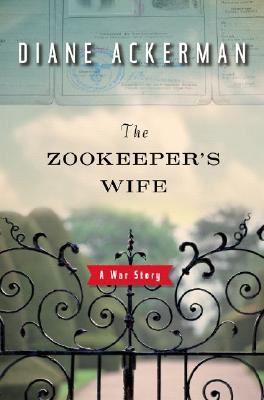
Diane Ackerman sets the record straight in her work of nonfiction, The Zookeeper's Wife (2007). When the Germans began rounding up Polish Jews, a great many Polish Catholics placed their own lives in jeopardy by protecting their Jewish neighbors until the war ended. Her story focuses on Antonia Zabinski, the wife of a Warsaw zookeeper, who hid a number of Jews on the grounds of the zoo while Jan, her husband, fought with the Polish underground. The whole family, including two children, survived the war, as did all but a couple of the Jewish guests who passed through their property on their way to safety.
 The fact that Antonia had two small children, one of them born during the war, makes her heroism seem all the greater. It's one thing to risk your own life to save others, but to risk the lives of your children seems almost foolhardy. Only someone who believed strongly in the rightness of her actions would do such a thing. And Antonia, according to the journal she kept during that harsh period, had many friends who were doing the same thing.
Ackerman wrote an inspiring book that deserves to stand with Schindler's List. It's full of wonderful little moments that take the reader back to that time and place. One of oddest finds Antonia visited by a German officer who, spying a piano in her home, asks her to play "The Star-Spangled Banner" while he sings along.
My maternal grandparents immigrated from Poland. I don't believe such things as bigotry and hatred are passed down through blood or genes, and I didn't care for the novel's suggestion that Poles are, by nature, evil.Diane Ackerman sets the record straight in her work of nonfiction, The Zookeeper's Wife (2007). When the Germans began rounding up Polish Jews, a great many Polish Catholics placed their own lives in jeopardy by protecting their Jewish neighbors until the war ended. Her story focuses on Antonia Zabinski, the wife of a Warsaw zookeeper, who hid a number of Jews on the grounds of the zoo while Jan, her husband, fought with the Polish underground. The whole family, including two children, survived the war, as did all but a couple of the Jewish guests who passed through their property on their way to safety.
The fact that Antonia had two small children, one of them born during the war, makes her heroism seem all the greater. It's one thing to risk your own life to save others, but to risk the lives of your children seems almost foolhardy. Only someone who believed strongly in the rightness of her actions would do such a thing. And Antonia, according to the journal she kept during that harsh period, had many friends who were doing the same thing.Ackerman wrote an inspiring book that deserves to stand with Schindler's List. It's full of wonderful little moments that take the reader back to that time and place. One of oddest finds Antonia visited by a German officer who, spying a piano in her home, asks her to play "The Star-Spangled Banner" while he sings along.
Friday, February 7, 2014
Tribute writers
Lately the tributes have been to the likes of the Mamas and the Papas, ABBA and Louis Armstrong. I confess to once attending a tribute to Jimmy Buffett, not in Largo but back in Ohio, but as a rule I avoid tribute bands. When I want to hear ABBA, I put on an ABBA album. I'm not interested in paying money to hear somebody else pretending to be ABBA.
I feel much the same way about what I think of as tribute writers, those people who, after the deaths of popular authors, continue writing books in the same style and using the same characters. The other day at Barnes & Noble I noticed Robert B. Parker's Bull River by Robert Knott and Robert Ludlum's The Arctic Event by James H. Cobb on the shelves. There are still plenty of Parker and Ludlum novels I have yet to read. Why would I want to read these imitations?
In a way, these "tribute novels" don't really pay tribute to dead authors at all. If Robert Knott and James H. Cobb, among others, can write like Robert B. Parker and Robert Ludlum, then maybe what Parker and Ludlum did wasn't so special after all. Maybe any competent writer could have written the same books.
 |
| Sebastian Faulks |
Why would quality writers like Faulks and Winegardner stoop to writing tribute novels? Probably for the same reason William Faulkner wrote Hollywood screenplays. Serious novels usually don't make all that much money.
Undoubtedly there have been more Sherlock Holmes stories written by writers other than Sir Arthur Conan Doyle than were ever written by him. Do they really pay tribute to Doyle and Holmes, or are they, like the various tribute bands, just trying to cash in on somebody else's success?
Wednesday, February 5, 2014
E.B. White on reading
 |
| Michael Sims |
1. "He (White) once described Walden as the only book he 'owned,' that others merely lived with him," Sims writes.
Others of us might put it a little differently. Some of us might say that we own some books, while certain other books own us. Others of us might say that most of our books are just temporary visitors, while others are permanent residents. Or we might say that some books are our friends, while others merely acquaintances.
However we think about it, all books are created equal, but some books, to paraphrase George Orwell, are more equal than others. Certain books speak to us in a way that others do not. Rebecca Mead has a new book called My Life in Middlemarch about her lifelong fascination with the George Eliot novel. There are probably many books in Mead's personal library. Middlemarch is the one she owns, the one that owns her, the one that's a permanent resident or, if you prefer, the one that is her best friend.
Most serious readers have books like that, likely books we found magical in our youth and that remain so years, even decades, later. I know I do.
2. White once described his feelings about visiting a bookstore as "the terrible excitement of so great a concentration of books in one place under one roof, each book wanting the completion of being read."
That partial sentence contains three ideas worth a comment:
The terrible excitement: Some people feel excitement when entering a clothing store, an electronics store, a casino, a ballpark, whatever. For book lovers, that excitement comes in bookstores and, perhaps, libraries. We probably even feel it when surrounded by our own home library.
So great a concentration of books in one place: Here's one reason for that excitement. Small bookstores can be wonderful, especially when they hold books you can't find everywhere else, but there's something compelling about large bookstores, those places where you can't possibly see everything in one visit. Like the stars in the night sky, all these books overwhelm us and leave us with a sense of awe.
Each book wanting the completion of being read: I like this idea, that no book can really be completed until it is read, and not just read by somebody else but by you. Each of us completes the writing of a book by reading it. Writers, like singers, dancers or actors, need their audience for completion.
Monday, February 3, 2014
No adjustment needed
Among the many charms of Alexander McCall Smith's No. 1 Ladies' Detective Agency novels are the names Smith gives to the businesses in Botswana. Many of these find their ways into his titles, The No. 1 Ladies Detective Agency being but one of them. Among others are The Kalahari Typing School for Men, The Miracle at Speedy Motors and, most recently, The Minor Adjustment Beauty Salon.
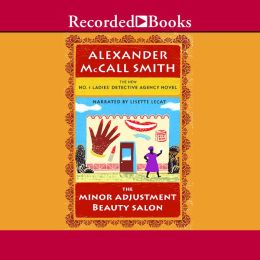 When Precious Ramotswe gets a "free" facial at the newly opened Minor Adjustment Beauty Salon, she soon realizes the proprietor expects a favor in return. Someone is already trying to destroy the business by spreading terrible false rumors. How does one go about tracking down the source of a rumor, Mma Ramotswe wonders.
Another case proves even more challenging. A lawyer wants Mma Ramotswe to discover whether a nephew about to inherit his uncle's estate is really who he claims to be.
This being an Alexander McCall Smith mystery, you know the subplots will often overpower the supposedly main plots, and that is the case in this 14th book in the series, as well. This time, Mma Ramotswe's husband, Mr. J.L.B. Matekoni, attempts to become a modern husband and Grace Makutsi, her long-time assistant (no, better make that associate), gives birth to a baby boy and then must put up with her husband's overpowering aunt moving in and attempting to take over, all in the name of tradition.
I have listened to, rather than actually read, most of the books in this series, and I did that again with The Minor Adjustment Beauty Salon. Native South African Lisette Lecat has been narrating the series from the beginning, and as always she does a perfect job with this installment. With Lecat reading Smith's prose, what's not to like?
When Precious Ramotswe gets a "free" facial at the newly opened Minor Adjustment Beauty Salon, she soon realizes the proprietor expects a favor in return. Someone is already trying to destroy the business by spreading terrible false rumors. How does one go about tracking down the source of a rumor, Mma Ramotswe wonders.Another case proves even more challenging. A lawyer wants Mma Ramotswe to discover whether a nephew about to inherit his uncle's estate is really who he claims to be.
This being an Alexander McCall Smith mystery, you know the subplots will often overpower the supposedly main plots, and that is the case in this 14th book in the series, as well. This time, Mma Ramotswe's husband, Mr. J.L.B. Matekoni, attempts to become a modern husband and Grace Makutsi, her long-time assistant (no, better make that associate), gives birth to a baby boy and then must put up with her husband's overpowering aunt moving in and attempting to take over, all in the name of tradition.
I have listened to, rather than actually read, most of the books in this series, and I did that again with The Minor Adjustment Beauty Salon. Native South African Lisette Lecat has been narrating the series from the beginning, and as always she does a perfect job with this installment. With Lecat reading Smith's prose, what's not to like?
Subscribe to:
Posts (Atom)